Partnership brings Mandeville-focused local reporting to weekly print readers
MANDEVILLE — Beginning with its January 16th issue, The Southern Reveille has launched a weekly Mandeville, Louisiana, print edition, and select Mandeville Daily news coverage will now appear in its pages.
The expansion brings Mandeville-focused reporting into print as part of the Reveille’s new Northshore edition, offering readers a traditional newspaper option alongside Mandeville Daily’s digital coverage. Select stories published by Mandeville Daily will be edited for print and distributed weekly to subscribers in Mandeville.
Founded in 1851, The Southern Reveille is based in Port Gibson, Mississippi, and serves Claiborne County as a community newspaper. The new Mandeville edition marks the paper’s first regular print presence in Louisiana and reflects a broader effort to support local journalism in communities that have seen a decline in traditional news outlets.
Kelly Sullivan, Publisher, Southern Reveille. (Mandeville Daily)
Publisher Kelly Sullivan said the new Mandeville edition is rooted in both tradition and forward-looking local journalism. “Born of a deep love for storytelling, truth-telling, and Southern voices, this paper is both a continuation and a fresh start,” Sullivan said. “My goal is to honor what came before while shining a smart, steady light on what’s next.”
William “Wild Bill” Kropog, Editor Emeritus and Publisher, Mandeville Daily. (Mandeville Daily)
Mandeville Daily will continue to operate independently as a digital-first local news outlet, covering City Council meetings, ordinances, public safety, development and community events. The print partnership allows that reporting to reach additional readers who prefer or rely on a physical newspaper.
The Mandeville edition of The Southern Reveille is published weekly. Subscription information is available through the newspaper’s website.
Queer Northshore warns new rules could force Pride parade out of Mandeville
Ordinance removes council, mayor authority to waive fees
Biggest changes mostly affect lakefront parades, not other events
MANDEVILLE — The Mandeville City Council on Thursday unanimously adopted a sweeping overhaul of the city’s parade and special-event rules, a move supporters said will modernize safety standards and create a more predictable system for recovering city costs tied to large events.
The ordinance also removes the ability of the City Council and mayor to waive fees, requiring equal treatment of all applicants.
The vote followed a relatively brief discussion where concerns about growing event sizes and neighborhood impacts were weighed against fears the new system could discourage community-based events.
Leyla Hekmatdoost, executive director of Queer Northshore, said the new fee structure could ultimately force the organization to move its Pride Parade — having rolled two years in a row — out of Mandeville due to the now-required fee structure. She argued that the event provides tangible economic benefits to the city, particularly for local businesses along the parade route. (City of Mandeville)
Leyla Hekmatdoost, executive director of Queer Northshore, said the new fee structure could ultimately force the organization to move its Pride Northshore parade — having rolled two years in a row — out of Mandeville due to the now-required fee structure. She argued that the event provides tangible economic benefits to the city, particularly for local businesses along the parade route.
“We feel like we bring value to the city with local businesses profiting as well as tax revenue, so if it became apparent that we would have to pay $20,000 for us to have a parade, we would have to look at a new location,” Hekmatdoost said. She added that relocating the event would come at a cost to Mandeville’s economy, noting that nearby businesses “would lose out on that new income they’ve had two years in a row.”
Mel Manuel (left) and Jeremy “JF” Thompson (right), former executive directors of Queer Northshore, echoed concerns that the new ordinance could effectively end the group’s ability to hold its Pride parade in Mandeville. Manuel said the potential cost of complying with the new fee structure could exceed what the organization can reasonably absorb. (City of Mandeville)
Mel Manuel and Jeremy “JF” Thompson, former executive directors of Queer Northshore, echoed concerns that the new ordinance could effectively end the group’s ability to hold its Pride parade in Mandeville. Manuel said the potential cost of complying with the new fee structure could exceed what the organization can reasonably absorb.
“If it’s true this is going to cost us $15,000 to $20,000 for this parade, that does represent fully half our annual revenue,” Manuel said. “I don’t know if we’d be able to do the parade here or not, just based solely on that.”
Under the ordinance, Mandeville will move away from its current discretionary approach to event permitting and instead require organizers to reimburse the city for public-safety and operational costs, including police, fire, EMS, sanitation and traffic control. Fees will be calculated in advance based on projected attendance and staffing needs, with the city retaining authority to bill additional costs if events exceed estimates.
The ordinance will also restrict most non-Mardi Gras parades to two predefined routes along Lakeshore Drive, tighten enforcement standards for participant behavior, and establish a new permit category for post-parade assemblies that significantly impact traffic or public spaces.
Although the ordinance does not assign specific dollar amounts, minimum-cost estimates based on the required staffing levels and typical municipal overtime rates indicate that a Lakeshore Drive parade turning up Girod Street with about 3,000 attendees could cost organizers approximately $15,000 to $20,000 or more, depending on final staffing and route conditions.
Post-parade gatherings will be limited to designated special-event areas such as the Mandeville Trailhead, Sunset Point Park or Lakeshore Park. Stationary activities extending beyond a typical parade disbandment — including events requiring police, EMS, sanitation or traffic control services, or involving amplified sound, vendors or alcohol — will require separate approval and, in most cases, a separate permit.
Traditional Mardi Gras parades will remain largely exempt, with existing routes, seasonal rules and City Council discretion over cost sharing left intact.
And again… and again… and again… and again… and again…
Teenagers on bikes weave in and out of traffic, events with impunity
Several near-accidents observed by locals, reporter
Similar activity reported in Slidell
Updated: See Community Note at bottom…
MANDEVILLE — A group of roughly five to 10 teenagers riding primarily electric bicycles — affectionately dubbed the “Wheelie Bandits” — has drawn growing concern in recent months for what residents describe as dangerous riding behavior through Old Mandeville, particularly along Girod Street and Lakeshore Drive.
Similar activity has been reported in other parts of the parish, particularly in Slidell, were Slidell Police Chief Daniel Seuzeneau is warning parents to intervene with their kids to prevent serious injury, and that he is going to start taking action by issuing tickets or charging the offenders.
A group has been frequently observed in Mandeville on weekends, and even almost daily during the recent holidays.
Affectionately dubbed the “Wheelie Bandits,” a group of teenagers ride electric bicycles and scooters through Old Mandeville, performing wheelies into oncoming traffic along Girod Street and Lakeshore Drive and near the Mandeville Trailhead. (Mandeville Daily)
Observers say the group rides a mix of e-bikes, regular bikes, with one or two riders occasionally using electric-powered scooters. The teenagers are frequently seen performing near-constant wheelies while traveling with — and often against — traffic on Girod Street, weaving in front of vehicles and forcing drivers to slow or stop out of fear that a rider could fall into the roadway and become seriously injured.
Locals have also expressed concern that the group’s constant presence and behavior is altering the character of the scenic old town area.
Mandeville Chief of Police Todd Schliem issued a statement to Mandeville Daily as follows: “I would like to echo [Slidell Police] Chief Seuzeneau’s statement regarding the reckless nature of some of our local kids when it comes to the operation of all types of bicycles. We have received several complaints regarding this issue and are taking it very seriously. Hopefully, we can get parents to talk to their kids about being more responsible. In the meantime, I would encourage anyone witnessing this type of behavior to immediately call the Mandeville Police Department.”
The activity appears to center around Girod Street, Lakeshore Drive and the Mandeville Trailhead, where the riders zip back and forth beneath the covered pavilion and across the grassy area in front of the stage, often maintaining wheelies for extended periods, especially down Girod Street or Lakeshore Drive, stopping traffic from time to time. The same gang was also photographed and filmed at a local gas station on Florida Street, displaying the same behavior.
Affectionately dubbed the “Wheelie Bandits,” a group of teenagers ride electric bicycles and scooters through Old Mandeville, performing wheelies into oncoming traffic along Girod Street and Lakeshore Drive and near the Mandeville Trailhead. (Mandeville Daily)
While on foot, this reporter witnessed an incident on Girod Street in which one of the teenagers riding in a wheelie position darted from a sidewalk into the path of an oncoming vehicle traveling on Girod Street, forcing the driver to slam on the brakes and sound the horn. The masked rider narrowly avoided impact, then turned and continued riding in a wheelie, showing no apparent reaction to the near collision.
Similar close calls have been reported to Mandeville Daily near Girod Street, an area that regularly sees heavy vehicle, pedestrian and bicycle traffic, particularly during evenings and weekends.
Residents say the behavior has continued for months with little apparent consequence, raising concerns about safety, enforcement and how these teenagers are behaving in shared public spaces. No injuries have been reported to Mandeville Daily, but residents worry the ongoing activity could result in a serious accident if it continues unchecked.
Affectionately dubbed the “Wheelie Bandits,” a group of teenagers ride electric bicycles and scooters through Old Mandeville, performing wheelies into oncoming traffic along Girod Street and Lakeshore Drive and near the Mandeville Trailhead. (Mandeville Daily)
Concerns were also raised by a local event coordinator who had reserved the trailhead facility for a pre-Christmas market featuring local artists and vendors. The coordinator said she attempted to ask the group to leave after observing the teenagers repeatedly riding their electric bicycles between vendor booths. According to the coordinator, her requests were ignored by the teens, and several of them plugged their e-bikes into electrical outlets in the middle of the vendor area to recharge during the event.
Many of the teenagers who have been observed were wearing helmets, often with face coverings, obscuring their identities and making it difficult for residents or event organizers to identify individual riders.
In Old Mandeville, residents say the repeated incidents underscore a familiar tension between preserving an open, family-friendly atmosphere and ensuring that visible disorder does not become an accepted part of the streetscape, as it apparently has with these “Wheelie Bandits.”
Community Note: We understand the concern expressed recently in social media comments concerning this coverage — on both sides of this issue. The images and videos used in the story were recorded in public spaces where there is no legal expectation of privacy. Additionally, we made every effort to distort identifiable faces or only to show imagery from a sufficient distance. The images and videos were submitted by multiple sources, primarily dash-cam footage.
In fact, certain up-close imagery of the wheelies into oncoming traffic provided by a confidential source was reviewed for verification purposes but was not published, both as a condition of access to the imagery and as an editorial decision to avoid singling out any one individual when the behavior involved multiple participants.
The behavior documented — including riding bicycles in so-called wheelie position into oncoming traffic — has resulted in documented near-collisions and poses a serious risk of injury to the riders and to motorists. We consulted Police Chief Todd Schliem before publication who confirmed certain details that had been passed on to us by other sources. He told us that his staff had already met and were planning a response to the behavior, irrespective of our intent to cover the issue. In other words, a police response was already in the works before our coverage.
With that said, we are disappointed in some of the comments on social media we are seeing in both directions. Name-calling and unfounded accusations and threats have no place in civil discord among neighbors. Thank you.
Would establish formula-based event fees but leave Mardi Gras parades largely unchanged
Heavy-turnout lakefront parades could face daunting financial obstacles
3K turnout could cost $20K
MANDEVILLE — A proposed rewrite of Mandeville’s parade and special-event rules — one that could push the price tag for large lakefront parades into the tens of thousands of dollars — is up for a vote at the January 8th City Council meeting.
Supporters say Ordinance 25-34 brings transparency, fairness and modern safety standards to a growing calendar of large events that often strain the Old Mandeville neighborhood. Critics contend the cost structure could discourage community-based parades and festivals by shifting major costs onto organizers.
As proposed, the ordinance would shift Mandeville away from its current discretionary approach to event permitting and toward an attendance-based, formula-driven system that requires organizers to reimburse the city for public-safety and operational costs such as police, fire, EMS, sanitation and traffic control. Fees would be calculated in advance, with the city retaining authority to bill additional costs if events exceed projected attendance.
The ordinance also would restrict most non-Mardi Gras parades to two predefined routes along Lakeshore Drive, tighten enforcement standards for participant behavior and create a new permit category for post-parade assemblies that significantly impact traffic or public spaces.
The two routes for non-Mardi Gras parades proposed by Ordinance 25-34. (Mandeville Daily)
While the ordinance does not assign dollar values, a minimum-cost estimate based on the required staffing levels and typical municipal overtime rates places the permit cost for a Lakeshore Drive parade turning up Girod Street with about 3,000 attendees at approximately $15,000 to $20,000 or more, depending on final staffing and route conditions as well as other factors that cannot be determined without more information.
Post-parade gatherings would be restricted to designated special event areas, such as the Mandeville Trailhead, Sunset Point Park, or Lakeshore Park. Additionally, any stationary activity that extends beyond the typical disbandment of the parade — requiring police, EMS, sanitation, or traffic control services, involving amplified sound, vendors, or alcohol — would require separate approval and, in most cases, a separate permitting process.
As an example, the Northshore Pride parade, organized by Queer Northshore, would likely be affected in this manner. Last year’s event followed a Lakeshore Drive route turning up Girod Street, with organizers publicly estimating attendance at more than 3,000 people, and concluded with a separate staged gathering at the Mandeville Trailhead. Under the proposed ordinance as written, that combination of attendance size, route configuration and post-parade activities would most likely trigger the higher cost and permitting requirements cited above, including separate approval for the trailhead event.
The Pride Northshore parade would likely be impacted by these changes, according to the group’s self-reported attendance from 2025, as found on the Queer Northshore website. (Mandeville Daily)
Traditional Mardi Gras parades would largely be exempt from the new framework, with existing routes, seasonal rules and council discretion over cost sharing left intact.
The impact of proposed Ordinance 25-34. (Mandeville Daily)
(Editor’s note: Mandeville Daily independently calculated the estimate in this piece using the staffing framework in the proposed ordinance, police overtime rates published in the city’s FY2026 adopted budget, and conservative assumptions for other services. The City of Mandeville has not issued an official cost estimate, and actual charges could differ materially.)
Ordinance 25-34: Proposed Fee Schedule. (City of Mandeville)
Council seeks clearer, more transparent zoning framework after years of debate over large-scale proposals
Would alter path of future Sucette-like proposals if adopted
MANDEVILLE — Two interrelated zoning ordinances set for introduction by the City Council on January 8th would fundamentally change how major development proposals are brought before the public, requiring earlier council introduction, clearer limits on density calculations, and a single ordinance-driven review process from start to finish.
If enacted into law, the proposed ordinances would dramatically reshape how rezoning, conditional use permits, planned districts and mixed-use marina developments are evaluated, a shift that — had it been in place in 2023 — would likely have altered the timing, structure and public visibility of the Sucette Harbor application process.
The ordinances — 26-02 and 26-03 — are authored by Councilman-at-Large Jason Zuckerman and co-sponsored by District II Councilman Kevin Vogeltanz and are designed to work together. One focuses on how applications move through the city’s review process, while the other clarifies what land area may be counted when calculating density, units and parking in mixed-use developments.
Introduction is a procedural step required by law to notify the public that proposed ordinances are under consideration. No vote or discussion occurs at introduction; instead, the measures are published and will be scheduled for consideration and possible adoption at a later meeting.
Proposed Ordinance 26-02: Conditional use and planned district procedures
Council-first introduction of applications. Requests for rezoning, conditional use permits and planned district zoning would begin with the formal introduction of a proposed ordinance at the City Council, rather than originating solely as an application before the Planning Commission.
Applications framed as proposed ordinances. Each application reviewed by the Planning Commission would be required to include a draft ordinance detailing any rezoning requests, requested variances and development specifics, ensuring both bodies are reviewing the same document throughout the process.
Clarified public notice requirements. Public notice for conditional use permits and planned district developments would explicitly follow the same standards used for zoning amendments.
Limits on mid-process changes. Amendments or conditions proposed during Planning Commission review would not require restarting the process unless the original purpose of the proposed ordinance is fundamentally changed. Nothing in the proposal changes the fact that the Council may either agree or disagree with the Commission’s recommendations and may amend the ordinance as it sees fit without the need to restart the review process with the Planning Commission. The Council retains the authority to reject the proposed ordinance entirely, even if approval is recommended by the Planning Commission. Only if the actual purpose of the ordinance that was introduced, after amendments, no longer reflects the original intent of the ordinance that was advertised, would the process need to restart.
Clarified role of Planning Commission recommendations. The ordinance would require the Planning Commission to transmit clear recommendations to the City Council, including any conditions it supports, but would not require the commission to draft or propose specific ordinance amendments. The commission may suggest modified language if it chooses, but final ordinance drafting would remain the responsibility of the City Council.
Expanded application of supermajority voting rules. The ordinance would broaden existing four-fifths voting requirements to apply when proposed conditional uses or planned districts are adjacent to any residentially zoned property, rather than limiting the provision to single-family (R-1) neighborhoods, extending those protections to multifamily residential neighbors as well.
Proposed Ordinance 26-03: Mixed-use marina and planned district calculations
Revised definition of ‘lot area.’ For properties with more than one proposed or permitted use, only the portion of the site designated for each specific use could be used when calculating density, building area and parking.
Limits on density in marina districts. In both PM-1 (waterfront) and PM-2 (non-waterfront) Marina Districts, allowable units and building area would be calculated using only the land area assigned to each use, rather than the total acreage of a mixed-use site.
Exclusion of water and flood-prone areas. Areas extending into Lake Pontchartrain or other water bodies, wetlands and land subject to periodic inundation would be excluded from lot-area and density calculations.
Residential standards preserved. Residential portions of marina developments would continue to follow R-2 Two-Family Residential standards, preventing marina zoning from being used to increase residential density.
Clarified limits on planned district flexibility. While planned districts may still allow flexibility in design standards, each individual use would be required to obtain its own conditional use approval and comply with use-specific site-area calculations.
Uniform rules for combined-use developments. Parallel language would apply the same area-calculation rules across marina and planned district zoning to eliminate ambiguity.
How the ordinances work together
Taken together, the two measures align process and substance. Ordinance 26-02 restructures the review pathway so conditional use and planned district applications are introduced and tracked as ordinances from the outset. Ordinance 26-03 tightens how density and site area are calculated within that process, limiting the ability to use overall site size — including water or flood-prone areas — to increase development intensity.
Once introduced January 8th, both ordinances will be published and scheduled for future public hearings and council votes at a subsequent meeting or meetings.
MANDEVILLE — A proposed rewrite of Mandeville’s special events rules would significantly change how Old Mandeville’s parades and festivals are permitted, routed and paid for, while leaving traditional Mardi Gras parades largely unchanged.
Ordinance 25-34, scheduled to be introduced at the December 18th City Council meeting, amends Article V of the city code governing parades, festivals and other special events. The measure seeks to modernize public safety rules, clarify permitting standards and ensure large, non-city-sponsored events do not impose unreimbursed costs on taxpayers.
If adopted, the ordinance would replace the city’s largely discretionary system with a structured, attendance-based framework that requires event organizers to reimburse the city for police, fire, EMS, sanitation and traffic-control costs. The practical effect would be most pronounced for newer or nontraditional parades.
Shift toward structured, cost-based permitting
Under current law, nonprofit events may have most or all city costs waived at the discretion of the mayor or City Council. There is no standardized fee schedule, and staffing levels are determined administratively. The current system has made it difficult for the city to control special-event-related costs or budget for them accurately, especially as more groups seek permits for events that can strain city resources depending on attendance.
Ordinance 25-34 would replace that system with an attendance-based framework requiring organizers to reimburse the city for police, fire, EMS, sanitation and traffic-control services. Permit fees would be calculated upfront based on projected attendance, route length and safety needs, with the city retaining authority to bill additional costs if attendance exceeds estimates.
The proposed fee structure contemplates staffing that includes parking enforcement officers for extended pre- and post-event coverage, additional foot patrol officers tied to attendance, and traffic-control staffing at route intersections, along with staged EMS coverage and ongoing sanitation sweeps.
The ordinance also anticipates added costs for crowd-control barricades and vehicle-control measures, including temporary no-parking signage.
While the ordinance does not assign dollar values, a minimum-cost estimate based on the required staffing levels and typical municipal overtime rates places the permit cost for a Lakeshore Drive parade turning up Girod Street with about 3,000 attendees at approximately $15,000 to $20,000 or more, depending on final staffing and route conditions as well as other factors that cannot be determined without more information.
(Editor’s note: Mandeville Daily independently calculated this estimate using the staffing framework in the proposed ordinance, police overtime rates published in the city’s FY2026 adopted budget, and conservative assumptions for other services. The City of Mandeville has not issued an official cost estimate, and actual charges could differ materially.)
Ordinance 25-34: Proposed Fee Schedule. (City of Mandeville)
Route limits and enforcement
The ordinance would limit most non-Mardi Gras parades to two predefined public parade routes along Lakeshore Drive, with fixed staging and termination points.
While many conduct rules already exist in city code, the ordinance strengthens enforcement mechanisms by more clearly authorizing police and parade marshals to remove participants for indecent behavior, intoxication or safety violations. It also expands no-parking rules, clarifies sanitation minimums and codifies authority to cancel events due to weather or safety threats.
Post-parade assemblies permitted separately
The proposal creates a new category for “public assemblies,” requiring permits for organized gatherings expected to obstruct traffic or normal public use. Those permits would be tied to fixed locations, would require indemnification and cleanup commitments, and would be subject to cost recovery for public safety services.
Any post-parade gathering would be confined to designated special event areas such as the Mandeville Trailhead, Sunset Point Park or Lakeshore Park and would require separate approval — and in most cases a separate permit — if the activity is stationary, extends beyond normal parade disbandment, requires police, EMS, sanitation or traffic control services, or involves amplified sound, vendors or alcohol.
Mardi Gras parades largely unaffected
Traditional Mardi Gras parades would see comparatively little change. Established routes, seniority rules, float requirements and seasonal timing remain in place.
The City Council would continue to determine what percentage of city costs Mardi Gras organizations pay, preserving the city’s longstanding cost-sharing structure for those parades.
The impact of proposed Ordinance 25-34. (Mandeville Daily)
Debate ahead
Supporters argue the ordinance brings transparency, fairness and modern safety standards to a growing calendar of large events that often strain the Old Mandeville neighborhood. Critics contend the cost structure could discourage community-based parades and festivals by shifting major costs onto organizers.
Ordinance 25-34 is scheduled only for introduction at the City Council’s December 18th meeting. Ordinances are not debated or voted on at the meeting where they are introduced, but must be formally introduced in advance of a later meeting where they would debated and voted on.
Street changes, special event rules and capital budget amendments to be introduced
MANDEVILLE — Discussion of recently implemented water and sewer rate changes is included on the agenda for Thursday’s Mandeville City Council meeting, which also features several ordinance introductions and a full slate of routine city business.
The City Council unanimously adopted changes to its water and sewer billing system at the January 9th meeting earlier this year, a long-planned update that took effect this fall and resulted in higher initial bills for some customers, particularly high-volume users, during the rollout period.
The water and sewer rate discussion appears under new business, at the request of Councilman-at-Large Scott Discon. While no formal vote is scheduled, the agenda item gives council members an opportunity to publicly review and question rate adjustments that have already gone into effect.
In addition to the rate discussion, the council will introduce four ordinances. Ordinance 25-31 would revoke the public dedication of a portion of Harold Street between Albert and Colbert streets, declare the segment surplus and authorize its sale at private sale. 
Council members will also introduce Ordinance 25-32, which would establish one-way traffic on the 800 block of Penn Street. 
Ordinance 25-33 proposes an amendment to the city’s capital budget to address Jackson Avenue bulkhead repairs, while Ordinance 25-34 would amend the city code governing parades, festivals and other special events — a topic that has drawn increasing attention as the city reviews permitting and public-safety requirements. 
The agenda also includes proclamations recognizing January 2026 as Blood Donor Awareness Month and America’s upcoming 250th anniversary, followed by a finance report from Jessica Farno and a projects-in-progress update from Public Works Director Keith LaGrange covering more than a dozen ongoing infrastructure projects. 
Consent agenda items include special event permits, liquor license approvals, project completion certificates and contract-related resolutions. The council is also scheduled to consider a parks commission reappointment and a resolution authorizing a professional services agreement for comprehensive land use regulation ordinance revision services. 
The council is scheduled to meet at 6 p.m. Thursday, December 18th, at Mandeville City Hall, 3101 E. Causeway Approach, according to the posted agenda. 
Mosquito district’s governance fight highlights broader dilemma: When do appointed commissions become immune to oversight?
Editorial
At the heart of the debate over appointed boards and special districts lies a fundamental question of representative government: how much authority can an elected legislative body delegate before it begins to surrender powers the constitution expects it to exercise? In Louisiana’s parish-president and council-mayor systems, councils hold the purse strings. They levy taxes, adopt budgets, and set spending priorities. Yet the state’s landscape is dotted with autonomous boards and districts — governing mosquito control, drainage, water, recreation and more — that operate with their own millages and policymaking authority, often beyond the direct reach of the officials voters elect.
The St. Tammany Parish Mosquito Abatement District highlights that tension. Its five-member volunteer board, appointed by the parish’s elected leadership, sets the district’s millage rate annually and manages a tax-funded operation with professional staff and millions in assets. That structure provides stability and shields technical work from day-to-day politics. But it also raises the question: when a board’s financial decisions stand apart from the council that levies taxes parish-wide, where does voter accountability ultimately reside?
This fight over special districts: Autonomous or above the law? (Mandeville Daily)
Mandeville grappled with issue in 2023
That concern is not new in St. Tammany Parish. Mandeville confronted a similar issue in 2023, when city officials debated reviving a now-defunct Financial Oversight Committee with an expanded mandate. Critics argued the proposal would have effectively transferred core budgetary powers from the elected City Council to an appointed advisory body, forcing the council to adopt spending recommendations it did not originate and could not amend, thereby usurping the budgetary authority placed in council members by the voters. Opponents warned that such a shift could violate the separation of powers required by the city charter and the state constitution. The council ultimately rejected the proposal.
Both cases underscore a structural dilemma. Appointed commissions can offer expertise and continuity, and voters often approve the millages that fund them. But when those bodies set tax rates, influence spending or initiate policy in ways that bind or bypass the elected legislative branch, the risk is not just operational drift — it is democratic drift. The more authority shifts to entities that voters cannot remove, the harder it becomes to ensure transparency, enforce oversight or determine who is accountable when disputes arise.
The district even filed a lawsuit seeking an injunction to stop the parish from investigating the district’s finances, arguing the probe is politically motivated and intended to exert control over its dedicated tax dollars.
At the same time, a small but vocal group on social media — including some with ties to the district or who previously served on it — has been stoking public anger at elected officials for exercising their one remaining constitutional lever of control: the power to appoint and remove. The result is a narrative increasingly distorted and potentially dangerous.
Are we to accept, at face value, that once a committee, board or district is appointed and funded with its own long-term special tax, it is no longer answerable to the public or to the body that created it, or to any law enforcement official, not even a duly appointed financial review committee?
Autonomous or above the law?
It defies logic to argue that the parish’s chief law enforcement officer has a conflict of interest simply for reviewing the finances and operations of an appointed commission in the parish he serves. Likewise, it is untenable to claim that the appointing authority — the parish council — is somehow barred from examining the finances of a district funded with taxpayer dollars, the very taxpayers who elected them to provide said oversight in the first place.
The mosquito abatement district is a public body under Louisiana law, which holds that any board, committee, commission or entity created or appointed by an elected public body becomes a public body itself. As such, it is subject to the state’s Open Meetings Law (RS 42:11-28) and Public Records Act (RS 44:1-41), just as the parish council and every other public body is. Any resident has the right to request and obtain its financial records — a standard that applies all the more to the district attorney and the parish council.
Ultimately, voters should ask themselves a deeper question: when does the autonomy granted to a specialized district funded by dedicated tax dollars begin to resemble immunity from scrutiny? And if this publicly funded commission can reject oversight from both the parish council and the district attorney — even going to court to do so — has it not already crossed into a status no public body should ever hold: one that is, in practice, above the law?
MANDEVILLE — Mayor Clay Madden took to his November 19th “Madden Minute” to express his gratitude to residents, city staff, and volunteers for their contributions during the busy fall season. He also unveiled Mandeville’s holiday lineup, aptly named “Merry Mandeville.” This festive event will commence on December 5th and extend through December 19th, featuring a variety of activities such as Sips of the Season, Winter on the Water, a holiday market, and the annual menorah lighting ceremony.
In addition to acknowledging the community’s efforts, Madden also highlighted several new or recently opened businesses in the city. These include Creative Cakes, Bub’s Burgers, the Gastro Group, and Endocenter, all located on St. Ann. He assured the public that more business announcements will be made in the future.
The mayor then provided an update on several significant infrastructure projects that are currently underway. The Highway 22 Drainage Project, which is largely funded through state capital outlay dollars with parish support, has commenced utility relocations. Furthermore, work is also underway in the Sunset Point area, involving the demolition of the hurricane-damaged fishing pier and the subsequent construction of a replacement.
Mayor Clay Madden announced that the Lakefront Wetlands Restoration Project, commonly known as ‘the berm,’ is nearing completion and is anticipated to be finished by Christmas. (Mandeville Daily)
Madden expressed optimism about the Lakefront Wetlands Restoration Project, commonly referred to as “the berm.” He mentioned that the project is nearing completion and is expected to be finished before Christmas. He emphasized the state’s strong interest in the project and its potential to secure future grants for the city.
In his closing remarks, Madden extended his heartfelt gratitude to Mandeville’s veterans. He acknowledged the recent ceremonies and the unwavering support provided by the community in honoring their sacrifices.
MANDEVILLE — The Mandeville City Council is set to tackle a full agenda Thursday, November 20th, with a slate of holiday event permits, infrastructure project updates and multiple contract approvals scheduled for consideration. The meeting begins at 6 p.m. at Mandeville City Hall.
The agenda lists time for general reports and a message from Mayor Clay Madden.
Presentations
No formal presentations are scheduled.
Finance report
Finance Director Jessica Farno will deliver the city’s monthly financial update.
Projects in progress
Public Works Director Keith LaGrange is scheduled to brief the council on the status of 13 active infrastructure projects:
Lift Station A (Montgomery & Dupre) and Lift Station 27 (Mandeville High Blvd.)
Seawall Repair – Segment 1
Harbor Gazebo
Lakefront Wetlands Restoration (“Berm”)
Old Golden Shores Drainage
Girod Street landscaping and lighting
LA 22 drainage improvements
Sunset Point fishing pier demolition
Wastewater treatment plant disinfection system upgrades
2022/2025 roadway and drainage maintenance
2024 water and sewer maintenance
2022/2025 asphalt maintenance
2022/2025 striping maintenance
Consent agenda
The consent calendar is heavy with end-of-year and early-2026 event requests, largely requiring certificates of insurance, ATC approvals and coordination with MPD and Public Works.
Parade at 2 p.m., festival at 3 p.m., running from the Lakefront to the Trailhead. Requests include parade route approval, ATC authorization and coordination with MPD and Public Works.
Old Mandeville Business Association — “Sips of the Season” (Dec. 5, 2025)
Location: Girod Street Includes event and alcohol permit, event map approval and permission to leave Port-O-Lets in place for “Christmas Past.”
OMBA — “Christmas Past Festival” (Dec. 13, 2025; rain date Dec. 14)
Location: Girod Street Requests include map approval and departmental coordination.
Junior League of Greater Covington — “Carnival Couture” (Jan. 16, 2026)
Location: Fleur De Lis Center (private event) Alcohol permit request requiring ATC approval.
Approval of 2026 council meeting dates
Sponsored by Councilman Zuckerman.
Liquor license approval — Courtyard Bistro
Sponsored by Councilman Vogeltanz.
Change Order No. 1 — Lakefront Wetlands Restoration (Berm)
Increases the contract by $2,612.50 and extends the project by 50 days due to modified grass mix and acceptance of a marsh-creation bid alternate.
Police chief says response was ‘spot on’ and no danger was found
MANDEVILLE — Mandeville High School was placed on lockdown just before 1 p.m. Wednesday after an anonymous caller claimed someone was on their way to commit a shooting at the school, according to Mandeville Police Chief Todd Schliem.
Police and fire crews responded immediately, securing the campus alongside school officials under the city’s standard emergency procedures. The threat was later determined to be a hoax, Schliem said.
Mandeville High School campus (file photo)
“We were able to secure the facility and determined there was no active threat,” Schliem told Mandeville Daily on Friday. “We train for this all the time. Our response was absolutely spot on.”
Schliem praised school administrators and the St. Tammany Parish School Board for their coordination during the incident. Parents reported on social media that the school district’s emergency messaging system was used to alert parents about the lockdown.
“We could not have a better working relationship than we do with the school district,” Schliem said. “Our level of cooperation and working hand in hand with the school district is fantastic.”
Mandeville Police Chief Todd Schliem (City of Mandeville)
Students were released at their normal dismissal time, though officers maintained a presence around the campus for the remainder of the day as a precaution, he added.
“You can never plan for all scenarios,” Schliem said, “but I feel we were in a good spot yesterday.”
Similar hoax threats were reported around the same time at schools in Ponchatoula and Hammond. Schliem declined to discuss specific tactical procedures but emphasized that his department followed standard protocol throughout the response.
A four-panel cartoon published by Mandeville Daily satirizes a familiar pattern on social media, where a small but vocal group of disgruntled citizens denounce every institution that rules against them. The cartoon offers commentary on how online outrage often intensifies in inverse proportion to public support, especially when criticism stems not from evidence, but from dissatisfaction with an undesired outcome.
Dying oak can be cut now, but replacements cannot wait for elevation project completion
Bechac, planning director clash at P&Z
Email chain details efforts to get Bechac funded
MANDEVILLE — Former City Councilman Denis Bechac appeared before the Planning and Zoning Commission on Tuesday seeking permission to remove a large live oak, deemed dying by a local arborist, at his family’s historic Marigny-Bechac House property, the longtime site of the former Lakehouse Restaurant.
The property, heavily damaged by Hurricane Ida in 2021, has remained in disrepair as Bechac continues navigating the lengthy Federal Emergency Management Agency elevation grant process. He told commissioners that FEMA recently notified him that the property is on the award list, though he has not yet received a formal grant. Under FEMA rules and city code, the building must be elevated before it can reopen for business.
Bechac asked the commission to allow removal of the oak immediately but requested to postpone replanting the required replacement trees until after the elevation project is complete — a process that could take years. The Comprehensive Land Use Regulations Ordinance requires four new Class A trees of a specific size and age to be planted within about 30 days of removal, depending on planting seasons.
The discussion turned tense when one commissioner asked Bechac why the project had dragged on for so long.
“It’s been four years since Hurricane Ida,” Bechac said. “We’d have liked to have done this a long time ago, but of course, issues with the city and getting things done…”
“Dennis, there’s no issues with the city,” Director of Planning Cara Bartholomew interjected. “We applied for it. I’m just not—”
“I’m sorry,” Bechac interrupted. “You’re not gonna interrupt me. It’s my time speaking. I’m sorry. No, my time.”
“Excuse me,” Commissioner and Chairman Brian Rhinehart said, gaveling. “We will maintain civility here.”
“That’s right, my time.” Bechac shot back.
Rhinehart again restored order, stopping Bechac mid-sentence. He then told Bechac, noting that while members were generally supportive of allowing the tree’s removal, they shared concerns about delaying replanting. “We don’t know when you’ll receive your financing or when construction will begin,” Rhinehart said. “It could be two years from now, and I don’t see us letting you cut down the tree and wait that long.”
Denis Bechac hung a large banner on his Ida-damaged building during the lead-up to the March 2024 city-wide election. (Mandeville Daily)
The exchange underscored Bechac’s ongoing friction with city officials. He has publicly accused Mayor Clay Madden of hindering his FEMA approval — a feud that spilled into the public eye ahead of the March 2024 city elections, when Bechac hung a large banner across the damaged restaurant’s balcony reading, “ASK MAYOR CLAY MADDEN WHY! CALL [Madden’s cell phone] TODAY!”
Mandeville Daily obtained through a public records request a long email chain among Bechac, city officials and other consultants spanning the four-plus-year struggle to get FEMA funding from 2021 to 2024.
In an email that is dated November 1st, 2023, Bechac appears to grow frustrated with the city’s efforts, writing in-part:
“Since the city had hastily shut the building down after Hurricane Ida in September 2021, there have been very few conversations from city officials (can count them on one hand) in the past two years – as the city has been disengaged, absent, and apathetic. The city has not made this elevation project a priority nor has it shown any sense of urgency since.” [Page 40 (numbered page 12)]
Kyle Jones of Rostan Solutions, LLC, who was contracted by the city to handle working with FEMA to expedite grant money, not just for Bechac but for all applicants for the city, took issue with Bechac’s assessment, responding:
“I believe that my team and I have been overly communicative with Denis throughout this entire process since we took over. We had enormous success on our first go round with this last FMA cycle and unfortunately, even despite our best efforts, the Bechac property did not get selected. I can say this…the city – Cara/Lauren, and my team have really gone to bat for this project and we understand the importance of it, especially from a severe repetitive loss payout standpoint. I truly believe in this project and we are doing everything we can from our end to ensure we see it through.” [Page 39 (numbered page 11)]
Bartholomew concurred with Jones in the following response two days later:
“In your email dated 11/1/2023, you stated the City ‘hastily shut the building down’ after Hurricane Ida in 2021 and that there have been very few conversations with City Officials. However, the City met with you 7 times in the year following Hurricane Ida, in addition to the plethora of phone calls you had with our team, former consultants, and ROSTAN. Indeed, everyone involved has been very supportive of your efforts and could hardly be perceived as ‘disengaged, absent and apathetic.'” [Page 37 (numbered page 9)]
More than a year after this exchange, Bechac was cited by the city on November 8th, 2024, for violation of section 5.1.15 of the CLURO, pertaining to:
Failure to conform with structural strength
Unsafe, damaged, or non-inspected utilities system
No “Certificate of Occupancy” after substantial storm damage
No active building permits for repair or renovation
After discussion, the commission voted to allow the tree’s removal but denied Bechac’s request to postpone replanting, requiring that the new trees be planted now in accordance with city code. If replanting on-site proves unfeasible, Bechac will be required to plant the replacement trees at a location designated by the city.
Council approves Discon’s proposal after procedural uncertainty, confusion
Unhappy with adopted version, Zuckerman plans follow-up fixes
MANDEVILLE — The City Council voted unanimously Thursday night to adopt Ordinance 25-11, a sweeping expansion of the city’s tree-protection rules, but only after a tense stretch of confusion over a new document shown on the council-chamber screens in the lead-up to the vote.
Councilman-at-Large Scott Discon, who authored the ordinance, directed Planning Director Cara Bartholomew to display what appeared to be an enhanced version of the proposal. The document, however, had not been made available to the public beforehand, and even several council members said they had not received a printed copy.
The mix-up prompted uncertainty over exactly what text the council was voting on. Discon and other officials didn’t clearly explain that the on-screen version merely illustrated how the adopted Comprehensive Land Use Regulations Ordinance (CLURO) would look once the changes were incorporated. To members of the audience — and to some on the dais — it seemed like a revised ordinance from what had been officially published into the record.
Document shown on screens at the October 23rd City Council meeting caused confusion. (Mandeville Daily)
Councilman-at-Large Jason Zuckerman, along with council members Kevin Vogeltanz and Jill Lane, expressed concerns that adopting the measure without clarifying its differences would be unfair to property owners and confusing for the public. Vogeltanz proposed postponing the vote to the next meeting. However, after a debate, the motion failed with a vote of 2-3. In a reversal, Vogeltanz voted against postponement after Bartholomew advised that any significant amendments could necessitate revisiting the measure through the Planning and Zoning Commission, potentially delaying its implementation for months instead of weeks.
Discon, clearly frustrated by the talk of postponement, urged colleagues to move forward. “We worked extensively with legal, extensively with the planning department,” he said. “It always seems like there’s someone else that’s got something they want to add to it. And it’s just very frustrating.”
After extended public comment, the council adopted the ordinance 5-0.
After the meeting, Zuckerman wrote that he had voted for the ordinance “reluctantly,” saying it should have been postponed “to allow council members that had issues … to craft some meaningful amendments.” He added that he plans to propose follow-up legislation to fix what he views as problematic provisions that could affect property owners and builders.
In comments to Mandeville Daily on Friday, Zuckerman said he does not agree that further amendments would have required another Planning and Zoning review. He said the commission’s role is only to make a recommendation, and that “there is nothing in the charter that says it must go back after amendments.”
“The council, as always, can accept, alter, or reject a P&Z recommendation. It’s just that — a recommendation,” he said.
The ordinance itself amends eight sections of the CLURO, expanding protection to bald cypress and southern magnolia trees alongside the live oak and adding new permit requirements, fencing standards, and replacement rules for removed trees. Violations now trigger automatic suspension of permits or certificates of occupancy until fines or replanting obligations are met.
Confusion triggered by Discon presentation
When the ordinance was brought to the floor for consideration Thursday night, a document was shown on the video screens in council chambers, which at first appeared to be the proposed ordinance itself.
In essence, the visual presentation on-screen combined ordinance 25-11’s directives with the existing CLURO framework, producing a longer and more detailed document than the eight-page ordinance that had been publicly posted. For those unfamiliar, the document resembled an “expanded version” of the ordinance itself rather than a contextual markup — contributing to the confusion that would unfold in the room.
Zuckerman, Lane, and Vogeltanz expressed frustration over what was being shown on-screen. Zuckerman also pointed out unexplained annotations in the printed versions they held in their hands, which had several one-line annotations with no explanation. Those annotations had previously been exposed in a Microsoft Word Document version online as having been made by a planning department staffer named “Alex Weiner.” What was being shown on-screen seemed drastically different, said Zuckerman and Lane.
Excerpt from a previously published version of proposed Ordinance 25-11 in Microsoft Word Document format. (Mandeville Daily)
The confusion among council members and those in attendance began to grow because neither the council members (other than Discon) nor the those in attendance received a printed copy of what was being shown on-screen, and while it appeared to be the ordinance itself, it contained new blue and red markings in the text.
Because passages and headers from the CLURO would appear identical to the wording of the last published version of the ordinance, it created the false impression that a new, as-yet-unpublished version of the ordinance was being shown on-screen, when in fact, the on-screen document was merely a presentation to show what the CLURO would look like with and without the proposed ordinance’s changes.
Side-by-side comparison of the final published version of proposed Ordinance 25-11 and a presentation shown on-screen during the October 23rd City Council meeting. (Mandeville Daily)
Exchanges like the following only exacerbated the problem, when Discon said, “Cara, [Bartholomew, Planning Director] would you like to go through the amendment, uh, the ordinance?” This reference to “ordinance” proved crucial.
Bartholomew, who was controlling the on-screen document from her notebook computer, replied, “All right. So what I have on my screen is going to be the red-line version of the actual, or of the actual language in the CLURO, so it’s not the ordinance as advertised — it’s the red-line version.”
Her wording unintentionally created the impression that she was showing a “red-line version” of the proposed ordinance, not the CLURO. Those who spoke with Mandeville Daily — all of whom said they were in favor of the ordinance — said they too thought that what was on-screen was in-fact an updated version of the proposed ordinance that had not been published or advertised. According to the state’s Open Meetings Law, that could have put a vote by the council in legal jeopardy, if it had been true.
Next, Discon unwittingly continued the confusion when he said the following:
“I’m gonna explain to you the ordinance that you have in your hand. Uh, councilman, that’s the ordinance. … So what we did to make it easier [gesturing with hand to the screen above] is when you look at the screen, anything in blue is added. That’s the new stuff. And you’ll see that there’s only so much blue that’s, that’s been added. Red is being crossed out. We taking…”
By this time, Zuckerman, Lane and Vogeltanz were beginning to express their concerns over how the matter was being handled by Discon and staff. Zuckerman interrupted to ask: “But that’s not in the [meeting] packet though, right?” Discon replied, “No, it’s not. We, we just had this done this morning because we wanted to make it easier for everyone to understand.”
Those who spoke to Mandeville Daily said they believe the controversy could have been avoided if officials had made printed copies available to the public, or had they better explained what was going on.
Mandeville Daily tried to obtain a copy of the on-screen document immediately following the meeting but officials did not make it available. Mandeville Daily submitted a public records request the next day and as a result received a copy.
Discon said the intent was to modernize and clarify the city’s existing rules under the CLURO. The original version proposed adding bald cypress and southern magnolia trees to the list of protected species, which currently includes only the live oak.
At the June 12th meeting, Zuckerman urged caution, saying the proposal could impose costly and confusing requirements on residents and trigger a surge in variance requests before the Planning and Zoning Commission.
The proposal was postponed twice — first to July 10th and then to August 14th. Following those delays, Discon and city staff spent months revising the proposal.
What changed in the CLURO text
The document shown on the chamber screens — which included blue underlined additions and red strike-through deletions — appeared to be a “tracked” version of the city’s Comprehensive Land Use Regulations Ordinance (CLURO), reflecting how Ordinance 25-11’s proposed edits would integrate into the full code.
While the official ordinance published before the meeting contained only the new text to be adopted, the on-screen version showed the same CLURO sections with detailed markups that revealed the extent of the changes — and a few differences that were not obvious to those reading the posted version.
Among the most significant additions was a complete rewrite of Section 9.2.5.7, formerly titled Live Oak Protection Requirements, renamed Key Native Tree Species Protection Requirements. This section established three categories of protected trees — live oak, bald cypress, and southern magnolia — each requiring a removal permit for trees six inches in diameter or larger. The section also introduced explicit rules for pruning, site disturbance, and tree replacement ratios, along with penalties for unpermitted removal.
The on-screen markup also showed that the ordinance:
Shifted enforcement authority from the Building Inspector to the Landscape Inspector in most sections, including permit issuance and violation review.
Inserted a new “FEMA elevation exception” in Section 9.2.5.2, allowing administrative approval for tree work inside Vegetation Protection Zones on elevation projects funded by FEMA.
Replaced flexible barrier standards with a requirement for rigid four-foot, 12-gauge metal fencing around protected trees during construction.
Added new penalty provisions in Section 9.2.5.16, allowing for automatic suspension of building or occupancy permits until fines are paid or replanting requirements are met.
Created the Landscape Mitigation Fund, enabling property owners who cannot replant enough trees on-site to pay an equivalent fee to the city instead.
Some text in the markup clarified or restructured old CLURO sections to integrate the new key native species terminology, while other deletions removed references that applied only to live oaks. The display also visually indicated where sections from different parts of the CLURO — such as sign landscaping and site-map requirements — were being retitled or lightly amended to reflect the inclusion of new protected species.
Latest version broadens scope, adds enforcement measures and native-species safeguards
Updated 10/22/2025: Edits were made to improve descriptions of proposed changes to the Comprehensive Land Use Regulations Ordinance (CLURO).
MANDEVILLE — An ordinance first introduced last spring to expand tree-protection rules in Mandeville will return to the City Council’s agenda October 23rd, four months after it was last postponed amid concerns that it went too far.
Councilman-at-Large Scott Discon authored the measure, known as Ordinance 25-11, which originally sought to add bald cypress and southern magnolia trees to the city’s protected list alongside the live oak. The earlier version also required property owners to install four-foot-high, 12-gauge fencing around the drip line of each protected tree during construction and to replace any tree lost with two of the same species. Penalties for violations ranged from $2,000 to $20,000 per tree, depending on size.
In a Facebook post following that meeting, Zuckerman said, “I am concerned that these changes may place a severe burden on property owners citywide and at the same time significantly increase Planning & Zoning agendas with variance requests.”
The already lengthy title roughly doubled in size, jumping from 67 words to 129, or about a third of a printed page:
Comparison of the originally proposed title of Ordinance 25-11 with the latest title of the greatly expanded version of the proposal. (Mandeville Daily)
Among the provisions affected by the proposed ordinance:
Vegetation Protection Zones around trees slated for preservation, prohibiting storage, paving, or construction within those areas.
Mandatory installation of rigid metal fencing verified by city inspectors before permits are issued.
Expanded protection of key native tree species, formally naming the bald cypress and southern magnolia alongside the live oak.
Landscape Mitigation Fund and Compliance Agreements for property owners unable to meet replanting requirements on-site.
Automatic permit and certificate-of-occupancy suspensions for violations until fines or replanting obligations are satisfied.
The new draft also adds extensive findings that highlight the ecological and cultural importance of Louisiana’s native trees and their role in storm-water management, wildlife habitat, and community character.
If adopted October 23rd, Ordinance 25-11 would mark one of the most comprehensive updates to Mandeville’s tree-preservation rules in a decade — shifting the city’s approach from simple penalties toward long-term environmental stewardship of its native canopy.
Social media debate over unnamed appointee leads to personal, off-topic attacks
Discon, Bechac target someone in remarks but didn’t say who
MANDEVILLE — Remarks made during the City Council’s October 9th meeting by Councilman-at-Large Scott Discon and former Councilman Denis Bechac set off a wave of speculation and personal commentary online after both men criticized an unnamed individual’s social media behavior but declined to identify the person publicly. The online debate that followed quickly spiraled into personal attacks and off-topic posts, drawing in residents and city officials who had no connection to the original discussion.
During the meeting’s opening comment period, Discon said he wanted to remind anyone serving the city, whether elected or appointed, to act respectfully in public. He derided public comments he said he had seen on social media by an individual he did not identify, while implying the person is connected to the city in some way, either as an appointee or a volunteer.
Later, during the public comment period for the adoption of a resolution, former Councilman Denis Bechac delivered an extended statement criticizing what he described as a social media post that he said mocked a Mandeville family who had complained publicly about a high water bill, stemming from the recent switch by the city to a new metered rates system. Like Discon, Bechac did not identify the person either.
Information obtained by Mandeville Daily indicates that the disputed water bill to which Bechac referred was indeed accurate, noting that the property had a long history of higher-than-average usage and that the large total reflected both outdoor consumption and a one-time extended billing period during a system transition. The information said the meter had been inspected and found to be working properly and advised the homeowner to consider installing a separate irrigation meter to reduce future sewer charges.
Through his comments, Bechac implied that his unnamed individual doxed the homeowner with photos. However, the aforementioned homeowner had their property featured in online news publications in the past, and the alleged social media post used those existing, publicly available photos. Additionally, the homeowner had already reached out to local TV and printed news outlets before the alleged offending social media post had been made.
Within hours of the meeting ending, certain social media users positioning themselves as supporters of Discon or Bechac began posting about the person’s supposed identity, complete with videos and animations, including screenshots of the alleged individual. The online rhetoric quickly turned hostile, spreading into unrelated personal attacks on other city officials.
According to those who viewed the posts, the self-ascribed supporters of Discon and Bechac ended up creating posts and comments that were far more offensive than the remarks of the individual they were complaining about in the first place.
In these social media threads, several posters shifted their attention to personal criticism of others in city government. One thread about the mystery person included a sexually suggestive nickname aimed at a female city official, implying that her clothing exposed her during a public meeting. The comments from this group drew criticism from others on social media who called the posts “disrespectful” and “embarrassing to the city.”
Mandeville Daily redacted that nickname to protect the identify of the female official.
A redacted portion of one of the social media posts on the Nextdoor platform. Mandeville Daily redacted a nickname to prevent the female official from being identified. (Nextdoor website)
The posts were eventually removed by the social media platform itself for violating community guidelines, according to sources familiar with the situation.
Mandeville Daily reached out multiple times to both Discon and Bechac for comment and to clarify who they were targeting in their remarks. Neither responded.
Officials promise billing review, late-fee pause through year’s end
MANDEVILLE — Locals confronted city leaders this week over dramatic spikes in their water and sewer bills — with one reporting charges of $2,200 and others seeing jumps from about $100 to $800 — after Mandeville implemented a new rate structure this summer.
At a town hall in the Sanctuary neighborhood clubhouse Monday (October 6th) hosted by District I Councilwoman Cynthia Strong-Thompson and District II Councilman Kevin Vogeltanz, residents questioned whether “smart” meters are misreading usage and criticized the city for charging sewer fees on all water consumed — including irrigation and pool filling that never enters the sewer system. Mayor Clay Madden, Finance Director Jessica Farno and Public Works Director Keith LaGrange attended and fielded questions from roughly two dozen residents.
The meeting grew tense at moments, with residents and officials occasionally talking over one another as frustrations about high bills spilled out. Yet the discussion remained largely constructive, as officials allowed every attendee who wished to speak a chance to do so and worked to address each concern in turn.
Vogeltanz, who presented a computer spreadsheet with the rates calculations programmed to demonstrate before and after comparisons, said the largest driver of the increases is a change to how sewer is billed. Under the old system, most households paid a flat sewer fee of about $20 a month regardless of usage. Under the new formula, customers pay $3.25 per 1,000 gallons after the first 3,000 gallons, on top of tiered water rates that escalate with consumption. At the highest tier, the combined effective charge can reach about $8.38 per 1,000 gallons, he said.
“You couldn’t have picked a worse moment to roll this out — peak summer irrigation and an extended six-week billing cycle,” Vogeltanz told the crowd. “That combination supercharged the bills, and I apologize for the way this landed.”
Residents reported usage spikes they said defy logic — for example, monthly totals exceeding 120,000 or even 274,000 gallons. Several insisted they irrigate modestly or were out of town. LaGrange urged anyone disputing a bill to submit a work order through the city website so crews can perform on-site checks and pull historic reads. He said public works will prioritize those calls and can conduct simple verification tests at the meter.
District II Councilman Kevin Vogeltanz demonstrates a water and sewer rate calculator he created in Microsoft Excel (Mandeville Daily)
The higher charges stem from the city’s 2023 state-funded rate study, which found that Mandeville’s water and sewer enterprise fund had been operating at a loss for decades, extending back into former Mayor Donald Villere’s administration, which implemented a council-adopted rate hike that failed to fix the issue.
Mandeville has in effect been partially subsidizing residents’ water and sewer services, and it is not alone in facing pressure to align utility rates with actual costs. In 2020, Covington ended a decade of subsidies by raising rates, with its City Council redirecting the savings toward priorities such as higher police pay.
As of August 31, 2024, the enterprise fund owed more than $5.6 million to the general fund. Without rate adjustments, Finance Director Jessica Farno said, the city risked losing about $2.2 million in state Water Sector Program funding.
The Louisiana Water Sector Program, created in 2021, was designed to repair and modernize the state’s aging water and sewer infrastructure. Funded primarily through the American Rescue Plan Act and supplemented with state dollars, the program awards grants to municipalities, parishes, and local water and sewer providers to fix or consolidate systems that often date back decades. Recipients are required to contribute matching funds, typically ranging from 25 to 50 percent of the total project cost, depending on the size and financial capacity of the applicant.
Mandeville received a grant under the program to help fund improvements to its water and sewer systems. According to program records, St. Tammany Parish as well as other municipalities or water companies received grants through the program.
The funding was part of more than $450 million distributed statewide beginning in 2022 to address critical infrastructure needs. Additional rounds of state-funded grants under Phase 2 have continued through 2025, with the overall goal of improving water quality, reducing service interruptions, and easing the financial strain on smaller communities and rural systems unable to fund major upgrades on their own.
Several residents urged the city to adopt “winter averaging,” a method used elsewhere that bases sewer charges on indoor-use months when irrigation is minimal. Vogeltanz signaled openness to revisiting the structure after several months of data, saying the council must first see whether collections match actual operating costs. He also said state law limits the city’s ability to issue discretionary bill credits, except for proven meter or city errors.
Officials outlined near-term steps:
The city will re-average the six-week billing cycle and adjust accounts that were pushed into higher tiers by the extended period.
Late fees are suspended through the end of the year, officials said.
Residents may request meter inspections via the public works “Report a Problem” portal; photo uploads and geolocation help staff track issues.
Customers with heavy irrigation can install a separate irrigation meter to avoid sewer charges on outdoor use, though that requires a deposit and plumbing work.
Vogeltanz said he would press for a broader analysis of meter accuracy and rate fairness. “If the data show we’re over-collecting, I’ll be the first to demand we adjust the rates down,” he said.
How to seek help: City leaders urged residents to file a public works work order online if they suspect a meter error or drainage issue, and to email their council members if they do not receive a response.
Do we have a quorum here?
Conflicting reports suggest that both at-large councilmen Jason Zuckerman and Scott Discon had agreed or were asked not to attend the Sanctuary town hall so the two district members, Cynthia Strong-Thompson and Kevin Vogeltanz, could lead the discussion. However, as the meeting began, Discon arrived and was seen walking through the crowd, greeting residents and shaking hands. Strong-Thompson reportedly asked Discon to step outside, reminding him of their agreement that only the two district members would conduct the session.
Zuckerman said as the meeting started, he received text messages from supporters alerting him that Discon was present despite his prior understanding, so he decided to go to the meeting to stand quietly in the back and observe but not participate.
Zuckerman told Mandeville Daily that upon arriving he encountered Discon and former councilwoman and past mayoral candidate Trilby Lenfant — who emerged as a prominent advocate for the ill-fated Sucette Harbor development — outside and confronted Discon about the apparent contradiction. According to Zuckerman, Discon denied he agreed to skip the meeting. Zuckerman said he had honored what he understood to be a mutual decision until learning that Discon had chosen to attend.
However, Discon told Mandeville Daily there was never any agreement with anyone not to attend the Sanctuary town hall. He said he had told Strong-Thompson weeks earlier that he planned to attend only as a member of the audience, and that he and Zuckerman had never discussed the matter. Discon said that upon arriving at the clubhouse, Strong-Thompson advised him he could not attend because it might violate the Open Meetings Law, so he left the room and waited outside for the duration of the meeting. He said he later encountered Zuckerman in the parking lot, where they briefly discussed the confusion. “Evidently, someone did not want me attending the meeting,” Discon wrote.
Strong-Thompson, on the other hand, said she had asked both Discon and Zuckerman not to attend because she had invited Vogeltanz to co-host the meeting and wanted to avoid creating the appearance of a quorum. She added that she was trying to keep the meeting “low key” and to ensure there was no question of violating the Open Meetings Law.
The situation drew questions on social media about whether the appearance of a quorum of council members constituted a violation of Louisiana’s Open Meetings Law. However, legal experts and prior state attorneys-general opinions have noted that the law does not prohibit a quorum of a public body from attending another event as long as they do not deliberate or participate in official discussion. City Council members have been known to attend Planning & Zoning Commission meetings in the audience, at times forming a quorum, without an Open Meetings Law violation. Similarly, elected officials attend debates or forums during campaigns, where technically a quorum is created.
Operating at loss for decades, state forcing end to subsidized water, sewage
Rates unchanged since 2016 failed attempt to stop operating losses
Bills expected to drop significantly during fall, winter months
Neighboring Covington faced similar billing shift in 2020
MANDEVILLE — Mandeville’s long-awaited overhaul of its water and sewer billing system has left many high-volume users experiencing a rate jolt, as the first round of statements reflected not only new tiered rates but also an unusually long billing cycle tied to the rollout process.
That was the message at the September 25th City Council meeting, where officials faced a handful of frustrated residents in person but said they have fielded calls from many more since the bills went out.
Officially adopted by the City Council in January, the switch to the new metered water and sewer billing system had been in the works for years, dating back to the early days of Mayor Clay Madden’s administration.
Mayor Clay Madden fields a question from District III Councilwoman Jill Lane as Finance Director Jessica Farno looks on. (Mandeville Daily)
The higher charges stem from the city’s 2023 state-funded rate study, which found that Mandeville’s water and sewer enterprise fund had been operating at a loss for decades, extending back into former Mayor Donald Villere’s administration, which implemented a council-adopted rate hike that failed to fix the issue.
Mandeville has in effect been partially subsidizing residents’ water and sewer services, and it is not alone in facing pressure to align utility rates with actual costs. In 2020, Covington ended a decade of subsidies by raising rates, with its City Council redirecting the savings toward priorities such as higher police pay.
As of August 31, 2024, the enterprise fund owed more than $5.6 million to the general fund. Without rate adjustments, Finance Director Jessica Farno said, the city risked losing about $2.2 million in state Water Sector Program funding.
Officials attempt to add context to changes
Farno on Thursday sought to calm residents rattled by sharp increases in their September water and sewer bills, telling the City Council the spike reflected both a new rate structure and an unusually long 48-day billing cycle.
The City Council implemented the study’s recommendations in January through Ordinance 24-40, the first comprehensive rate update since 2016, according to Farno. Under the new structure, residents pay a fixed demand charge based on meter size — $10.40 for most households — covering the first 3,000 gallons of water. Usage above that is billed in tiers, with higher rates applied to higher consumption levels. Sewer billing was simplified to a fixed demand charge plus $3.25 per 1,000 gallons.
Public Works Director Keith LaGrange said additional incremental increases are planned over the next five years, each to be well-advertised and reviewed based on how the first adjustment performs. Officials said those hikes are not expected to be as steep as this year’s, since the largest impact came from shifting residents from a flat monthly rate to usage-based billing — a change that also coincided with peak summer usage.
Water & Sewer Rate Update: Estimated Monthly Bills (City of Mandeville)
Farno stressed that the system is designed to shield typical households while placing greater costs on high-volume users, such as homes with irrigation systems or pools. “About 86 percent of our customers still used 25,000 gallons or less, even in this longer billing cycle,” she said. The department also set up an online bill estimator to help residents break down their charges.
Council members weigh in
Councilman at Large Jason Zuckerman said he sympathized with residents but noted that the city had little choice once the state required utilities to prove they could pay their own way.
“I was very good paying $48.08 a month for trash, water and sewer forever from my house in Old Mandeville,” Zuckerman said. “But I had to suck it up. It was a difficult decision [for the city].”
Zuckerman recalled that for years, the city’s general fund and other accounts had quietly supplemented the utility, a practice made easier by the city’s heavy reliance on sales taxes, much of which comes from shoppers outside the city limits. “It was like that forever,” he said. “Nobody tackled the real problem until the state of Louisiana came and said, guess what? If you want to continue to operate your system at such a discount, at such a loss, you can’t come to the state for projects anymore.”
The rate study, he said, showed Mandeville’s charges were “drastically low compared to everybody else,” even neighboring subdivisions such as Greenleaves. “Ask anybody to go grab a Greenleaves water bill and compare it to Mandeville’s,” he said.
District II Councilman Kevin Vogeltanz struck an optimistic note, saying residents will see bills ease when seasonal demand falls. “Everyone’s rates are gonna go down,” he said. “I water my lawn. I have a pool. I’m using 25,000 gallons in the summer. In the winter I’m using 4,000 gallons. These summer months will be expensive, but we’re basically over the hump.”
Mayor Clay Madden reminded residents that the enterprise fund’s problems stretch back nearly two decades. “When I first ran for council back in 2012, I went back and looked at budgets from 2006 and 2007,” he said. “One of the things I noticed was the enterprise fund was not paying for itself, as it says in our city charter. This has gone back at least that far.”
David J. Mancina addresses the City Council during public comment on water and sewer rates. (City of Mandeville)
He acknowledged the political difficulty of addressing the issue sooner. “The reason why nothing was done about it before is it wasn’t politically popular,” Madden said. “Nobody wanted to do what we’re doing right now.” Still, he said the state’s Water Sector Program left the city no choice, and neighboring cities such as Covington have already undergone similar adjustments.
District I Councilwoman Cynthia Strong-Thompson praised staff for their work and said the changes should prompt residents to think more carefully about water use. “When I ride my bicycle in the morning and we’ve been in a drought for six months and people have water standing in their ditches, we may have a problem,” she said. “We as homeowners also have to take personal responsibility.”
Strong-Thompson also thanked Madden for agreeing to host a town hall Oct. 6 where department heads will answer questions directly. “I cannot express how much I appreciate that y’all are taking your evening to come do that,” she said.
District III Councilwoman Jill Lane emphasized that the overhaul had been years in the making and said communication remains a challenge. “We’ve been working on this about four years,” she said. “However, I understand the shock and awe, especially doing it in August and it being six weeks instead of four weeks.”
She said residents often miss important information because they pay bills online or through auto-draft. “The water bill is a little archaic. A lot of people don’t even look at their water bills,” Lane said. She suggested exploring text alerts similar to school notification systems to give residents a heads-up about major changes.
Operating fund net position explained
Farno said the “loss from operations” shown in the city’s financials does not mean the enterprise fund was simply left uncovered year after year. Instead, operating revenues from water and sewer fees consistently fell short of operating expenses such as salaries, utilities and maintenance — but the gap was offset by other sources.
Water & Sewer Rate Update: Enterprise Fund Operations losses over the years. (City of Mandeville)
Farno explained that the Enterprise Fund’s overall “net position” remained positive because of transfers from the special sales tax fund, grant funding, and investment income. Those non-operating revenues, while not available for day-to-day costs, boosted the fund’s balance sheet and masked the operating shortfall.
She pointed to fiscal year 2022 as an example: the fund recorded an operating loss of about $1.38 million, but a $4.9 million transfer from the special sales tax fund — restricted to capital projects — and other non-operating revenues pushed the overall net position up by about $3.5 million.
The general fund was only mentioned, Farno said, because it sometimes lent cash on a short-term basis when the enterprise fund’s expenses outpaced available cash. Those inter-fund loans are recorded as “due to” and “due from” and must be repaid; the general fund is not directly paying the utility’s operating costs.
Farno added that 2017 was used as the starting point in the city’s presentation because that was the last time rates were adjusted, making it a clear window to show how revenues and expenses trended under the same structure.
Addressing concerns while moving forward
Farno said the city temporarily suspended automatic withdrawals for customers enrolled in ACH or EFT payments directly with the city to avoid “surprising anyone” as the new rates took effect. No late fees will be assessed for this month, and auto-drafts are expected to resume with the next billing cycle. Customers can still pay online, by phone, in person, or by mail, she added.
The finance department is reviewing bills on a case-by-case basis, and she thanked her staff for handling more than 400 calls and in-person inquiries from residents.
Farno said her office may issue credits where the 48-day billing cycle pushed customers into higher usage tiers than their typical average. She urged residents to use the city’s new online bill estimator and said staff will keep monitoring the system closely in the coming months. “It’s not an overnight fix,” she said, “but we’re working case by case to make sure the bills are fair.”
Requiring employees to pay retirement share not viable option: Strong-Thompson
Tax renewal referendum looms for 2029, so fix revenue imbalance with same vote: Zuckerman
Committee votes to add 2 citizen members
MANDEVILLE — The City Council’s new Income Strategies Committee held its first meeting Monday, September 15th, examining both the city’s revenue picture and cost-saving challenges while weighing options for addressing long-standing imbalances in the city budget.
The committee — comprised of Mayor Clay Madden, Councilman at Large Jason Zuckerman, District I Councilwoman Cynthia Strong-Thompson and Finance Director Jessica Farno — is tasked with recommending both new revenue sources and cost-saving strategies to the council. Farno opened with a presentation showing that property taxes are expected to generate about $2.18 million in 2025, while sales taxes — the city’s dominant income source — are projected to bring in $22.3 million in fiscal 2026. The city currently holds a combined $65 million across its general, special, street, and enterprise funds, though restricted balances continue to climb faster than the general fund.
During the recent budget hearing process, Zuckerman had raised the concern that while the general fund is languishing, the so-called restricted funds are on an overflowing upward trend. At the July 23rd budget hearing, he told the council: “The city is already collecting $3.4 million per year more than it spends.”
Cut employee benefits?
One of the committee’s most pointed discussions centered on retirement costs. Mandeville participates in the Municipal Employee Retirement System of Louisiana (MERS), Plan A. In addition to its 28-percent employer contribution, the city also covers the employees’ 10-percent share — a practice most other municipalities do not follow. According to the MERS website, the FY2026 employer contribution rate is dropping to 27 percent, which would mean an additional savings to the city.
But it is unclear if those are viable options for the city. “We are really hamstrung on employee benefits of what we can do legally,” said Strong-Thompson. She explained that the city is limited in changing retirement benefits.
She continued: “Under ERISA [The Employee Retirement Income Security Act of 1974] rules, having some employees on one benefit and not offering to others is considered discrimination. However, the MERS [Municipal Employees Retirement System] system is under state guidelines and a municipality cannot unilaterally stop paying the employee portion if they have elected to do so in the past as it would most likely be a violation of state law and contractual agreements. The benefits are protected. So we truly have to look at other options.”
Revisit COLA and salaries?
Farno told the committee that SSA Consultants — the firm that conducted the city’s 2021 salary survey — will soon begin an updated study to show where Mandeville stands today compared with neighboring municipalities.
Madden, Zuckerman, and District II Councilman Kevin Vogeltanz have all questioned whether the city may have “over-shot” in recent years with either salaries or cost-of-living adjustments (COLAs). That concern could open the door to slowing or reducing future COLAs to keep pay more in line with other parish agencies and cities.
Looking at the revenue side, members discussed whether property taxes should be adjusted. Though the city is authorized to levy more than 15 mills, it currently imposes just over half that amount. In Mandeville, the owner of a $400,000 home in 2025 pays roughly $4,000 to St. Tammany Parish but only about $300 to the City of Mandeville.
Mandeville is estimated to collection about $2.18 million in ad valorem property taxes this fiscal year, while sales taxes are projected to bring in around $22.3 million. This means that even if the council were to vote to collect the maximum authorized millages, it would only bring in about another $2 million.
Rebalance sales taxes?
Another option on the table is the rededication of sales taxes, which would require voter approval. Runyon expressed opposition to that approach at a recent City Council meeting. However, Zuckerman noted that with 1.5 percent of Mandeville’s 2.5 percent in sales taxes (not including District 3 sales tax) set to expire starting in 2029, the renewal referendum would be an opportunity to rebalance how revenues are distributed among the city’s funds, addressing the restricted funds overflow problem.
“This isn’t an income problem,” Zuckerman said at a recent budget hearing. “It’s an accounting restriction problem. We’re taxing citizens, then tying up their money in funds we legally can’t use for basic operations.”
And now Zuckerman is calling attention to what he describes as an “opportunity” to address the problem. “We know that 90 percent of the city’s income [sales taxes] is set to expire within five years, therefore it is the perfect opportunity to rebalance, realign and reduce sales taxes,” Zuckerman told the committee at Monday’s meeting.
Taxes Breakdown:
Sales taxes
• 1959: 1% [General Fund]: In perpetuity (no expiration).
• 1986: 1% [50% General Fund, 50% Special Sales Tax Fund (restricted)]: Expires Dec. 31, 2029.
• 2001: 0.5% [Street Construction Fund (restricted):] Expires July 1, 2031.
• District 3 sales tax fund: Expires Dec. 1, 2031.
Ad valorem millages
• Police department 1: (5.08 mills authorized, 2025 levy 5.08 mills): Authorized through 2031.
• Police department 2: (3.38 mills authorized, 2025 levy 0.34 mills): Authorized through 2031.
• General alimony: (6.87 mills authorized, 2025 levy 2.79 mills): No expiration listed.
The committee also debated whether restricted funds — particularly the District 3 tax fund dedicated to infrastructure — might be tapped for broader use. Farno said there may be some room but cautioned that any savings would likely be negligible.
In its only vote of the night, the committee unanimously added two citizen members: Becky Rohrbough, a former banker and past president of the Old Mandeville Historic Association, and Michele Avery, a forensic CPA and partner at Carr, Riggs & Ingram.
An informed public needs multiple news sources — not attacks on those who dare report
To the reader:
A handful of people seem to put a huge amount of energy into trying to control what others write or limit what others can read on social media. It must be exhausting for them.
I see a ruthless pursuit of ad hominem attacks simply because they disagree with what others say or post about Mandeville city government.
Back in the ’70s and ’80s, we had to do this radical thing in school. It was called: critical thinking. We read opposing views, thought about them, and came to our own conclusions. We didn’t knock on neighbors’ doors to ask what newspapers they read or TV news they watched. And we certainly didn’t try to report them to the authorities for disagreeing with us — even Nextdoor, if you take my meaning.
Some people confuse misinformation with bias. Misinformation is a misstatement of facts. Bias is the prism through which we all see the world. Everyone has one, shaped by life experience. A citizen journalist is no different. But bias does not erase accuracy as long as quotes and facts are verifiable. This is the foundation of what I practice: observational journalism.
Thanks to the collapse of the small-town daily newspaper, Mandeville today is a “news desert.” As recently as the 1990s, three reporters — one each from The Times-Picayune, The News-Banner, and The Tammany Farmer — loitered about City Hall, scrambling to make their counts. Today, there is only Nola.com/Times-Picayune, which absorbed The Farmer in 2017 and now tries to cover the whole region with a fraction of the staff it once had. The News-Banner closed in 2013. Ironically, the Information Age marked the beginning of the end of small-town print news.
That void is why citizen journalism matters. Mandeville Daily is just that: one person, in his spare time and at personal cost, trying to keep the record straight. I haven’t always been alone at this. Local attorney and former councilman Ernest Burguières did it for years, earning a strong following through solid reporting and commentary.
I’ve gone to great lengths to present my reporting professionally despite limited resources. The name Mandeville Daily itself is a tribute to a bygone era. “Mandeville” signals it is intensely local. “Daily” is an homage to the printed paper that once landed on every doorstep.
My recent article on the budget debate was one of the most carefully documented I’ve ever written — grounded in the city’s own numbers and in comments from the mayor, the finance director, council members, and others who spoke. I combed through public records, old council meetings and newspaper archives, providing meticulous attribution for every detail. Not one fact has been disputed. Think about that. Instead, the response from a familiar faction is to attack me personally, trying to gin up a mob to dig into my private life.
“Who writes the Mandeville Daily, and why does he lock out comments? Is he close friends with Jason Zuckerman and part of the mayor’s propaganda machine?” one post read. Predictably, others seized on it, launching their own searches and insults into my personal life.
Social media posts showing comments from the above referenced individual from 2025. (Nextdoor website)
For the record: the answers are the same as before — me, because I can, yes, and no. This is a small town where everybody knows somebody.
The individual behind that post has met me numerous times and knows exactly who I am and my background. He pulled similar stunts during the Sucette Harbor hearings in 2023. He has used antisemitic language in attacking Mr. Zuckerman, who was born and raised Jewish, despite converting to Catholicism later in life. Mr. Zuckerman has made clear that converting to Catholicism did not mean abandoning or disavowing his Jewish heritage, which he continues to honor and celebrate as a central part of his family history. Mr. Zuckerman is also a staunch supporter of Israel in its war against Hamas and an outspoken critic of the unprovoked October 7, 2023, large-scale attack on Israel.
Social media posts showing comments from the above same individual from 2023, using anti-Semitic terminology. (Nextdoor website)
Someone should remind this individual making these posts that only six million Jews had to literally die so that he could have a witty punchline to use on planning and zoning in Mandeville, Louisiana. At one point, he even published completely false and defamatory claims about me. Coincidentally, I received text messages in 2023 from a different individual threatening that “dirt” on me and a friend would be released if I didn’t stop my reporting.
Recent national headlines prove that unstable people are easily provoked by online figures or twisted ideologies — and how quickly Nazi analogies are weaponized to brand opponents as threats to democracy. That behavior is toxic at the national level and no less so here at home. Inciting others to dig into citizen journalists is just as reckless, and it can lead to serious harm.
Now, these same voices demand that I allow their propaganda and counterpoints be carried on my social media posts which provide links to my articles. But I refuse. I am under no obligation to platform competitors using the readership I’ve built. Should Coke have to include a Pepsi with every six-pack? Should Burger King have to sell McDonald’s burgers, too?
If they truly disagreed with a bias, they already have the means to counteract my effectiveness: do their own work. Present the facts professionally, consistently, and without libel or personal attacks. Just tell the story as if I, William Kropog, didn’t exist. That would give the public a real choice, which is exactly what I ultimately want. True, it would take time and effort, but it can be done. Instead, they resort to false accusations and attempts to de-platform others who stray from their narrative.
They are too shortsighted and focused on the next election or maybe even Sucette Harbor 2.0 in order to see that they’re not just hurting me, but the entire community too. Their behavior has a chilling effect on local journalism at a time when we need it most.
The Louisiana Open Meetings Law is called “the Sunshine Law” because the intent is to shine the light of day on local government. But if would-be citizen journalists are intimidated into silence with personal attacks, then the law isn’t worth the paper it’s written on.
To those critics I say this: if you want to comment on my stories, submit a letter to the editor. I might publish it — if it avoids personal attacks and falsehoods and meets the standards that I alone set. But expect a counterargument, as is my prerogative.
I wish there were more of us — two, three, four competing citizen news sources — because that would make Mandeville stronger, and provide a check against potential corruption. Attacking people for what they say or write is not debate. It is an assault on the principle that Americans should be free to inform and to be informed.
That principle is worth defending. Always.
In defense of the record,
William “Wild Bill” Kropog, a middle name I gave myself Editor Emeritus, a title I made up
Analysis of the FY26 budgeting process and the ‘crisis’ claim
Updated 9/4/2025: Expands reporting, documentation and graphics.
MANDEVILLE — Four years ago, Glen Runyon told Mandeville leaders they were “a flush with money” and should cut taxes. Today, the city’s former efficiency consultant is warning of a budget crisis — and calling for pay and benefit cuts, despite his 2021 report pinpointing low pay and benefits as the primary reasons for morale and retention issues.
In recent weeks, Runyon has peppered Finance Director Jessica Farno with dozens of emails pressing for — and receiving — answers to budget minutiae. He hosted a meeting in the Sanctuary neighborhood, urging residents to flock to the City Council’s final budget hearing and adoption meeting to demand answers, according to sources.
But the numbers may tell a different story. By most measures, Mandeville’s fiscal health is stronger than that of neighboring municipalities, with reserves several times higher than the national standard and well above the levels maintained by nearby cities like Covington and Slidell.
The fiscal year 2026 budget, adopted earlier this month, is balanced. The city is projected to finish the current year $2 million under budget on operating expenses. The general fund has indeed dipped from its 2018 peak, but restricted funds have ballooned, growing by more than $23 million since then. Overall, Mandeville has more money in the bank than ever before.
From raises to rollbacks
Runyon authored the city’s 2021 efficiency study, which found morale problems, overwork, and rigid pay scales. His report would eventually lead to across-the-board raises.
“You are a flush with money coming in … another $2 million general fund surplus this year … and that money should go back to the taxpayers,” Runyon told the City Council in April 2021.
But not long thereafter, Runyon reversed course, insisting the general fund is unsustainable, eventually urging cuts to the very pay and benefits his 2021 study is credited with boosting.
So what happened?
Forecasting a ‘crisis’
Today, Runyon and his allies often point to the city’s recently released FY26 Five-Year Forecast as proof that a financial reckoning is near. That report projects the general fund will slip into the red by 2027 if nothing changes — with annual deficits climbing to $4 million by 2030. If the city were to self-fund all capital projects without state or federal matching funds, the shortfall would deepen even further.
Excerpt chart from the City of Mandeville’s FY26 Five-Year Forecast document. (City of Mandeville)
But that scenario is largely unrealistic, according to city officials, who note that Mandeville almost never pursues a capital outlay project without matching grants or outside funding. In fact, most large infrastructure projects in recent decades have been built on state or federal partnerships. Without those funds, projects simply do not move forward.
In other words, the forecast’s “all cash, no grants” scenario is a stress test — not a prediction, according to Councilman at Large Jason Zuckerman. The document itself acknowledges that if matching dollars are not obtained, projects won’t commence.
However, the baseline forecast, which excludes capital outlay, still shows the general fund tightening under current assumptions: revenues growing just 1-1.5 percent annually, while personnel costs grow 4.5 percent. But officials say those figures do not account for potential structural fixes — such as a referendum to rebalance dedicated sales taxes or redefining expenditures so restricted funds can cover more costs.
At the budget adoption meeting August 14th, Farno said she was confident such options could resolve a revenue imbalance, and Zuckerman has pushed for just that, calling it a matter of fairness.
Zuckerman argues the real problem is not overspending but a structural imbalance. While the general fund has shrunk by $7 million since 2018, restricted accounts have swelled with dedicated sales tax revenues that cannot be used for salaries, benefits, or basic operations.
“The city is already collecting $3.4 million per year more than it spends,” Zuckerman said at a July budget hearing. “We can lower the tax rate and still fund core services — if we fix how that money is allocated.”
Zuckerman’s proposal wouldn’t touch the existing restricted funds but would instead: 1) send a smaller percentage to restricted funds to better match projected spending, and 2) re-classify or redefine certain expenditures that are currently paid from the general operating fund that could legally be paid from restricted funds.
If left unchanged, some say the restricted funds balance could balloon to over $100 million by the mid-2040s, if not sooner. This would be money that for the most part could never be spent, while officials would continue to bicker over the need to cut pay and services coming out of the general fund.
Approximate total government funds in millions for the City of Mandeville with general fund vs. restricted breakdown, based on data provided by the City of Mandeville. (Mandeville Daily)
Approximate restricted funds in millions for the City of Mandeville, based on data provided by the City of Mandeville. Some say restricted funds balances could reach $100 million by the mid-2040s, if not sooner. (Mandeville Daily)
“We’re taking money from the taxpayers and we’re sticking it in the mattress — and it’s not right,” Zuckerman said. “We have charged the taxpayers money and not spent it yet again, and that’s something I have a huge problem with. I think council members are starting to realize that we now have to focus on this reallocation.”
He added that if nothing changes structurally, the voters will continue to lose millions of dollars into an “accounting limbo” where it could never be spent.
District II Councilman Kevin Vogeltanz agreed with Zuckerman at the August 11th budget hearing: “It just so happens that as the budget has evolved, we can’t spend that money fast enough and year over year, forever, this will never end, ever. We are going to stack more, and more, and more of your money — your money — into these restricted funds and they will never be spent down.”
“This is not a deficit budget. At the end of the budget year, we will have more money than we had at the beginning of the year,” he concluded.
During the budget hearing process, District I Councilwoman Cynthia Strong-Thompson framed the argument for small cuts to the FY2026 budget as futile unless the city first attempts to address the bigger problem in the way that Zuckerman and Madden have suggested.
“We’re not really fixing the problem [with token cuts to general fund spending]. We’re basically sticking a finger in a tiny hole and ignoring the crumble over there, which is we’re taking too much money from our citizens and it’s being put into other [restricted] funds,” she told the council on August 5th.
But at the budget adoption meeting August 14th, Runyon cast doubt on the rededication idea.
“You think you got a plan to go to the citizens and ask to rededicate restricted sales tax. I wanna remind you that money that you keep saying that city winds up with surplus at the end of the year, that money that’s in those surpluses is restricted based off of the votes of the employee, uh, citizens,” he told the council.
Runyon continued, “They didn’t say we wanted to pass those sales taxes so that oh, in one day in the future we uh, we think it’d be okay for that to go back into the general fund. That’s not true.”
Political allies join in
But Runyon isn’t alone in his position.
In 2024, retired Piccadilly Restaurants manager Jeff Lyons ran to unseat Mayor Clay Madden using the budget crisis narrative. It didn’t work and he was overwhelmingly rejected by the voters, 73-22 percent.
The 2024 campaign season was particularly nasty, coming fresh off the Sucette Harbor debate. Then-candidate for council at-large Scott Discon supported Lyons over Madden and indicated support for the Sucette Harbor project at an RPEC candidate forum. Since winning his seat on the council, Discon has at times echoed Runyon’s budget narrative, especially during the recent fiscal year 2026 budget adoption process.
However, on August 24th, 2024, Discon voted with the rest of the council in favor of two budget amendments that added roughly $1.9 million in expenditures to the FY2025 budget, with no mention of a budget crisis.
Former Mariner’s Village Master Association President Erick McVicker, Councilman at Large Scott Discon, Glen Runyon, and an unidentified individual outside Discon’s law office in Mandeville weeks before the March 23, 2024, primary election. (Mandeville Daily source)
And now, former City Councilman and past mayoral candidate Denis Bechac recently inserted himself into the debate, reading a statement of opposition to the FY2026 budget at the August 14th meeting. Days earlier, he sent out a group text inviting residents to the Sanctuary meeting Runyon hosted.
Bechac, who publicly backed Lyons for mayor in 2024, warned in his message that the city is at a “serious crossroads” and accused the council of engaging in deficit spending. He portrayed Zuckerman’s referendum idea — rededicating some of the city’s dedicated sales taxes to shore up the general fund — as an attempt to “un-dedicate” funds for “critical maintenance, repairs, replacement of important infrastructure.”
“The Mayor and council now are talking about reaching into voter decided ‘dedicated funds’ for important infrastructure, such as streets, drainage, and flood protection,” Bechac wrote.
But officials contend that description is misleading. As the last five audits show, these restricted funds are on track to accumulate well beyond what can be spent because they cannot be tapped for day-to-day operations.
So yes, the general fund has shrunk, not because of overspending, but because of how revenues are partitioned, Zuckerman told the council during budget hearings.
Zuckerman has called for putting the matter to the voters this spring to adjust the percentages so that the partitioning is more balanced. He and Madden say that a referendum, combined with other measures, would fix the imbalance without raising taxes or cutting services.
Zuckerman says Runyon and his allies seem to have pivoted back into campaign mode because the council approved the “Income Strategies” committee to explore correcting the funds imbalance with a combination of measures, which would include rededication.
“They believe a budget crisis is their best hope of winning the mayor’s office and the council in 2028. They need a crisis, so naturally they don’t want the rededication because they’re afraid it will work,” Zuckerman said. “And he’s [Runyon] suggesting defunding the police now? I will never support defunding our police,” he added.
In the weeks around the budget hearings, and even after the budget was adopted August 14th, Farno faced a steady barrage of emails from Runyon and his allies questioning the city’s finances. Runyon pressed her to confirm figures he circulated to the council, often framing them as evidence of “dwindling reserves” or looming deficits.
Farno responded each time, often with lengthy explanations, citing conservative forecasting practices, FEMA reimbursements, and reserve ratios that far exceed national benchmarks. She repeatedly stressed that the city’s fund balances remain strong, that forecasts are planning tools rather than fixed facts, and that appropriations should not be mistaken for immediate obligations. Her explanations, she said, were consistent with the guidance of the Government Finance Officers Association (GFOA) and state law.
Some city officials have quietly raised the point that much of what Runyon was demanding from Farno — salary schedules, budget spreadsheets, fund balances and forecasts — are de facto public records requests under Louisiana law. Normally, such requests are routed through the city’s public records custodian, which creates a legal paper trail of what was asked for and what was provided.
This reporter has been required to submit formal public records requests for even routine information such as the names of applicants for the Planning and Zoning Commission or other public body appointments, records that are specifically enumerated as public under state law.
By responding informally to Runyon’s steady stream of emails, critics say, there is risk of exposing the city to legal or political fallout if a mistake is made or if the information is later challenged. Directing these inquiries into the public records process would not only ensure equal access for all members of the public, but also protect the city by documenting compliance with state law.
Furthermore, as per the Louisiana public records law, municipalities are not obligated to create records where none already exist. Consequently, requests for the generation of data tables could fall into that category.
Madden told Mandeville Daily that Runyon’s emails were intended less to seek clarity and more to stir political doubt and prepare for his August 10th Sanctuary meeting. He said he originally allowed the exchanges in an effort to be transparent, but was forced to put a stop to the practice when the requests became excessive and constant.
Social media posts appear to make reference to the very information that Farno was privately providing Runyon, but that he was taking it out of context and drawing unfounded conclusions, Madden said.
Social media post on Nextdoor.com website. (Nextdoor)
Madden said the exhaustive, months-long email exchange between Farno and Runyon provides context for his August 14th remarks to the council once they adopted the FY2026 budget. After thanking the council for their cooperation and their “productive” budget hearings, he turned his attention to the Sanctuary meeting:
“I do have a problem with a group of people having a secret Sunday meeting that we — none of us — were invited to at the last minute after we had very productive budget meetings and coming in and trying to sabotage it at the end. Why not come to the meetings that we had, if you had some concerns,” Madden told the council.
At the August 25th City Council meeting, Madden announced that he had chosen Zuckerman and Strong-Thompson to serve on the Income Strategies Committee, with no mention of Runyon.
Though not appointed, Runyon has responded by sending a flurry of emails to council members, Madden, Farno, and news reporters, offering his own suggestions for employee-related cuts and strategies. Notably, he criticized Mandeville’s per-officer police spending compared to that of Covington.
From ally to adversary
Runyon’s shift from ally to adversary was closely tied to the political trajectory of former Councilwoman and past mayoral candidate Trilby Lenfant, according to Madden.
Madden tapped Lenfant to be his executive assistant in 2020. It was Lenfant, Madden said, who recommended Runyon to conduct the 2021 efficiency study.
In 2012, however, Runyon was appointed to a seat on the short-lived “Financial Oversight Committee” which produced several recommendations that were later codified to improve transparency in the budgeting process.
In April 2021, the City Council rejected a Madden proposal to implement one of Runyon’s key efficiency study recommendations — a staff restructuring plan which would have promoted Lenfant to a director-level position with a 25-percent pay raise.
After a minor dustup with the council, Madden eventually pushed through a $10,000 raise for Lenfant, lifting her to $82,000. Still, the raise fell short of the $90,000 envisioned for the proposed director position.
The public’s first indication that Runyon had an issue with the administration’s budgeting was February 10th, 2022, the night the landmark pay-scale overhaul was adopted by the council. Runyon was not present for the meeting, but he had then-Councilwoman Rebecca Bush read a statement of opposition into the record, calling the raises “ill-conceived” and suggesting the city even consider no longer paying the employee portion into the state retirement system.
Lenfant resigned in May 2022, shortly after Runyon resurfaced as a critic of the city’s finances. In the subsequent months, Runyon and others intensified their warnings of an impending crisis.
The financial crisis narrative seamlessly transitioned into promoting Sucette Harbor as a potential revenue source to aid Mandeville and its predicted general fund shortfall.
Despite Sucette Harbor’s rejection by the council and Madden’s landslide victory, seemingly over the budget-crisis narrative, Runyon maintains that a financial meltdown remains a looming threat in the near future.
• Dec. 18, 2024 — Runyon asks Farno to post the November finance report immediately before the council meeting. → Farno’s reply: (Dec. 19, 2024, not shown in this set, but chain continues with monthly reports).
• Jan. 18, 2025, 1:39 p.m. — Runyon requests the December finance report be posted ASAP before council meeting. → Farno’s reply: (Feb. 19–21, 2025; January report delivered).
• Feb. 18, 2025, 8:29 p.m. — Runyon asks when the January monthly finance report will be posted. → Farno’s reply: Feb. 19, 2025, 9:25 a.m. (“by Friday at the latest”).
• Feb. 26, 2025, 3:35 p.m. — Runyon questions January report, says sales tax slowdown shows $629K shortfall, asks about adjustments. → Farno’s reply: Feb. 27, 2025, 5:19 p.m. (comments in red + spreadsheet).
• Mar. 2, 2025, 5:43 p.m. — Runyon argues General Fund has a spending problem, urges early cuts. → Farno’s reply: Mar. 5, 2025, 4:48 p.m. (philosophical difference, will target cuts in FY26 budget).
• Mar. 9, 2025, 4:17 p.m. — Runyon asks when FY24 audit will be released. → Farno’s reply: Mar. 10, 2025, 6:16 p.m. (60-day extension requested).
• Mar. 11, 2025, 11:34 a.m. — Runyon asks about property tax “collection fee” charges. → Farno’s reply: Mar. 11, 2025, 5:05 p.m. (explains STPSO holdback, costs).
• Mar. 19, 2025, 2:10 p.m. — Runyon thanks for February report, asks if Mardi Gras influenced taxes, presses for audit status. → Farno’s reply: Mar. 20, 2025, 4:10 p.m. (audit wrapping, hope by end of March).
Farno-Runyon email exchange excerpt from July 24, 2025. (Mandeville Daily)
• Aug. 10, 2025, 5:00 p.m. – Runyon hosts meeting in Sanctuary neighborhood
• Aug. 12, 2025, 11:46 p.m. — Runyon email to council: “Mandeville Has a Spending Problem NOT a Revenue Problem,” challenges rededication idea. → Farno’s reply: Aug. 13, 2025, 5:09 p.m. (acknowledges concerns, cites Income Strategies Committee).
• Aug. 15, 2025, 10:22 a.m. — Runyon asks Farno to confirm FY25 ending fund balance and $1M “shortfall.” → Farno’s reply: Aug. 15, 2025, 2:28 p.m. (projections conservative; FEMA obligations improve outlook).
Discon’s proposal to add council appointees rejected in 3-2 vote after concerns about politics, size
Vogeltanz amendment broadens scope to include budget cuts and efficiencies
MANDEVILLE — The Mandeville City Council voted 5-0 to adopt Resolution No. 25-39 at its August 14th meeting, creating an Income Strategies Committee to explore new revenue sources and cost-saving measures while advising the council through monthly reports from the mayor.
The council spent much of its discussion debating a proposal by Councilman at Large Scott Discon to restructure the committee’s membership. Discon argued that each council member should appoint a citizen representative, with the mayor also allowed one appointee, saying it would ensure balance and prevent the group from being stacked with one point of view.
“I think this committee needs to be balanced,” Discon said. “It needs to have people with different views. It needs to be well-rounded.”
District II Councilman Kevin Vogeltanz initially voiced some support, noting that “the more brain power and expertise that we can put on the committee, we can’t possibly be hurt by that.” But he also cautioned against losing the existing language that let the mayor appoint individuals with particular skills, suggesting the amendment was better suited as an addition rather than a replacement.
District III Councilwoman Jill Lane strongly opposed the idea, warning that expanding the committee could make it unmanageable. “Anytime you get a big group with big ideas … we need real answers,” she said. Lane worried that too many “armchair accountants” could muddy the process, turning the group into “some political hotbed” rather than a source of solutions.
Discon’s amendment would have expanded the committee’s makeup from four-person study group to 10, or possibly more, with other discussion around voting.
Mayor Clay Madden reminded the council that the panel was designed as a study committee or work group, not a decision-making body. “The committee’s not set up to vote,” he said. “It’s a study committee by intention.”
The mayor came up with the idea for the committee, and will appoint the district and at-large council members. The committee, once formed, can add citizens they deem could be helpful.
Discon’s amendment ultimately failed 3-2, with only Discon and Vogeltanz voting in favor. Councilman at Large Jason Zuckerman and District I Councilwoman Cynthia Strong-Thompson joined Lane in opposition.
Later in the meeting, Vogeltanz offered a separate amendment that broadened the committee’s mission beyond identifying new income streams. His change directs the group to also evaluate budget reductions and efficiencies, ensuring that cost-cutting ideas are considered alongside revenue options. The amendment passed unanimously.
As adopted, the committee will include the mayor (as chair), the finance director, one district council member, one at-large council member, and other members as deemed necessary. It will operate for six months unless extended and must follow Louisiana’s Open Meetings Law.
‘Secret meeting’ objective to rally public outrage at police, worker compensation
Finance director: budget is balanced, fiscally restrained
Officials: resources exceed spending
2024 political foes resuscitate rejected budget narrative
Updated 8/17/2025: Expands reporting on citizen meeting and positions.
MANDEVILLE — The City Council on Thursday adopted Mandeville’s fiscal 2026 operating and capital budgets, codified in Ordinances 25-25 and 25-26, after more than two hours of debate and a series of failed amendments aimed at reducing spending.
The operating budget (Ordinance 25-25) passed 4-1, with Councilman at Large Scott Discon casting the lone “no” vote. District I Councilwoman Cynthia Strong-Thompson, District II Councilman Kevin Vogeltanz, District III Councilwoman Jill Lane, and Councilman at Large Jason Zuckerman voted in favor.
Vogeltanz offered three amendments — to defund a city clerk position primarily handling public records requests, to cancel a planned Comprehensive Land Use Regulation Ordinance rewrite, and to reduce employee cost-of-living adjustments from 2.5% to 1% — but each failed by narrow margins.
Discon attempted to postpone the vote because he wanted the administration to propose cuts instead of the council being tied to voting on specific cuts. His motion died for lack of a second.
The capital budget (Ordinance 25-26) passed unanimously, 5-0. Vogeltanz proposed three amendments: to remove funding for three Mandeville Police Department vehicles, to eliminate replacement windows at the historic former town hall, and to cancel America Street Park’s environmental remediation and improvements. All failed, including one — the police vehicle cut — that was voted down unanimously.
Summary of voting on the FY2026 City of Mandeville budget. (Mandeville Daily)
The adoptions cap a budget process marked by agreement on the city’s overall fiscal strength but continued disagreement over whether to make immediate cuts or focus on long-term fixes such as sales tax rededication.
Runyon renews 2024 budget crisis push ahead of FY2026 vote
According to sources, Glen Runyon — the former efficiency consultant for the City of Mandeville and now a frequent critic of Mayor Clay Madden — hosted a meeting in the Sanctuary neighborhood on Sunday, August 10th.
A text was sent out reading in part: “Glen Runyon, a bipartisan business/government consultant, is hosting a one hour informational meeting to factually explain the current city’s financial situation, how we got here, and options for a sustainable, long-term path forward.”
“The Mayor and council now are talking about reaching into voter decided “dedicated funds” for important infrastructure, such as streets, drainage, and flood protection. The city wants to ‘un dedicate’ these restricted infrastructure funds to transfer additional money to the general fund to offset existing and future deficits,” the invitation continued.
Attendance at the first four budget hearings this time around was sparse, but the final session — held the day after the Sanctuary meeting and following Vogeltanz’s public hint at a possible COLA cut amendment — drew a near-capacity crowd.
According to sources, the Sanctuary meeting spurred the surge in attendance at the last two meetings. One attendee said the goal was to stage a visible challenge at the council meetings and “demand” answers about what organizers described as “outrageous” pay and benefits for police and city employees.
At Thursday’s meeting, Runyon took the podium repeatedly to challenge the administration’s characterization of the FY2026 budget as fiscally sound as well as criticisms of employee benefits.
A small group of Runyon’s allies echoed his concerns, each offering comments at multiple points before votes on Vogeltanz’s amendments, never fully supporting nor opposing any of them.
Runyon peppered council members and Finance Director Jessica Farno with questions and data points, echoing information he is known to email to the full council throughout the budget process, and again today, the day after the budget was approved.
On social media in recent weeks, Runyon had promoted:
completely eliminating the annual cost-of-living adjustment (COLA) for police and non-police,
forcing employees to pay a larger share of their health insurance cost, and
steadily reducing the city’s contribution to the employee retirement fund while the employee would start to pay more and more.
If enacted, these would result in across-the-board pay cuts for all city employees, the likes of which Mandeville has never seen, according to publicly available information.
Social media post on Nextdoor.com website. (Nextdoor)
During Thursday’s meeting, Lane challenged the veracity of the information reportedly disseminated by Runyon Sunday, calling it misinformation.
Police show up in force
At the final two budget hearings, Vogeltanz presented a range of potential cuts that he later formed into amendments he offered Thursday night — as he claimed — to offer budget critics options if they were serious about cutting spending to fit within only recurring tax revenue.
One of these suggestions was to just lower the COLA from 2.5 percent to 1 percent only for FY2026. At the time, Vogeltanz told the audience that he didn’t necessarily plan to vote for any of his would-be amendments, but that he was responding to the budget critics who requested cuts.
The combined employee compensation talk from both Runyon and Vogeltanz drew a substantial turnout of police and city workers to the August 11th and 14th meetings, several of whom spoke against the amendment, including Municipal Police Employees’ Civil Service Board Chairman Brian Burke.
This put the Runyon boosters in a precarious position, as the significant turnout by police and city workers seemed to have a damping effect on planned criticisms of pay and benefits, which sources say was the reason for their presence in the first place.
Mayor sounds off
Mayor Clay Madden made his feelings known just before adjournment, recognizing and thanking the council for their work throughout the budget process.
He described the FY2026 budget hearings as the best he’s ever participated in.
“But I do have a problem with a group of people having a secret Sunday meeting (Sanctuary meeting), that none of us were invited to, at the last minute, after we had very productive budget meetings, trying to sabotage it at the end. Why not come to the meetings (budget hearings) that we had if you had some concerns?” Madden said.
He derided the budget crisis narrative, saying, “If it was true, none of us would have been elected.”
Summary of FY2026 Mandeville budget
The FY2026 operating and capital budgets total $28.8 million in general fund expenditures, including capital outlay. Farno says the budget reduces total general fund spending by more than 27 percent compared to the prior year’s revised budget, maintains more than six months’ worth of reserves — triple the Government Finance Officers Association’s recommended minimum — and ends FY2025 with a projected $14.8 million general fund balance.
The budget is balanced in the sense that total resources exceed planned spending, but recurring general fund revenue is about $1.2 million less than recurring expenditures. That gap will be covered with existing fund balances, a practice some council members criticized. The budget relies heavily on dedicated sales tax revenue, much of which is restricted to specific uses like streets, drainage, and District 3 improvements. This has left the general fund — which pays for police, public works, parks, and administration — under greater long-term pressure.
Major provisions in the budget include funding for police vehicle replacements, building maintenance such as new windows at the detective station, and other capital projects across the city. America Street Park remains funded from prior-year appropriations and a state matching grant, with no new FY2026 dollars allocated. Employee salaries and benefits reflect existing cost-of-living adjustments and merit opportunities.
Madden and Farno describe the budget as fiscally sound, prioritizing needed maintenance and community improvements while preserving healthy reserves.
Budget by the numbers – FY2026 budget
$28.8 million — Total general fund expenditures, including capital outlay
$14.8 million — Projected FY2025 year-end general fund balance
$1.8 million — Gap between recurring general fund revenue and recurring expenditures
27% — Reduction in total general fund spending compared to FY2025 revised budget (including capital outlay)
0 — New FY2026 funding for America Street Park (all from prior-year appropriations)
$60+ million — Estimated total cash and investments across all city funds at start of FY2026 (includes restricted funds)
Restricted vs. Unrestricted Funds – FY2026 context
Unrestricted (General Fund)
Pays for: Police, public works, administration, parks, day-to-day operations
FY2025 projected year-end balance: $14.8 million
Share of total city funds: Minority (most city cash is restricted)
Source of strain: Budgeted recurring expenditures exceed budgeted recurring revenue by $1.2 million
Restricted Funds
Examples: Street Fund, Drainage Fund, District 3 Fund, Sales Tax Fund, Capital Projects Fund
Pays for: Specific uses only, as set by voter-approved dedications or grants
FY2025 projected combined balances: Tens of millions (cannot be used for general operations without voter approval)
Main issue: Balances keep growing because revenue exceeds spending capacity in these categories
Why it matters
While the city appears “cash-rich” with over $60 million in total cash and investments, much of that money is locked into restricted purposes and cannot legally be redirected to the general fund without a voter-approved sales tax rededication.
Members debate whether to cut spending or wait as budget imbalance stems from restricted funds
Some council members weigh targeted cuts against the risk of deferring action on structural fix
MANDEVILLE — The Mandeville City Council will decide Thursday whether to adopt the city’s fiscal 2026 operating and capital budgets, codified in Ordinances 25-25 and 25-26, following weeks of hearings that revealed clear philosophical differences but little movement in positions.
The consensus: the $28.8 million general fund budget is balanced, and the city remains in a strong financial position with reserves far exceeding recommended levels.
(Editor’s note: See “Budget hearings recap” later in this story.)
The dispute: whether to make cuts this year to reduce the projected $1.8 million gap between recurring revenue and general fund expenditures, or to pass the mayor’s proposal largely intact and focus on long-term fixes such as sales tax reallocation.
Councilman at Large Jason Zuckerman continues to push for a voter-approved shift in sales tax allocations paired with a rate cut, warning against overtaxing residents and deferring maintenance.
District II Councilman Kevin Vogeltanz has proposed $1.93 million in cuts to fully offset the shortfall this year, framing them as a starting point for debate.
Councilman at Large Scott Discon also favors trimming the budget but wants the administration, not the council, to identify the reductions.
District I Councilwoman Cynthia Strong-Thompson and District III Councilwoman Jill Lane oppose hasty cuts, stressing the need to avoid decisions that could increase costs later and expressing openness to a reallocation vote after public input.
Mayor Clay Madden stands by his budget, saying it funds the community improvements residents expect and rejects the “sky is falling” warnings that have surfaced in past budget cycles.
Finance Director Jessica Farno has defended the proposal as fiscally restrained and warned against what she called “short-sighted” last-minute reductions.
Thursday’s vote will cap a budget process that council members on all sides have called one of the most substantive in recent years. But it is unlikely to end the broader debate over how to resolve the city’s structural funding imbalance — an issue that could define next year’s budget talks.
Budget hearings recap: Each official’s stance and extended remarks
At its August 5th and 11th budget hearings, the final two in the series of five, council members sparred over whether to reduce general fund spending now — potentially delaying police purchases and capital improvements — or wait for a possible reallocation of sales taxes next year that could rebalance the city’s finances without cutting services.
No reallocation vote has been scheduled yet, but Councilman at Large Jason Zuckerman, the council chairman, has led calls for pursuing one.
Hear is a breakdown of each official’s remarks from the various budget hearings:
Jason Zuckerman: Tax relief through reallocation, warns against hoarding funds
Councilman at Large Jason Zuckerman reiterated that Mandeville’s FY26 budget is balanced and in the black, rejecting what he called “misinformation” about a deficit.
While acknowledging the problem of recurring general fund revenue falling short of general fund expenditures, he said that issue does not amount to a fiscal emergency and must be solved through a reallocation of sales tax revenue while simultaneously cutting taxes.
Zuckerman argued that deep cuts to capital and operating expenses this year would only add to the city’s already large excess fund balance, meaning “we have charged the taxpayers money and not spent it yet again.”
He said the city is “overtaxing our citizens year after year” and advocated for a voter-approved reallocation of sales taxes coupled with tax relief.
Without a unified council to promote it, he warned, the plan has no chance of passing. Zuckerman also cautioned against deferring maintenance and capital needs simply to set aside more money, calling that “sticking it in a mattress” and “kicking the can down the road.” While stressing the need to bring projected expenditure growth in line with slower revenue growth, he opposed making last-minute cuts this year that he said would hurt services without solving the long-term problem.
“We need to focus on fixing that [fund structure] rather than cutting services, which the people have already paid for.” Zuckerman said. “I’m not for defunding projects. I’m really not for cutting funding to the police department at this time.”
He reiterated his proposal to pursue a March 2026 reallocation of sales taxes to shift revenue into the general fund, calling it a long-term solution. Zuckerman added that the general fund balance — while down from its 2019 peak—is still well above the level auditors have said is healthy, and there is no immediate financial crisis.
Scott Discon: Supportive of reallocation, but remains skeptical
Councilman at Large Scott Discon maintained his position that the FY26 proposal is a deficit budget, citing a $1.74 million gap between revenues and expenses. While supportive of finding ways to cut back, he argued it should be the administration — not the council — that identifies specific reductions. Discon said department heads and the finance office are best positioned to develop the strategies needed to close the gap, as they have in past years.
He reiterated concerns over growing employee benefit costs and pointed to two large capital items he believes deserve scrutiny: the $3.31 million America Street Park project, which lies outside city limits, and $250,000 in city hall expenditures when the promised new police station remains unfinished. Calling the police facility the city’s “number one priority,” he said funds should first be secured to move officers into a safe, mold-free building.
Discon stressed that his aim was not to single out individuals but to raise questions about whether certain appropriations are appropriate given the city’s financial position.
“But I don’t see why as a councilman, I have to be the one to pick and choose and debate with my fellow councilmen up here, what has to be cut.”
He continued, “The other option is for us to sit up here tonight and then we would have to make offers of what we feel should be cut. And I don’t know if that’s really fair for us or fair for you.”
Discon said he supports Zuckerman’s reallocation idea but expressed doubt as to whether it would be approved by voters.
“Just like the parish, there are some people that are not gonna support it,” Discon said. “I’m just concerned … that just fixing the rededication is not gonna solve our problem.”
He questioned why projects he proposed for the city’s central neighborhoods continue to be delayed while funding remains committed to projects like America Street Park, which lies outside the city limits.
Kevin Vogeltanz: Offered cuts to nullify ‘shortfall’
District II Councilman Kevin Vogeltanz acknowledged the structural issue but presented possible cuts to the budget to neutralize what political foes of Mayor Clay Madden say is a shortfall in the general fund.
“We are told by our auditors that we are the only municipality in Louisiana … that has zero debt. We owe no money to anybody. We are masters of our own fate today. We have approximately … $60 million in cash and investments, $60 million,” Vogeltanz told the crowded Council Chambers.
“This is not a deficit budget. At the end of the budget year, we will have more money than we had at the beginning of the year.”
He continued, “It’s not deficit budget, but it’s a general fund shortfall.” However, “out of a sense of conservative fiscal outlook,” he was offering a series of proposed cuts to give the council and the public an option, should they chosoe it.
Vogeltanz presented a slate of proposed cuts totaling $1.932 million — enough to more than offset the projected “shortfall” and leave a small surplus.
The list includes reductions or deferrals in vehicle purchases, building maintenance, and other line items. Vogeltanz said the council and public should be prepared for the reality that “cutting the budget means cutting things that people want.” He emphasized that the discussion should inform both the current budget debate and future talks on sales tax reallocation.
Proposed cuts to the FY26 budget that District II Councilman Kevin Vogeltanz says he plans to offer as amendments at the August 14th meeting. (Keven Vogeltanz)
Cynthia Strong-Thompson: Defends council’s diligence, highlights outside praise for Mandeville
District I Councilwoman Cynthia Strong-Thompson used part of her comments to counter suggestions that council members are acting with political motives or lack financial understanding.
She noted that all members recently traveled to Lake Charles for the Louisiana Municipal Association conference, taking time away from jobs and families to learn best practices from other cities. While there, she met Clay Stafford of Reliant Investment Management, who later sent her a handwritten letter praising Mandeville as a city “others seek to emulate” and noting that other municipalities have mirrored some of its ordinances.
Strong-Thompson said the encounter underscored that Mandeville is viewed positively beyond its borders and that the council is actively seeking ways to improve, including exploring potential cost-sharing arrangements for large projects such as the America Street Park. She stressed that the trip and her engagement with peers and experts reflected a commitment to informed decision-making, not political maneuvering.
Strong‑Thompson supports adopting a balanced FY26 budget that protects essential services and neighborhood‑level needs. She is cautious about any near‑term tax cut or revenue shift that could constrain operations, emphasizing the importance of maintenance, public safety and equitable service delivery across districts. She favors a deliberate review of options before pursuing structural changes.
She said she could not support removing the window replacement project for the police investigations building, which she noted is currently covered with cardboard and duct tape.
“If we don’t take care of our properties, then we have larger costs down the road,” she said, noting that even cuts of $150,000 “aren’t fixing the problem” caused by an overly restricted fund structure.
Strong-Thompson aligned with Zuckerman’s diagnosis of the broader issue, calling the city’s budgeting restrictions “a crumble over here” that makes small line-item cuts feel like empty gestures.
Jill Lane: In favor of planning, not panic
District III Councilwoman Jill Lane recounted the city’s recent efforts to improve employee pay and morale, noting that an efficiency study in 2020 revealed low wages, staffing shortages, and low morale, particularly in public works and the police department.
Subsequent salary adjustments and cost-of-living increases, she said, were necessary to attract and retain qualified staff. Lane credited these steps with improving service and employee satisfaction.
She stressed that while the city must prepare for future fiscal challenges, this year’s budget is not projected to run a deficit and will likely end with about $14 million in reserves.
Lane warned that cutting major purchases such as police cars or city hall window replacements could lead to higher maintenance costs later and that delaying capital projects often results in higher prices. She also clarified that the America Street Park funding is a prior-year appropriation, not part of the FY26 budget, and therefore cannot be cut from it.
Lane said she is open to a public vote on rededicating sales tax revenue but wants decisions to be informed by detailed pros-and-cons analyses. She cautioned against hasty budget cuts that could cost the city more in the long run.
Clay Madden: Defends community investments, rejects “sky is falling” rhetoric
Mayor Clay Madden praised the FY26 budget process as the most productive since he took office in 2020, citing constructive, big-picture discussions about the city’s future.
Responding to a resident’s question about the Harbor Pavilion project, Madden said years of deferred maintenance had left city assets in need of upgrades, and he believes residents expect their leaders to invest in parks and other public amenities.
While not opposed to specific project cuts if the council chooses, he said his philosophy is to “take less money from the people and use it for what people actually want,” rather than stockpiling cash in savings.
Madden contrasted his approach with past leadership, which he said often left projects unfinished. He emphasized that all improvement projects have been vetted through the council’s annual budget process and argued that warnings of financial crisis are nothing new and have not come to pass in decades.
“The sky has never fallen because we do this every year,” he said, adding that he looks forward to finalizing and passing a “good budget” in the coming meetings.
Finance director urges council to reject ‘short-sighted’ last-minute cuts
Finance Director Jessica Farno, a certified public accountant licensed in Louisiana, told the Mandeville City Council she has a fiduciary duty to safeguard the city’s financial health and will not “rubber-stamp or play politics.”
She said the administration has already reduced general fund spending by more than 27 percent compared to the previous year, proof of fiscal restraint.
“The city maintains over six months of reserve coverage. That’s more than triple the GFOA’s (Government Finance Officers Association) recommended minimum of two months, and more than adequate given the city’s risk environment, revenue stability, and operational needs,” she said.
Farno warned against last-minute budget amendments aimed at one-time expenditures, calling them an “illusion” of fiscal toughness that would defer needed maintenance, public safety, and capital projects — increasing costs over time.
“There is no fiscal emergency,” Farno said, citing a projected $14.8 million general fund balance for FY25, six months of reserve coverage, and even healthier restricted funds. She noted the mayor is forming an ad hoc committee to review fiscal policies, address structural cost drivers, and plan for the next five years.
Those challenges, she said, cannot be solved with rushed political moves but require strategic, forward-looking planning. “We cannot govern effectively if every budget becomes a line-by-line political litmus test,” she added.
Says city collects $3.4M more per year than it spends
Excess money can’t be touched while general fund dwindles
2026 proposed budget 3% less than previous
City on track to be $2M under budget on operating expenses for 2025
MANDEVILLE — Councilman at Large Jason Zuckerman is proposing a sales tax reduction for Mandeville residents, arguing the city is collecting millions more than it spends and should return some of that money to taxpayers while still maintaining essential services.
At a budget hearing on July 23rd — the latest in a series before adoption of the city’s fiscal year 2025-2026 budget — Zuckerman laid out a plan to reduce the overall sales tax burden while shifting how the remaining tax revenue is divided among city funds. The goal, he says, is to stop overfilling restricted accounts while the general fund, which pays for most day-to-day operations, continues to shrink.
“The city is already collecting $3.4 million per year more than it spends,” Zuckerman said. “We can lower the tax rate and still fund core services — if we fix how that money is allocated.”
Zuckerman’s remarks came in stark contrast to Councilman at Large Scott Discon’s suggestion that the city shouldn’t rely on a ballot measure to reallocate sales taxes in favor of cutting spending and services and holding the millage rates steady.
Discon expressed concern that a city-wide ballot initiative would fail after a much larger, parish-wide rededication narrowly failed in the spring, leaving parish officials scrambling to make adjustments.
“And if, according to Mr. Zuckerman, he wants to give them a percentage cut on the sales tax, that’s fine. But I don’t think you can put it all on the residents right now. They don’t think the parish is spending all the money properly or wisely.”
Uneven growth among city funds
Mandeville’s budget is divided into a “general fund,” which pays for most recurring expenses and non-infrastructure capital projects; five restricted funds, which are limited primarily to streets and drainage; and an Enterprise Fund for water and sewer operations. By ordinance — and with voter approval — sales tax revenues are distributed among these funds according to fixed percentages, and cannot be changed without voter approval.
Zuckerman cited figures showing that since 2018:
The general fund balance has dropped by $7 million (from $21 million to $14 million).
The combined balances of all city funds grew by $18 million (from $49 million to $67 million).
Most notably, the restricted funds grew by $23.4 million, or roughly $3.4 million per year.
“This isn’t an income problem,” Zuckerman said. “It’s an accounting restriction problem. We’re taxing citizens, then tying up their money in funds we legally can’t use for basic operations.”
Property taxes compared to sales taxes
Discon stressed the importance of holding Mandeville’s property tax millages steady, which the council voted unanimously at its last meeting to do.
“It would seem to me that if we showed the public: one, we’re not going to raise the millage — we’re going to hold off; and two, we make some cuts. Let’s just make some cuts and show them that we’re being responsible. The council’s job here is to authorize the spending, and it just appears that maybe we’re spending too much money,” he said.
But city property taxes only account for about 7.5 percent of a Mandeville homeowner’s property tax bill, with the rest going to the parish.
And according to the city’s fiscal year 2024 financial report, property taxes only account for 5.9 percent of total revenue. The city of Mandeville collected $21.6 million in sales tax revenue, accounting for a whopping 59 percent of its total income, but only $2.1 million from property taxes, or 5.9 percent. The city’s overall revenue for the year was $36.5 million, with the remaining funds coming from franchise fees, licenses, permits, intergovernmental transfers, fines and other sources.
FY2024 Revenue by source and destination fund. (Mandeville Daily)
The median home value in the City of Mandeville is approximately $385,000, significantly higher than St. Tammany Parish’s median of about $285,000, or excluding Mandeville, estimated between $250,000 and $270,000, according to the most recent available data from the U.S. Census Bureau and Realtor.com. (This will likely not reflect the 2024 increased property assessments.)
This means that in 2024, the typical Mandeville property owner paid just over $300 to the city in property taxes while sending nearly $4,000 to the parish.
Council members and property taxes
District I Councilwoman Cynthia Strong-Thompson pointed out at the July 24th council meeting that the median home value in her district was significantly higher than the rest of the city.
Strong-Thompson’s Sanctuary home was assessed by the parish at $787,483 total fair market value for 2024, higher than the city and parish’s median values combined, according to the St. Tammany Parish Assessor’s Office website. Her tax bill to the parish was $8,758.52 and $646.52 to the city. Her city taxes went up by $68.22 in 2024.
In Louisiana, an assessment ratio of 10 percent is applied to what the parish assessor determines to be the fair market value of a property, from which the homestead exemption — if applicable — is deducted, leaving the “taxable value.” For simplicity, we refer to the “assessment” as the assessed total fair market value. The resulting taxes mentioned herein for each property can be found at the St. Tammany Parish Assessor’s website.
Discon, on the other hand, whose home is about a block off Lakeshore Drive and was featured in a 2021 Times-Picayune article, came in at the bottom of the pack of council members being assessed at only $265,374, much lower than the Mandeville median value and right at the parish median. He only had to pay $2,340.22 to the parish and $217.87 to the city. His city taxes increased by $32.08 in 2024.
Zuckerman, who lives on the eastern end of Villere Street about seven-blocks distance from Lakeshore Drive, brought his last two property tax bills to the budget hearings to illustrate his argument about property taxes versus sales taxes. He was in the middle of the council pack at an assessment of $413,442, meaning he paid the parish $4,160.47 and the city, $339.43. Zuckerman’s city taxes saw the largest jump among council members at $77.28 due to his home seeing the largest assessment increase.
Council members’ assessments and tax bills for 2024 vs. 2023. (St. Tammany Parish Assessor’s Office website)
The city property tax cut championed by Discon last year, which cut the total city millage from 8.86 to 8.21, only provided a paltry savings of $25.08 annually for the typical Mandeville homeowner, barely $2 a month. The stated objective of the cut was to keep the city revenue neutral on ad valorem taxes in anticipation of inflationary assessments by the parish.
Despite Discon’s 2024 social media claim that “City property taxes will not go up at all this year,” most Mandeville homeowners still ended up paying more in city property taxes due to the parish assessments. While the City of Mandeville did cut its ad valorem tax rate, the sharp rise in assessed values led to higher tax bills despite the cut. The city’s year-to-date ad valorem collections confirm this, as the city is on track to collect nearly 3 percent more for fiscal year 2025 than in 2024.
Post from Councilman at Large Scott Discon’s Facebook page from Sept. 24, 2024. (Facebook)
But even if Mandeville were to completely abolish city property taxes, the typical property owner would barely save $25 per month while still sending over $300 a month to the parish, not to mention, the city’s restricted funds issue would still need to be addressed, according to Zuckerman.
No to cuts, yes to rebalancing
Zuckerman’s proposal would cut the sales tax rate to reflect the city’s recurring surpluses, while also pursuing a reallocation or redefinition to direct a greater share of revenue to the general fund expenses and less to the restricted accounts that have seen outsized growth. He said all this can easily be done while cutting the sales tax by at least $1 million.
He also pushed back against what he described as budget-cutting for appearances’ sake, taking aim at Discon’s remarks, who suggested good-faith budget cutting without addressing revenue distribution.
“We’re taking money from the taxpayers and we’re sticking it in the mattress — and it’s not right,” Zuckerman said. “I’m not in favor of just cutting for the sake of cutting, just to say we cut something. I’m not in favor of cutting or reducing services just to say we did.”
Councilmen at Large Jason Zuckerman and Scott Discon expressed contrasting views on handling the city’s budget moving forward. (Mandeville Daily)
He emphasized that the city is not in a crisis — at least not financially — and warned against reducing services or benefits before correcting what he sees as a structural flaw in how tax revenue is managed.
“Before we raise property taxes, before we cut departments, before we reduce police or employee benefits — we need to fix how we’re using the money we already have,” he said.
Budget outlook stable
Zuckerman noted that the administration’s proposed operating budget for fiscal year 2025–2026 is 3 percent lower than last year’s adopted budget. Additionally, the city is currently on track to finish the current fiscal year $2 million under budget on operating expenses.
Despite those positive indicators, Zuckerman expressed frustration that the council has been unwilling to even consider adjusting how sales tax revenue is allocated into restricted vs. non-restricted accounts, while continuing to over-tax the citizens.
No formal ordinance has been introduced yet, but Zuckerman indicated he will continue to advocate for structural reforms — with the goal of cutting taxes without cutting services.



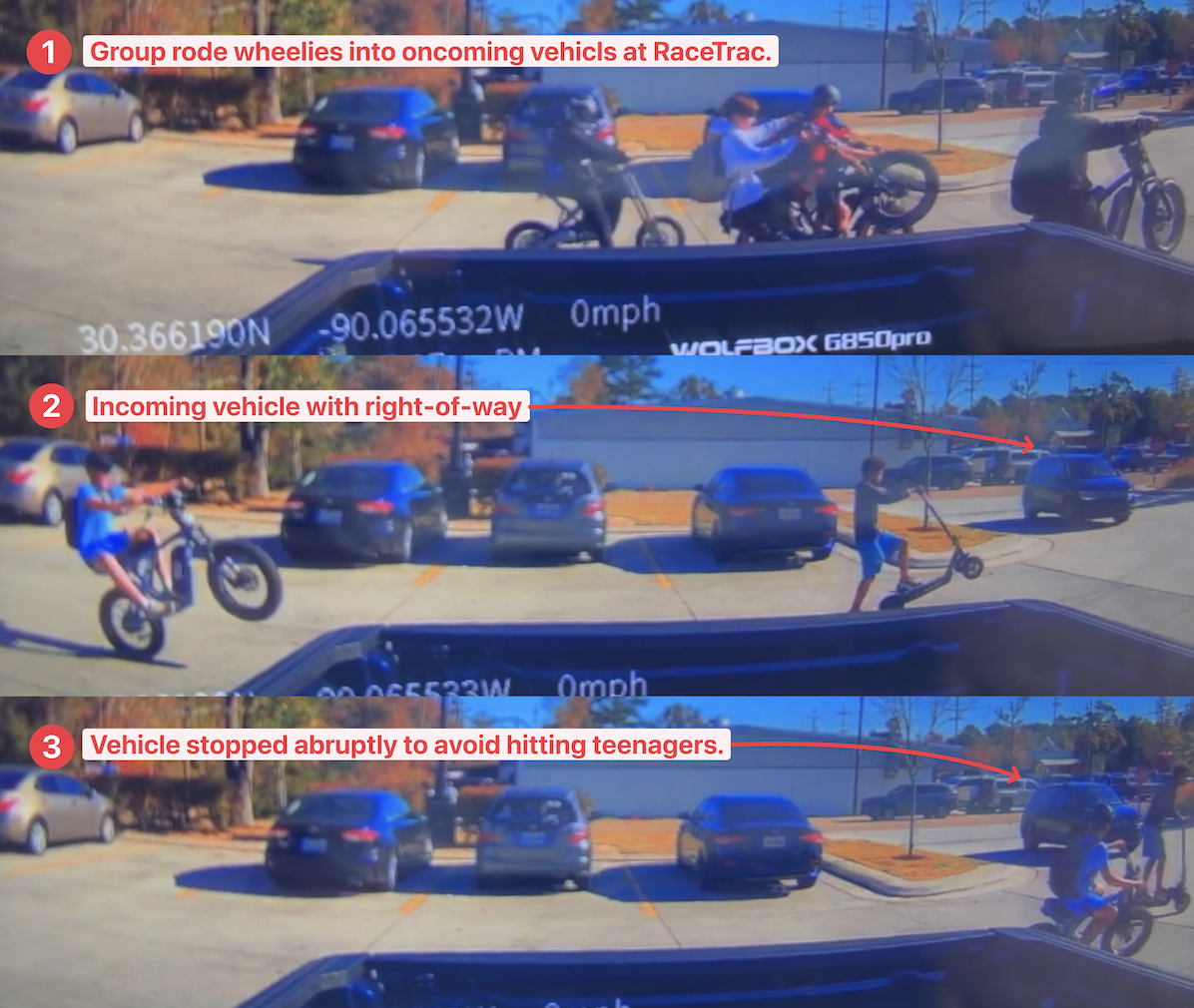


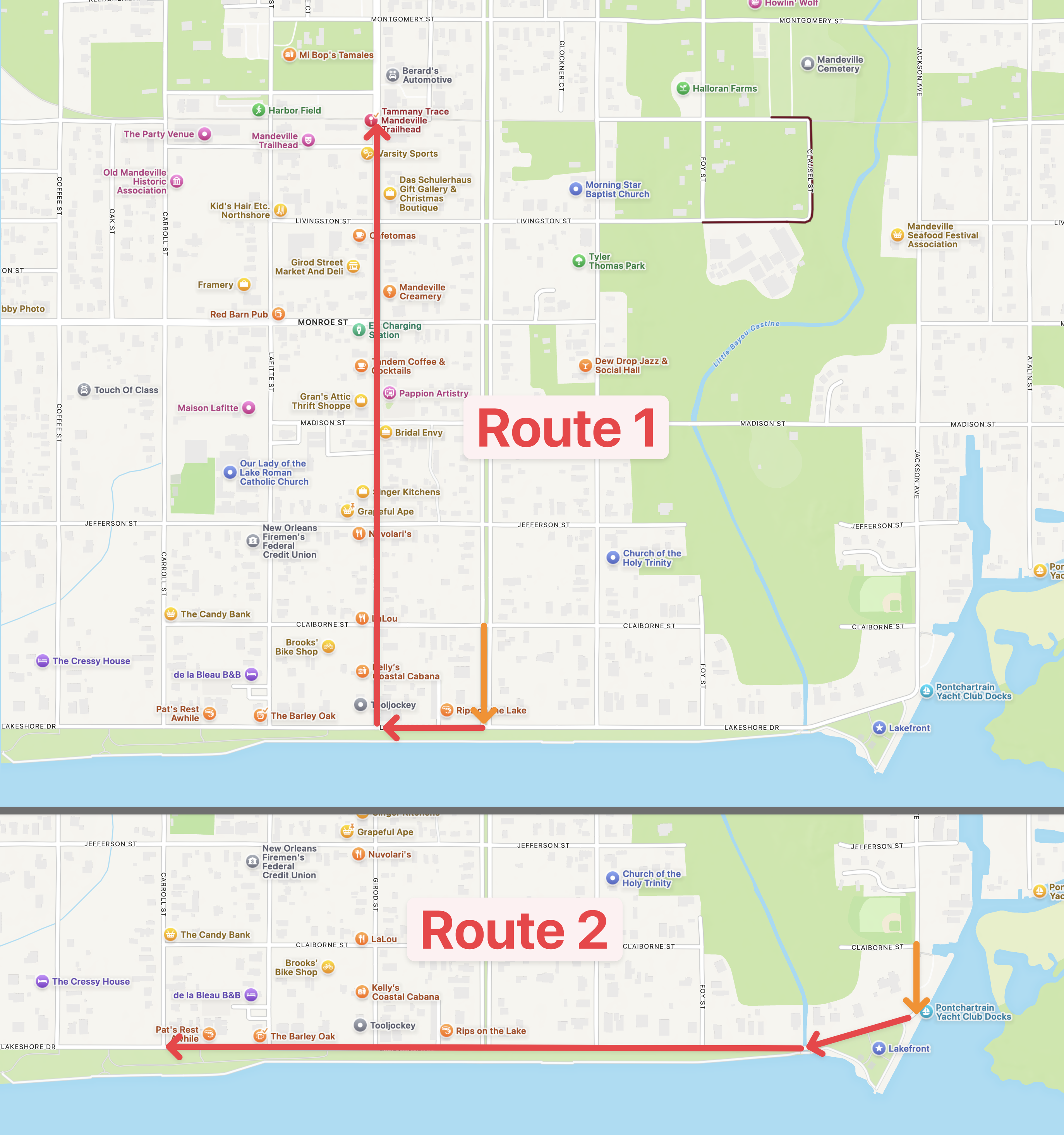
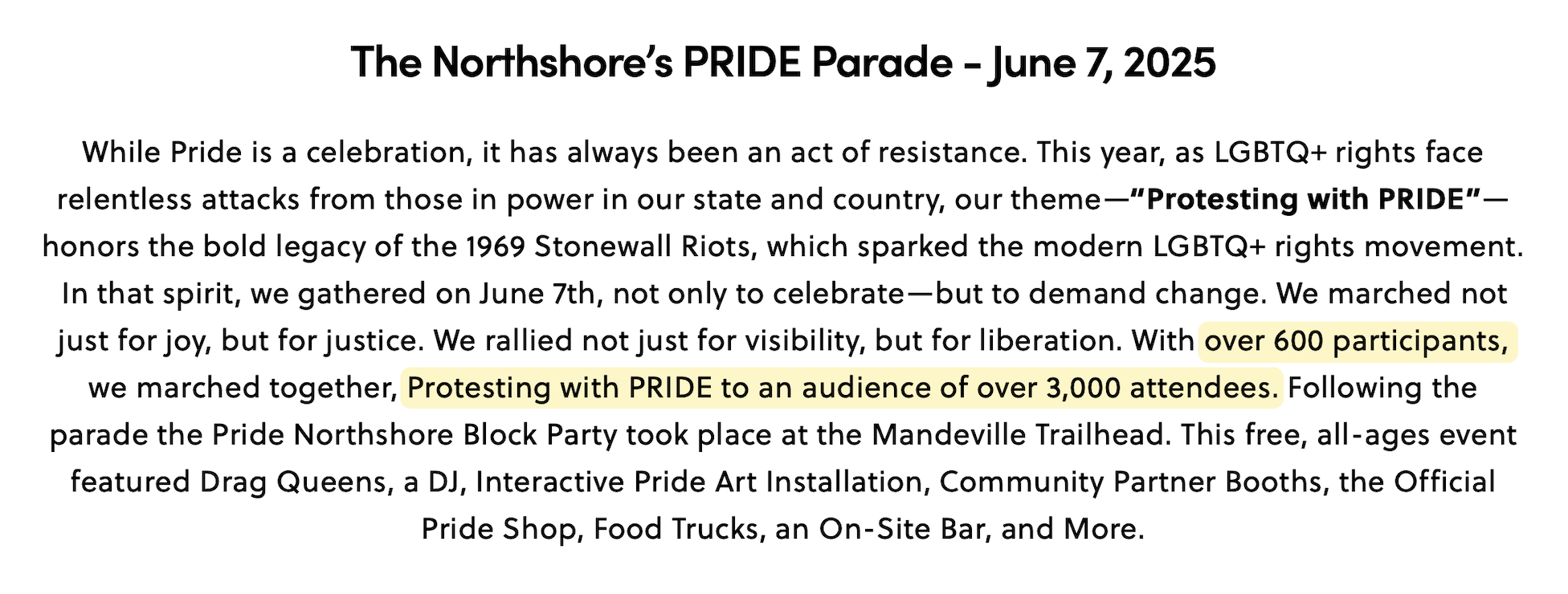
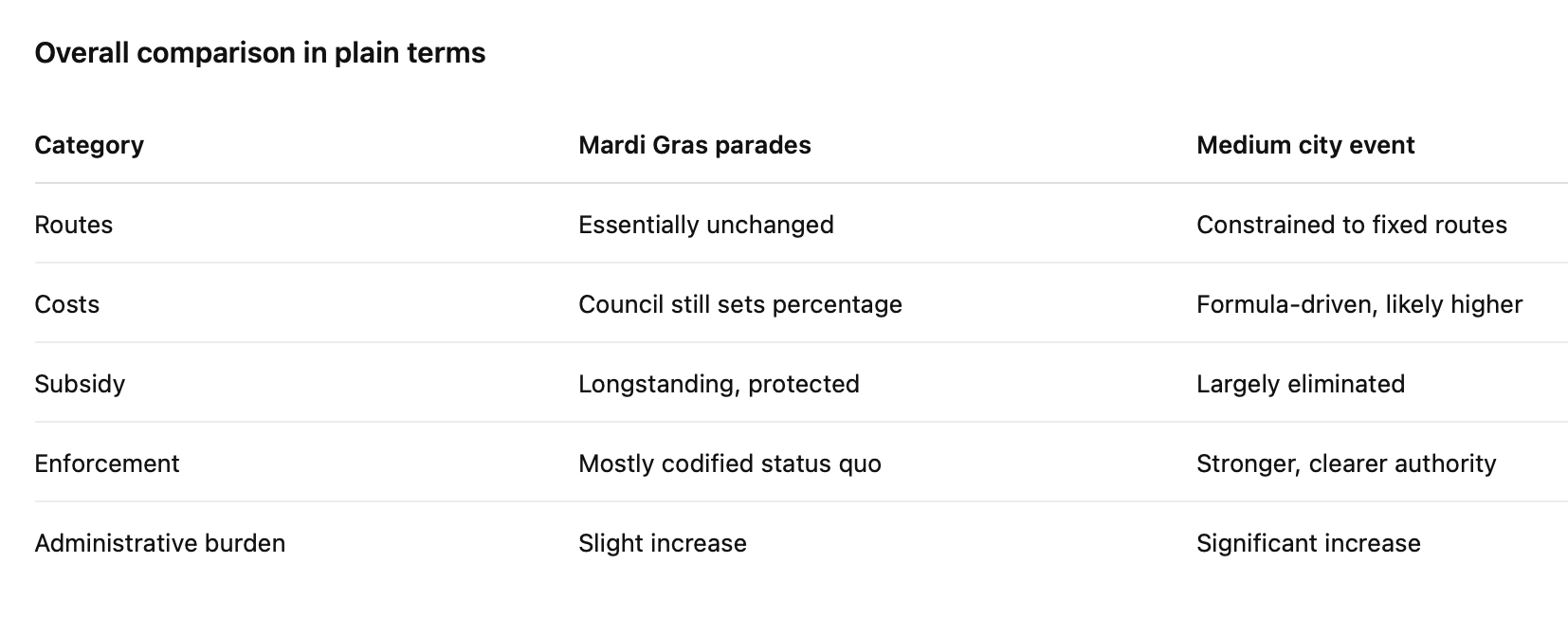
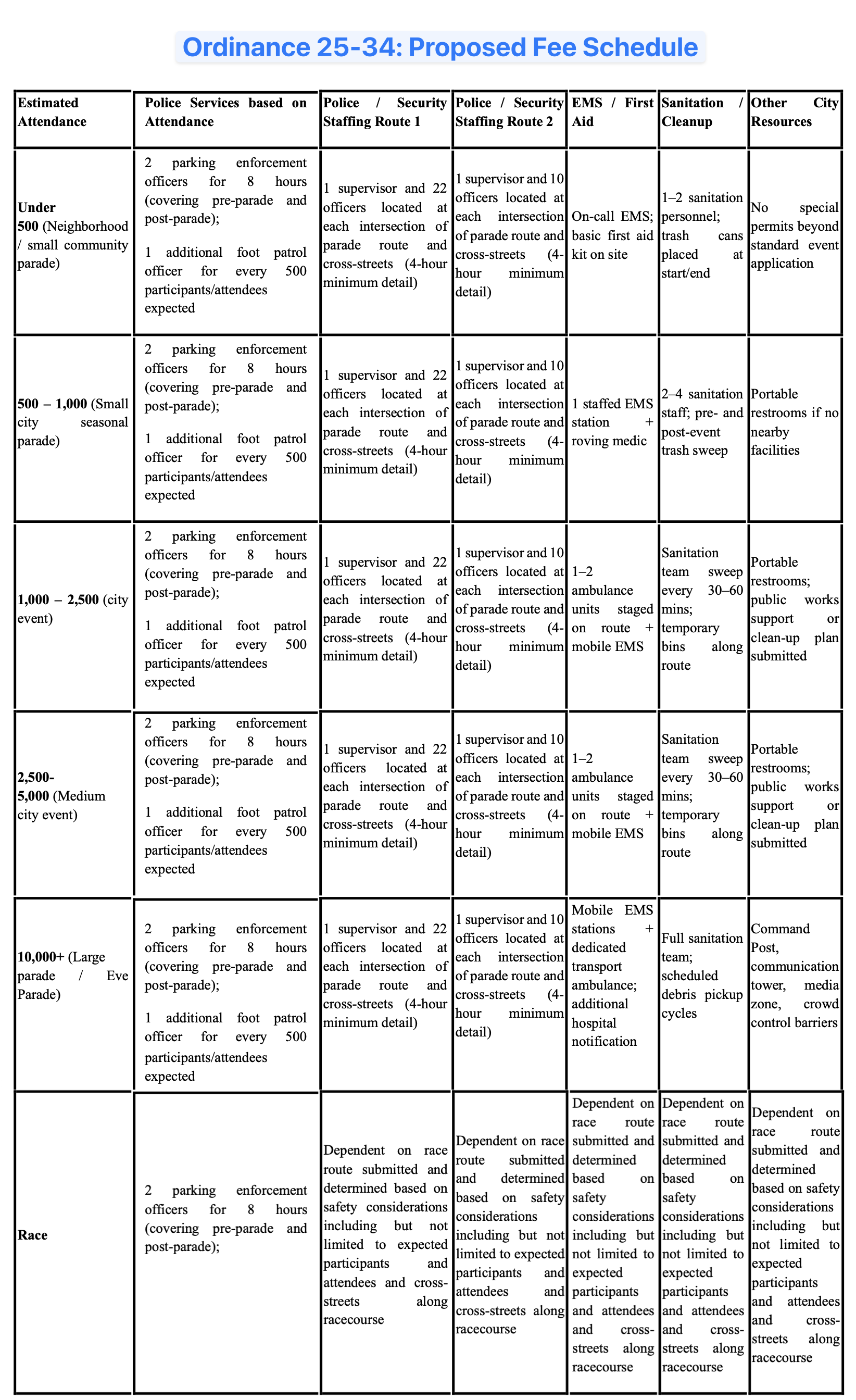


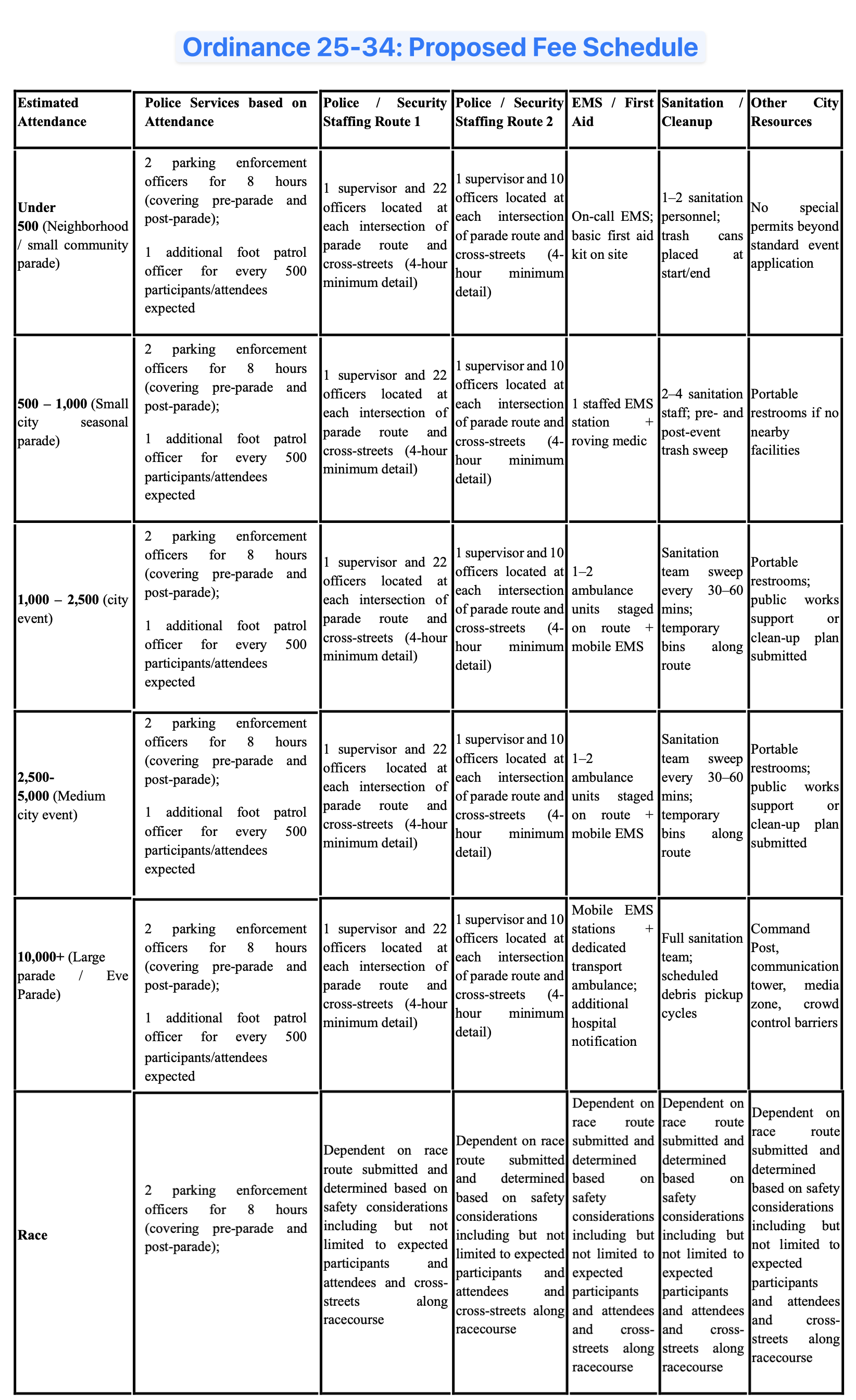
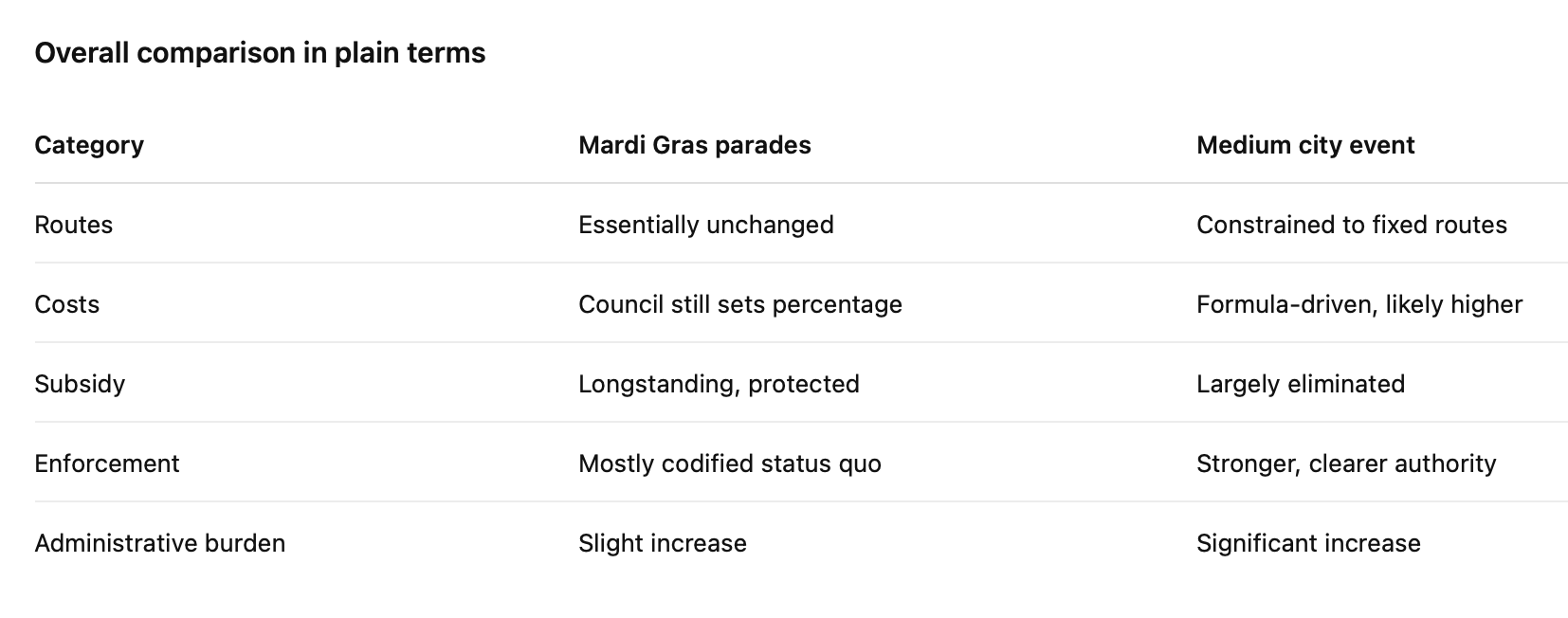





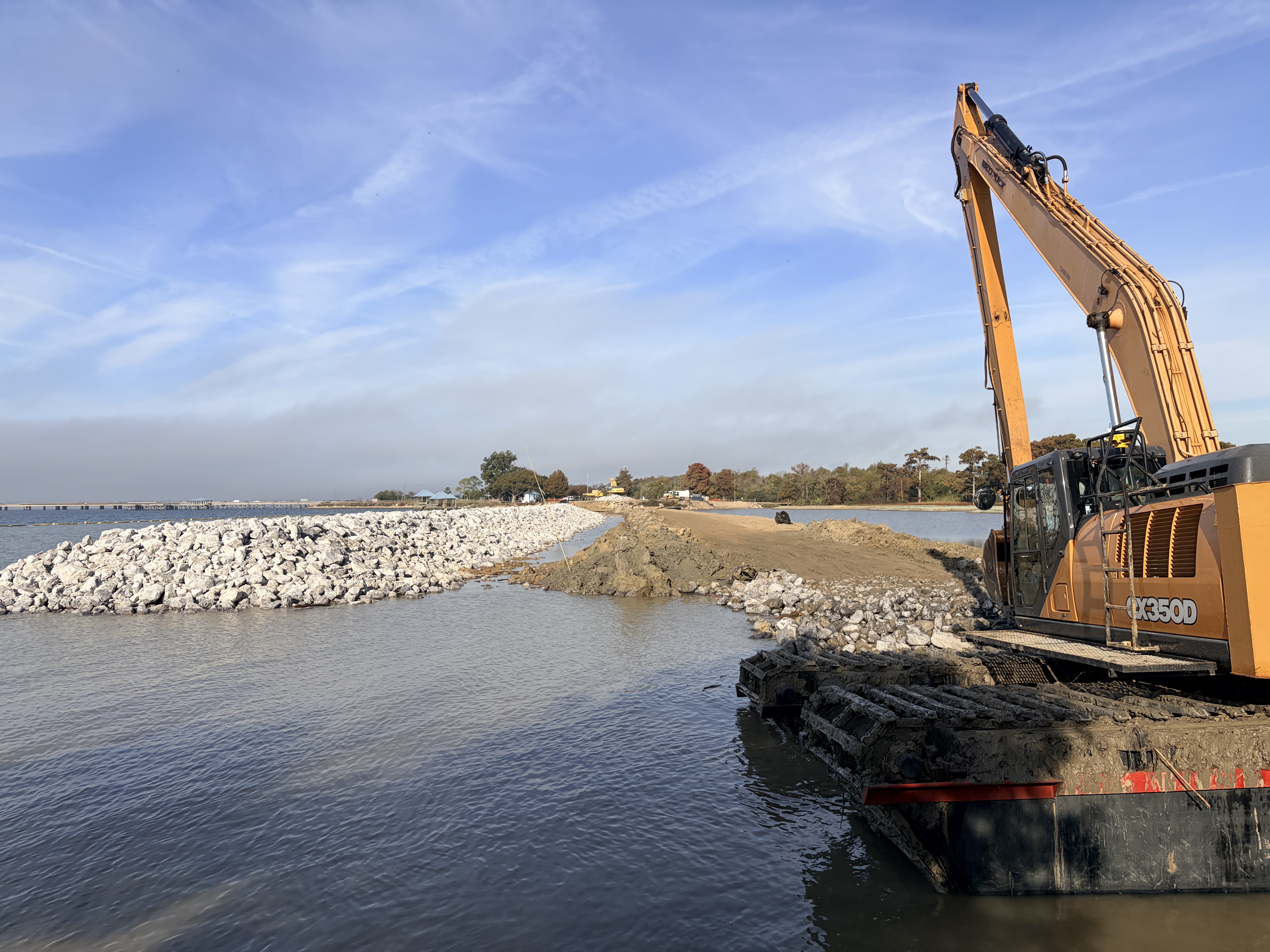

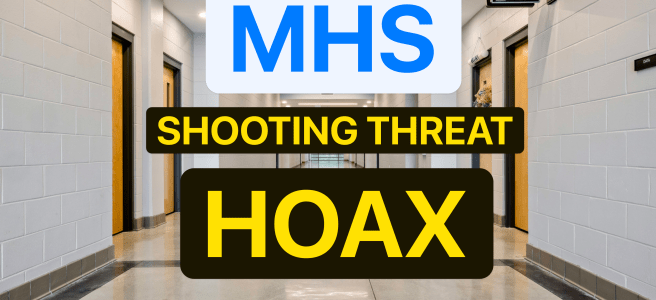


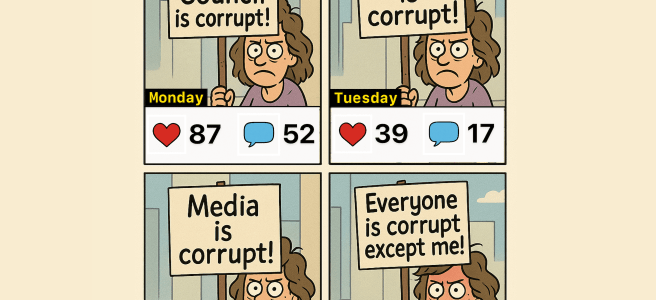
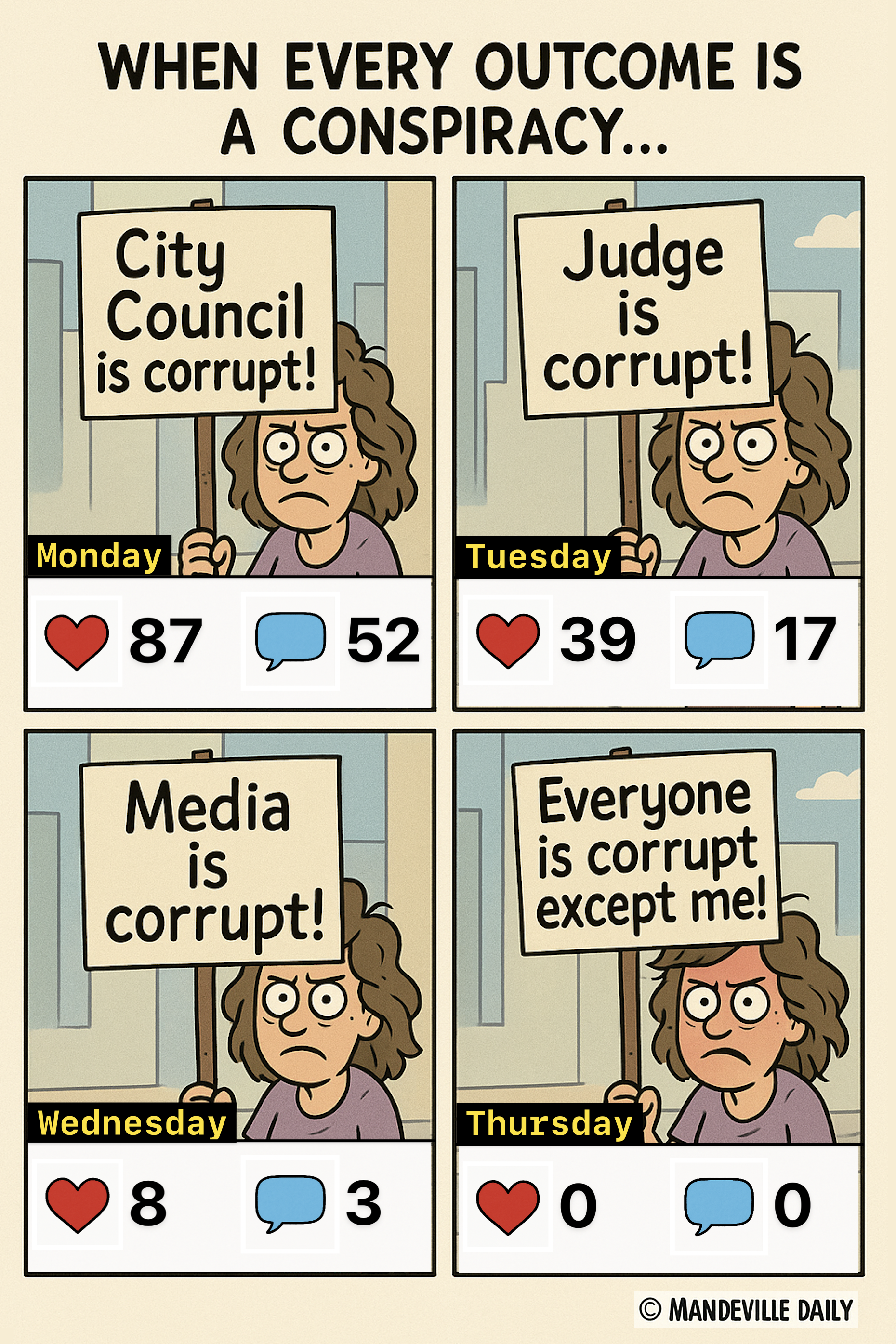

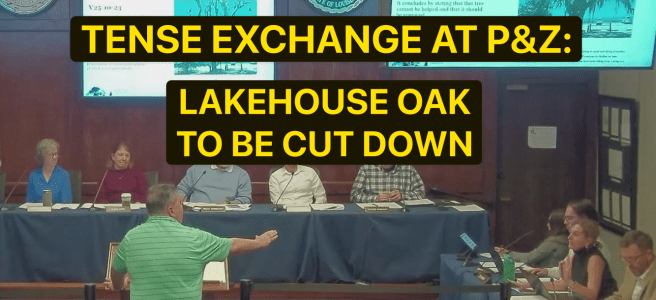
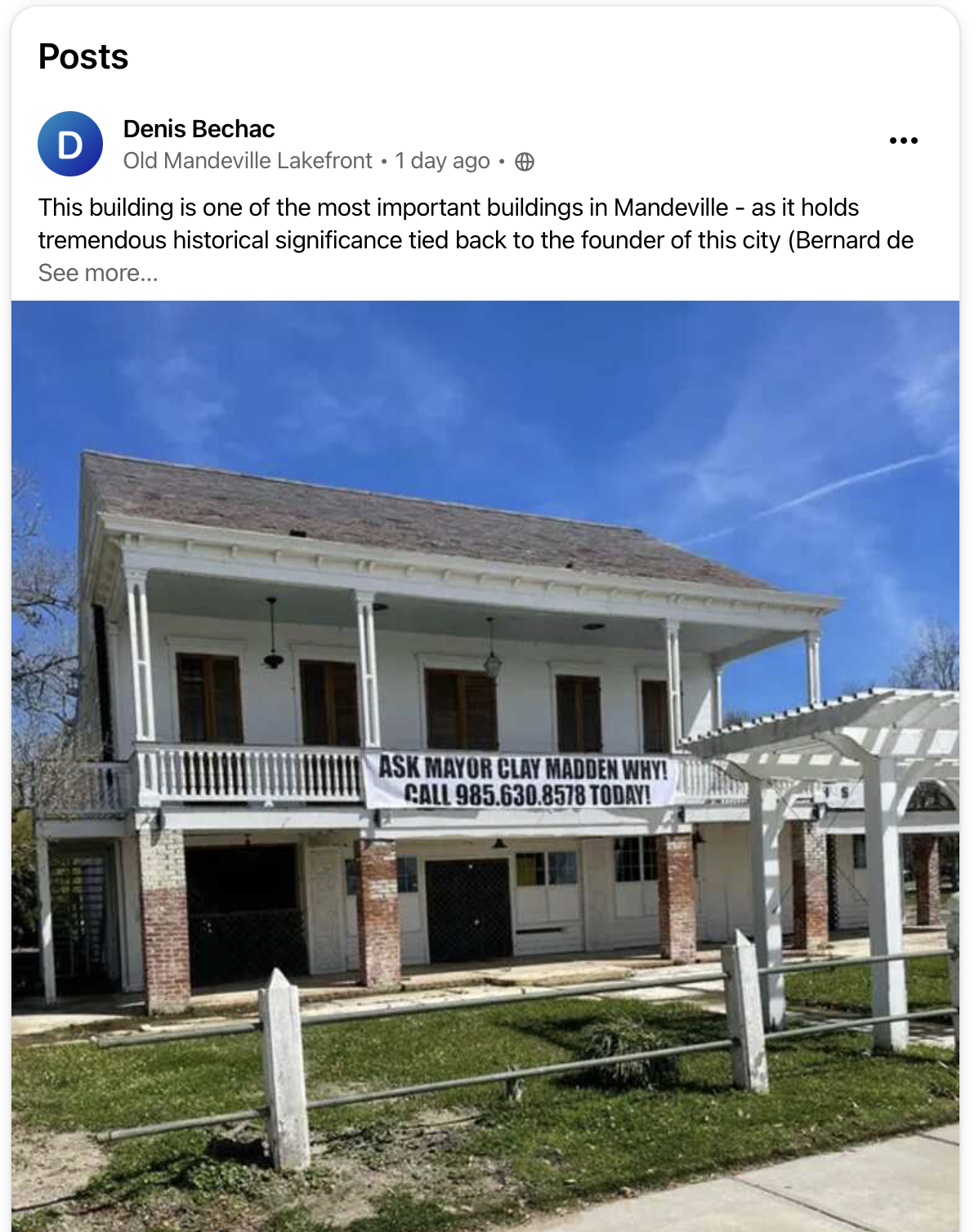

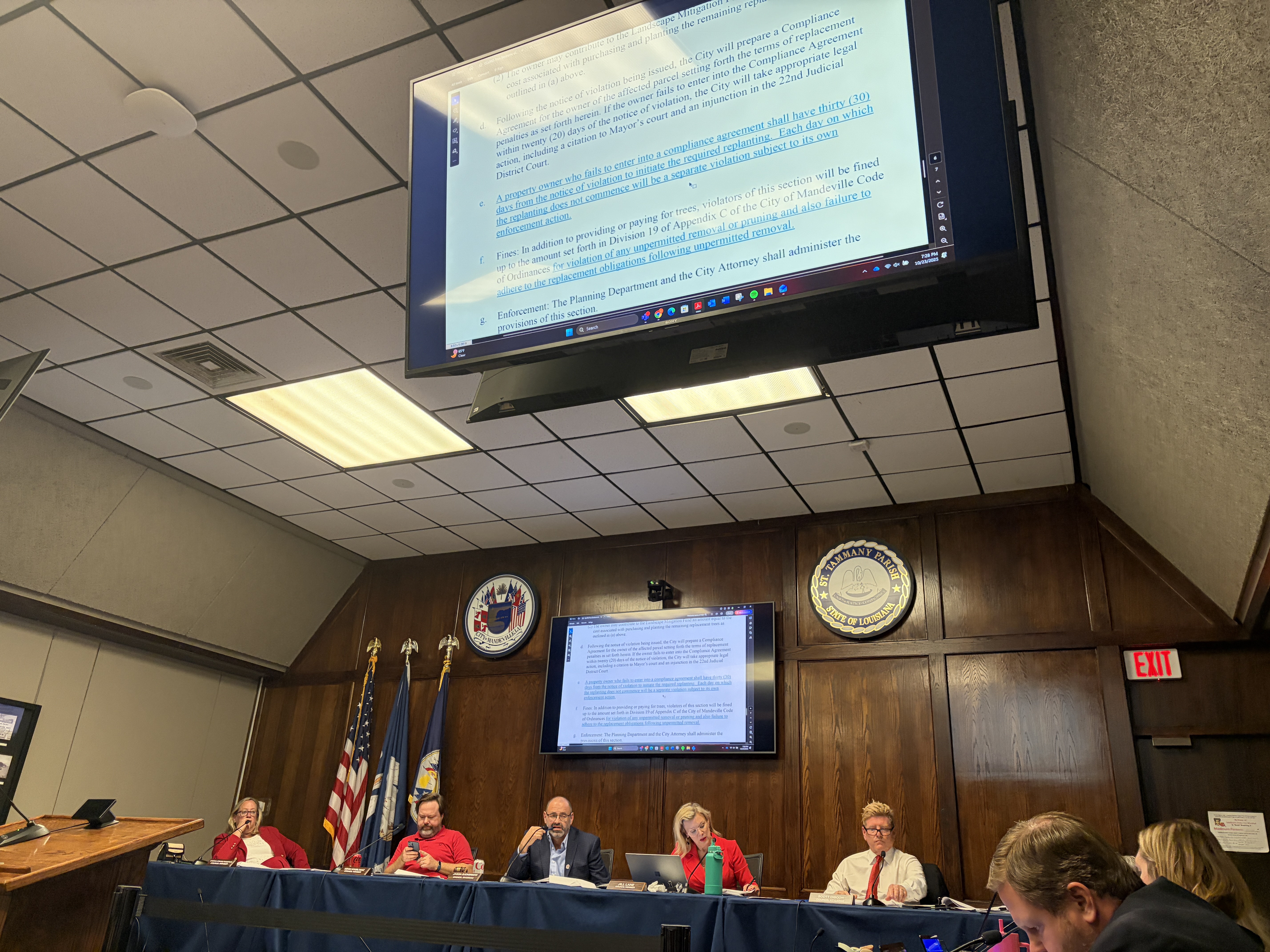
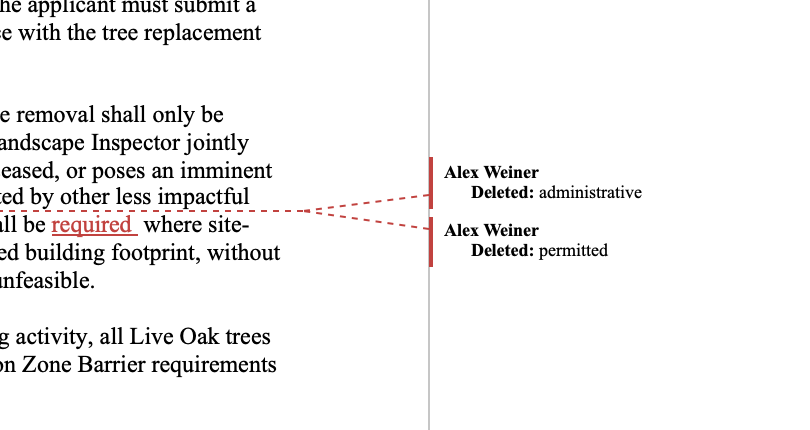
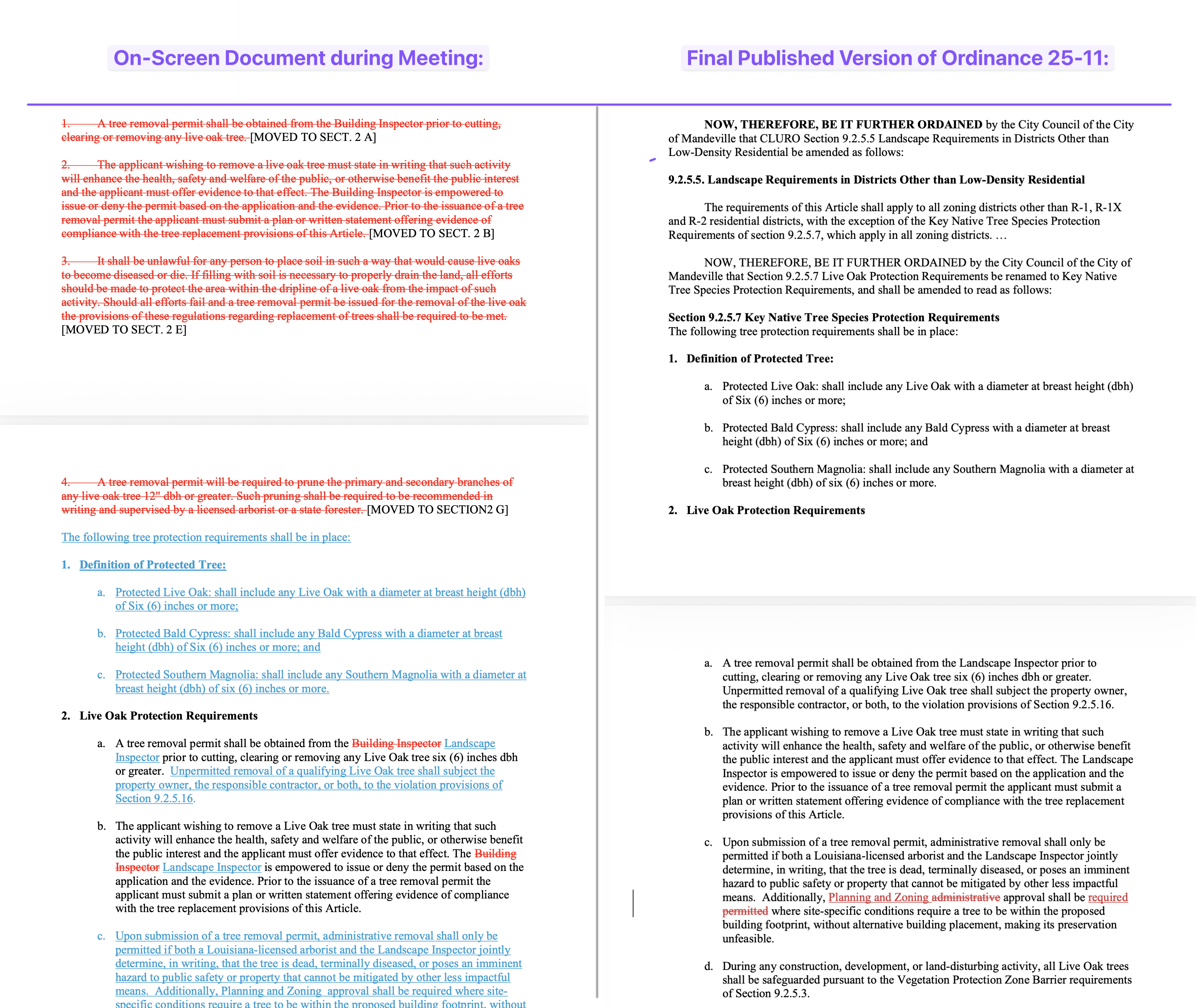

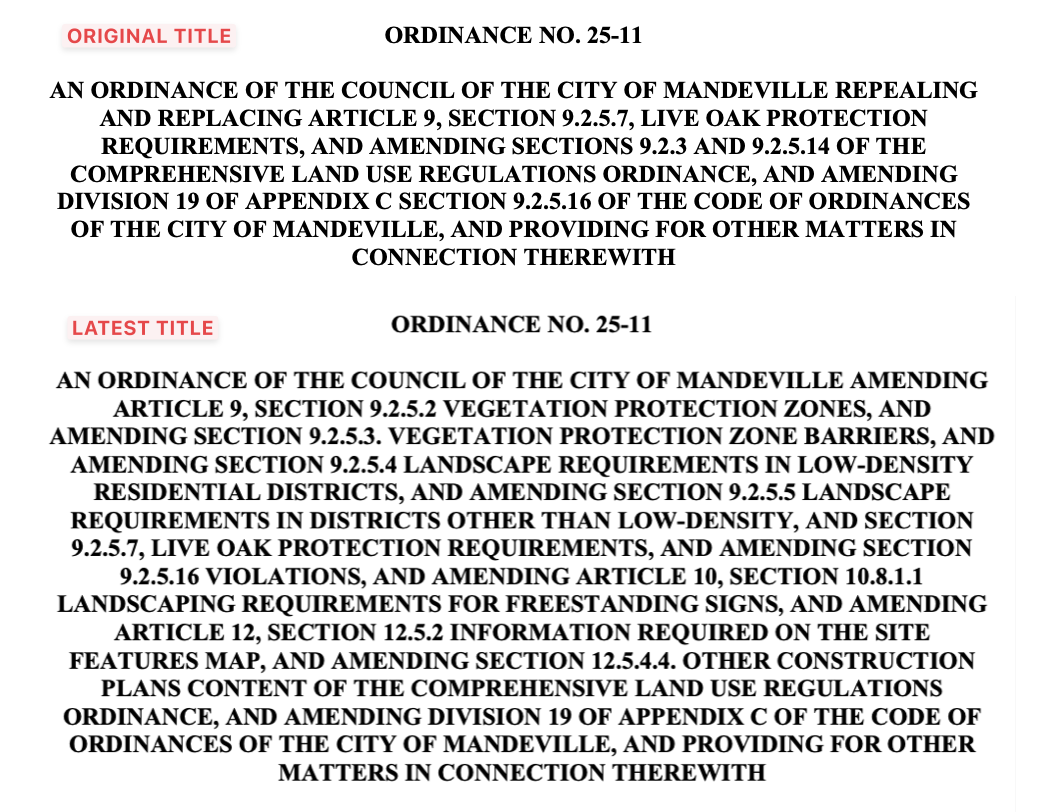

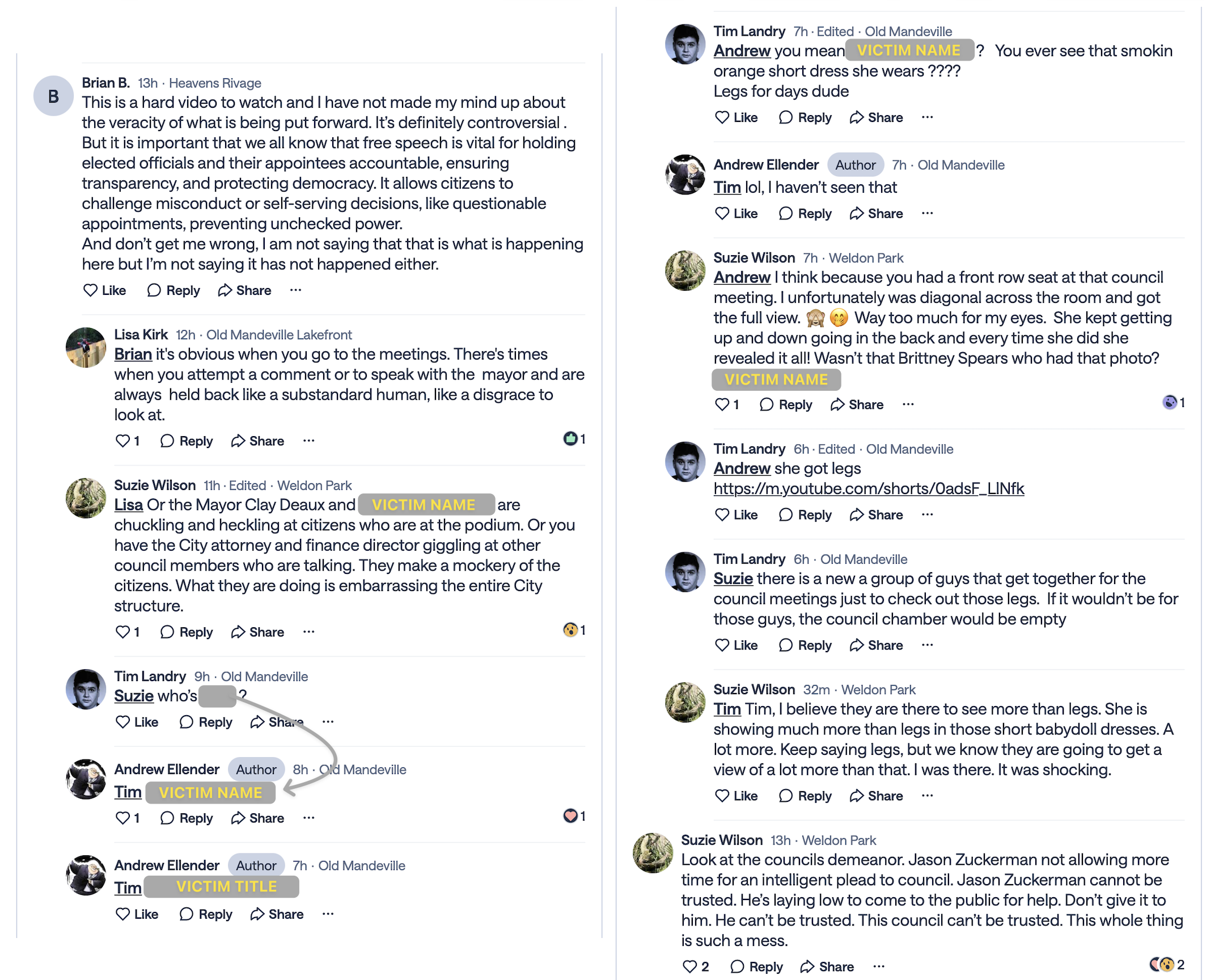

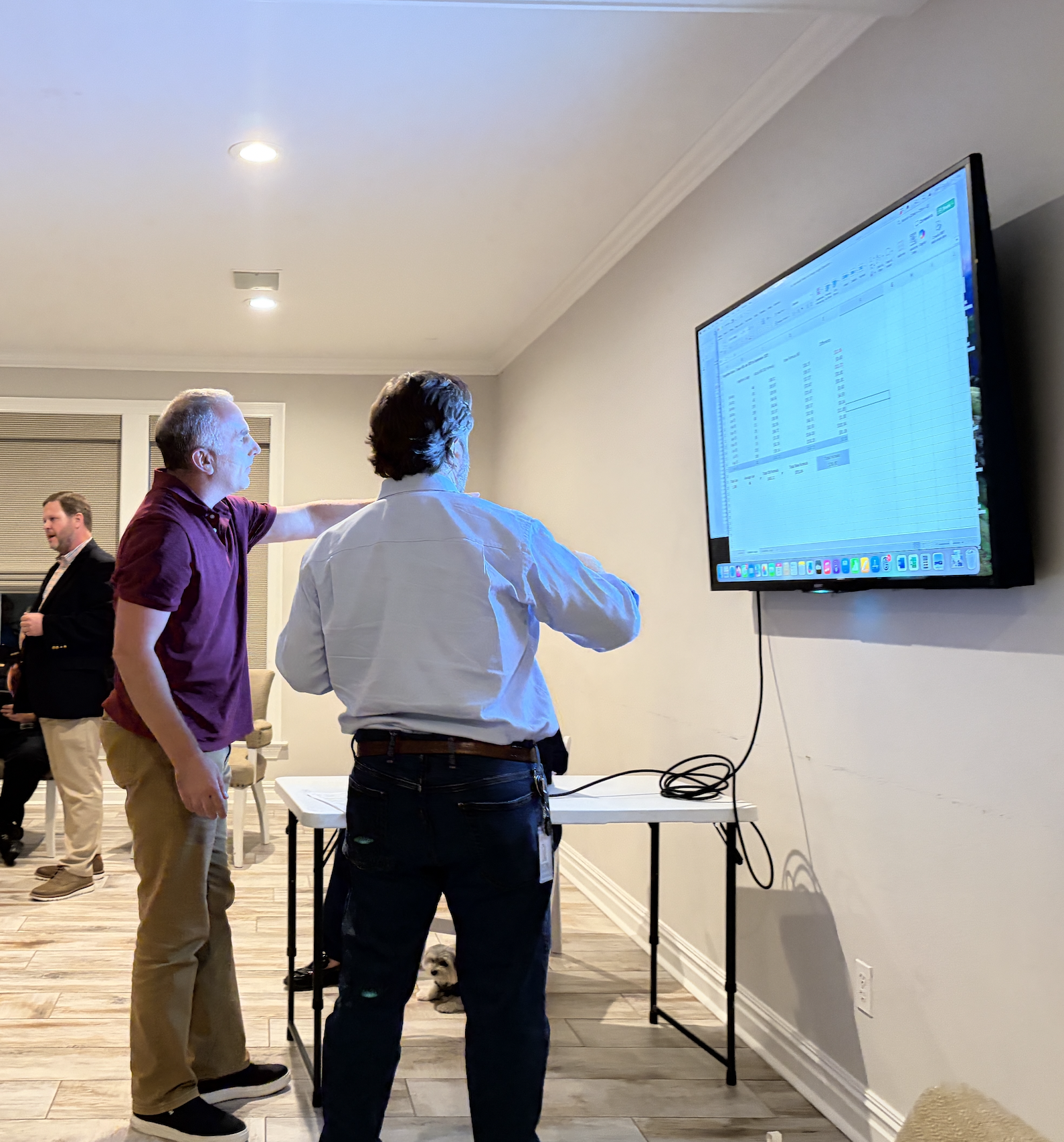
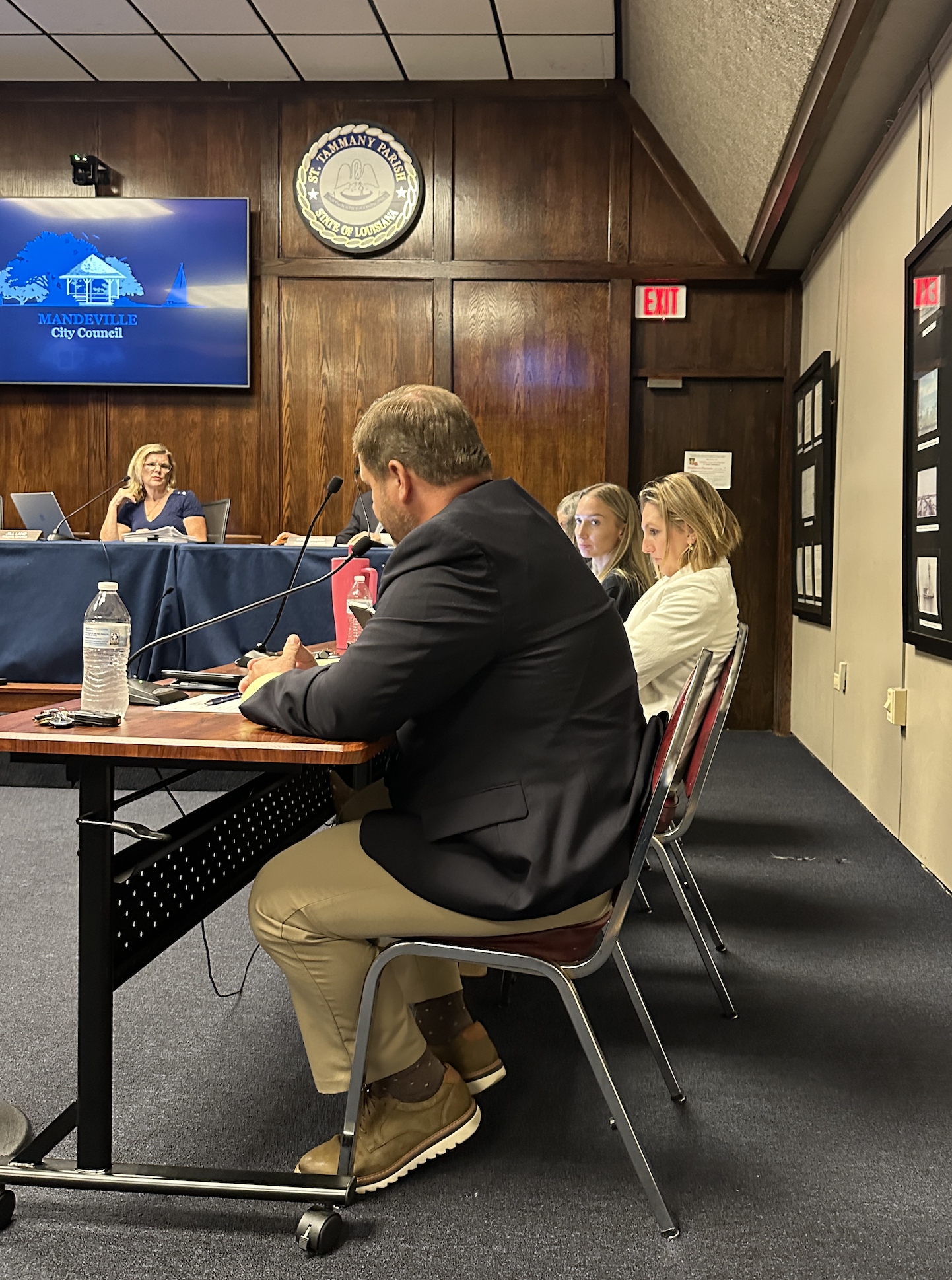

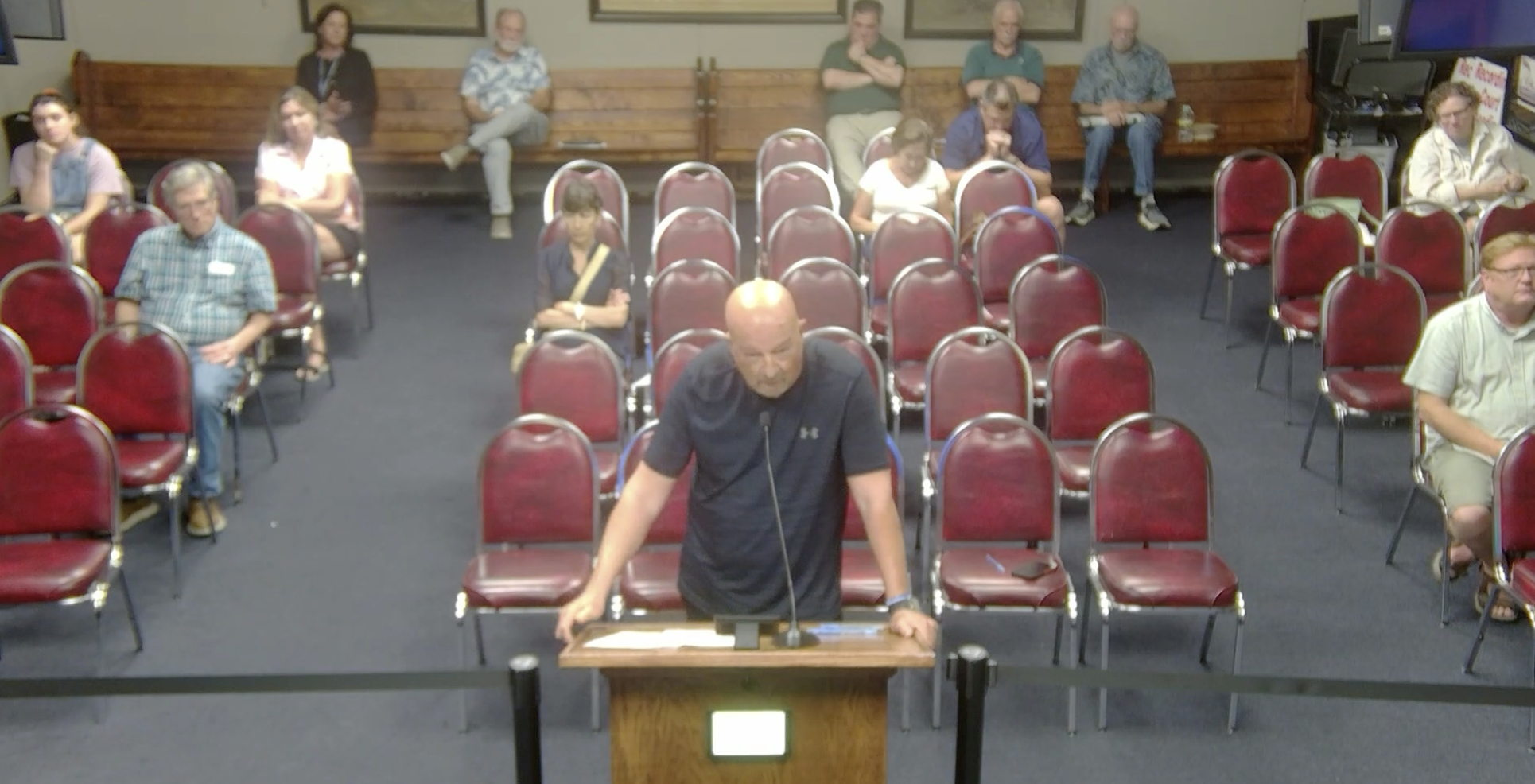
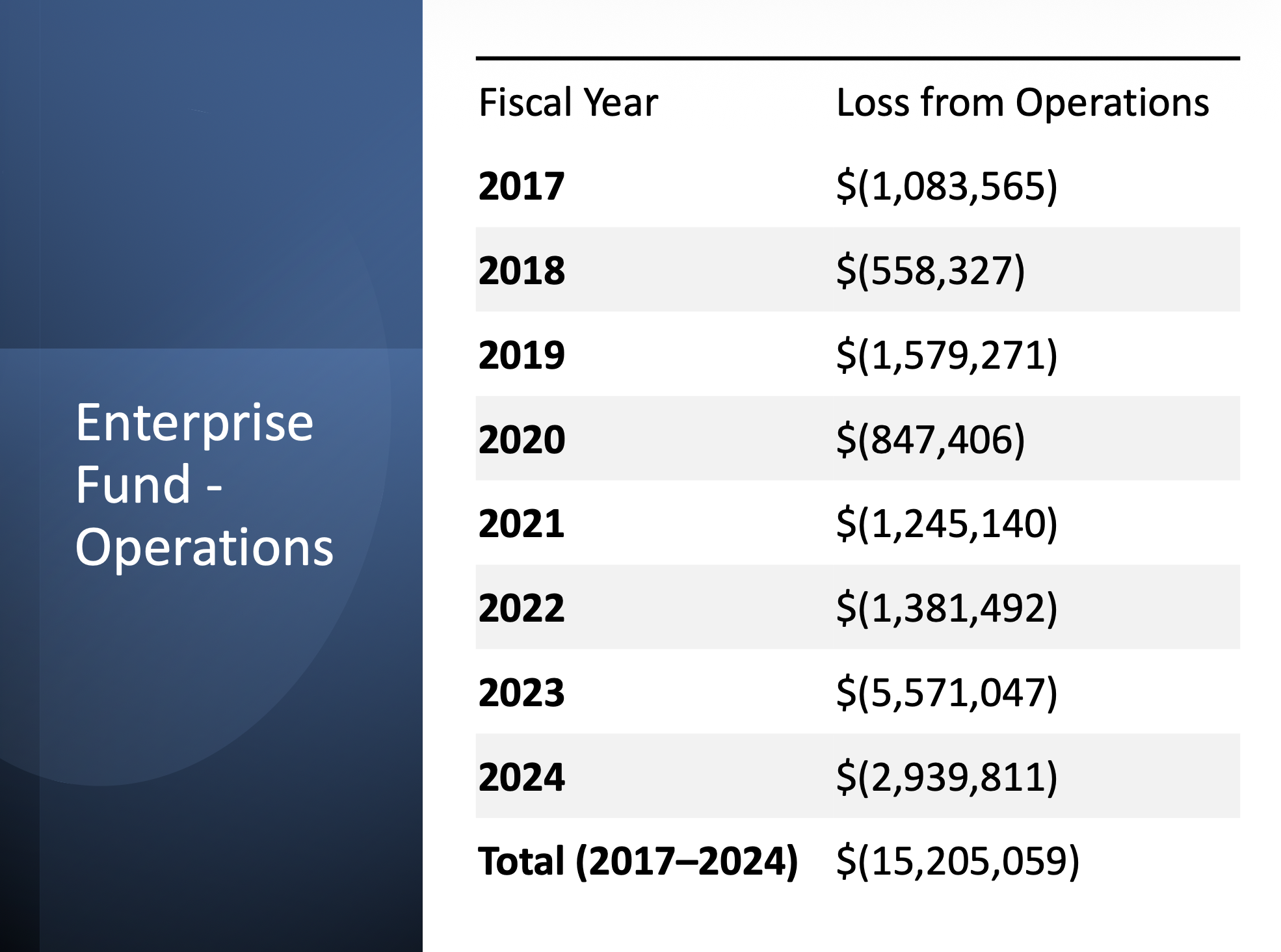

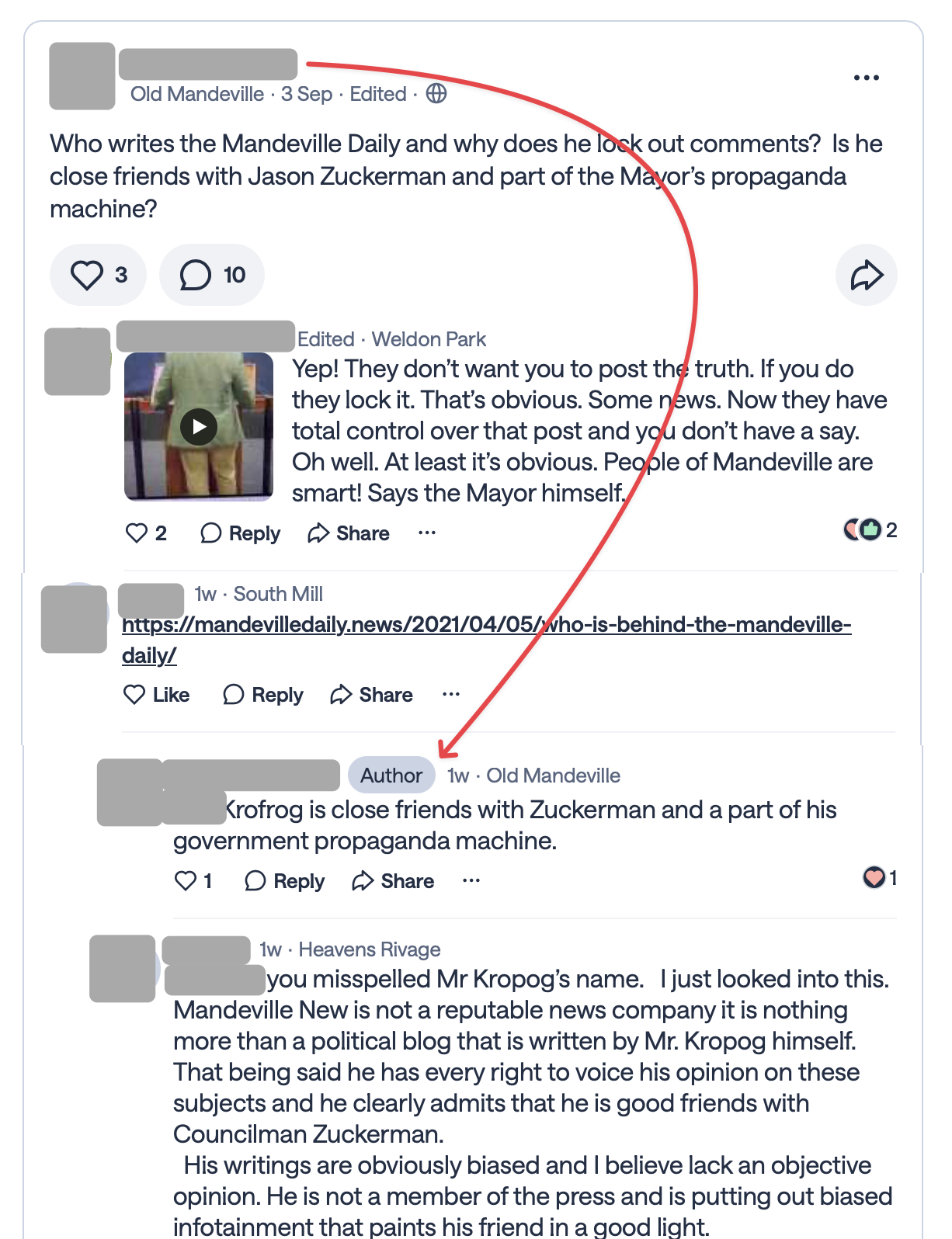
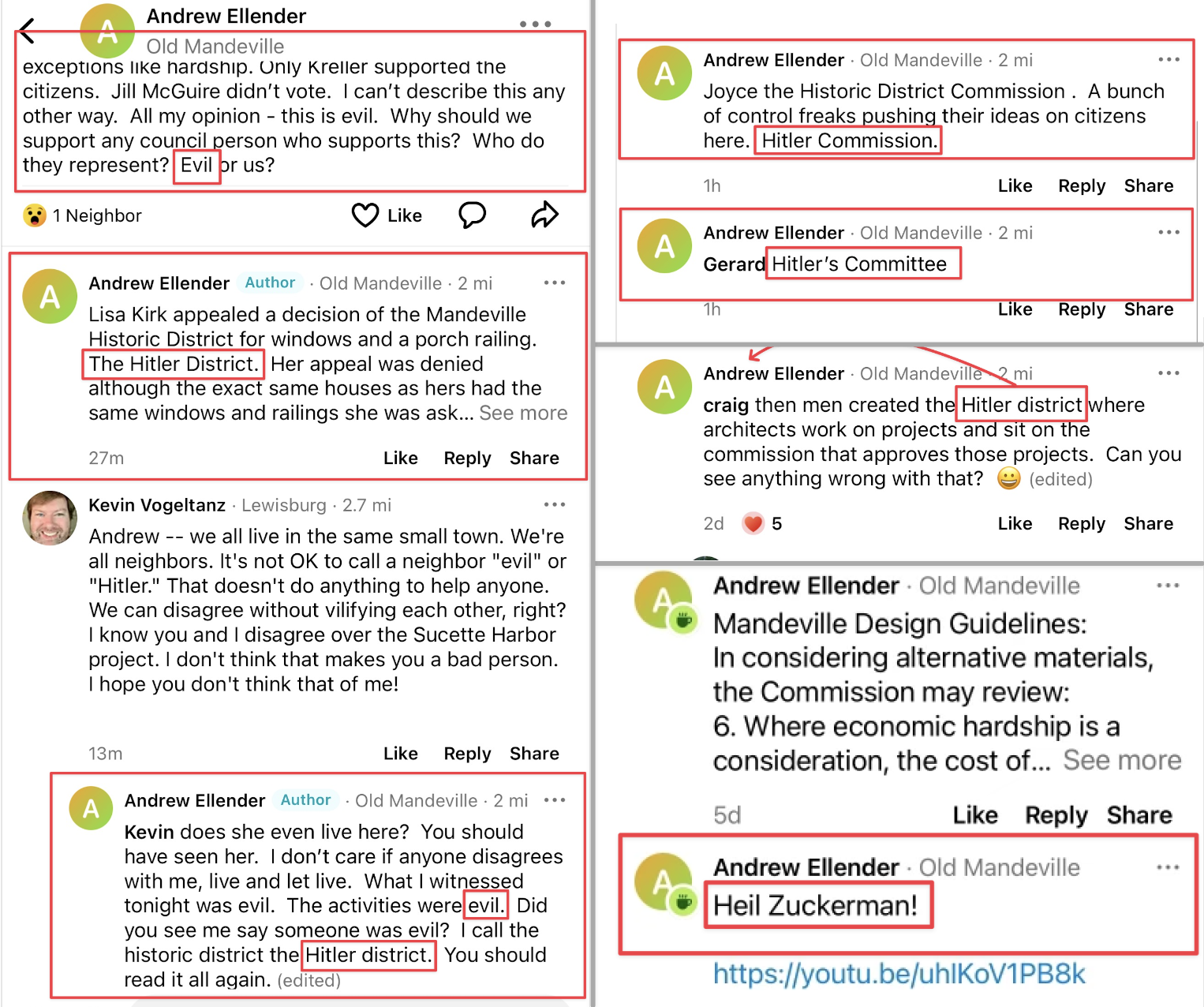


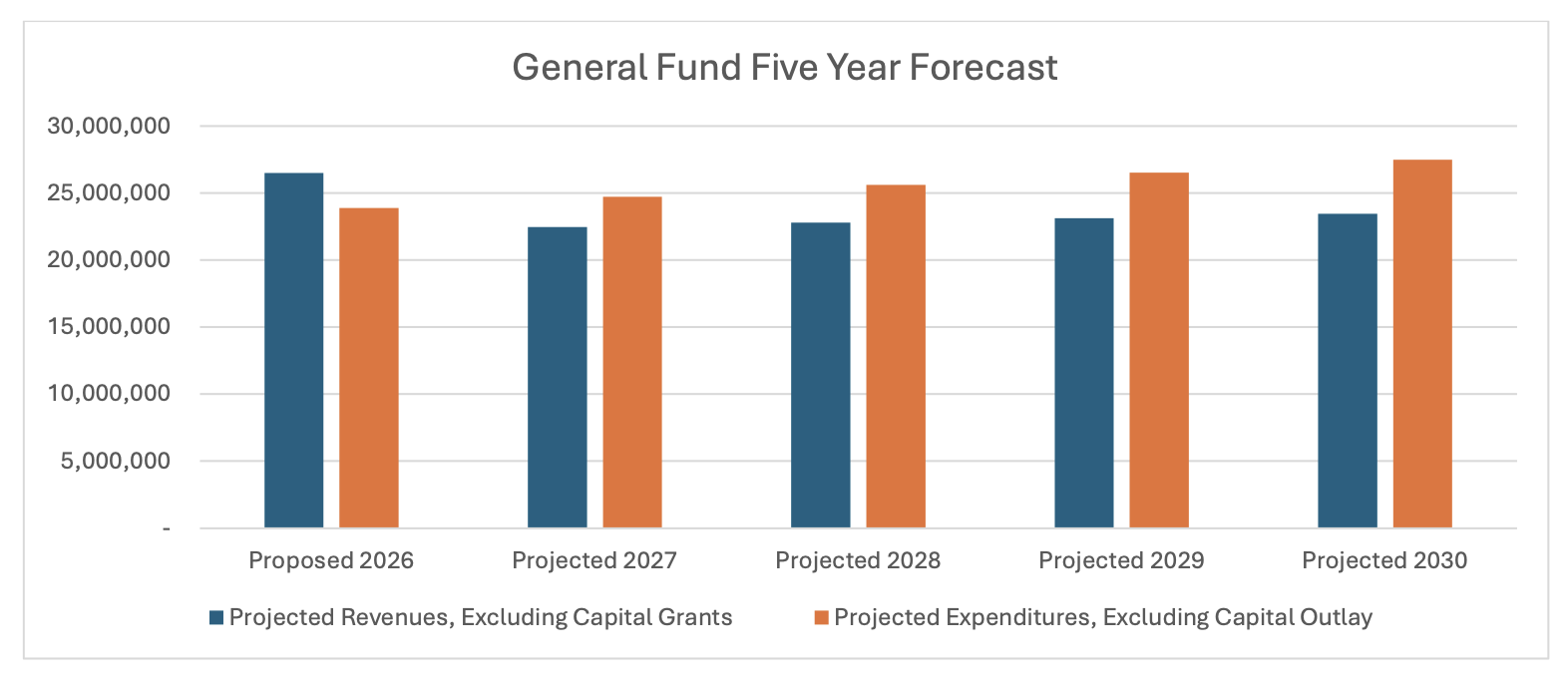
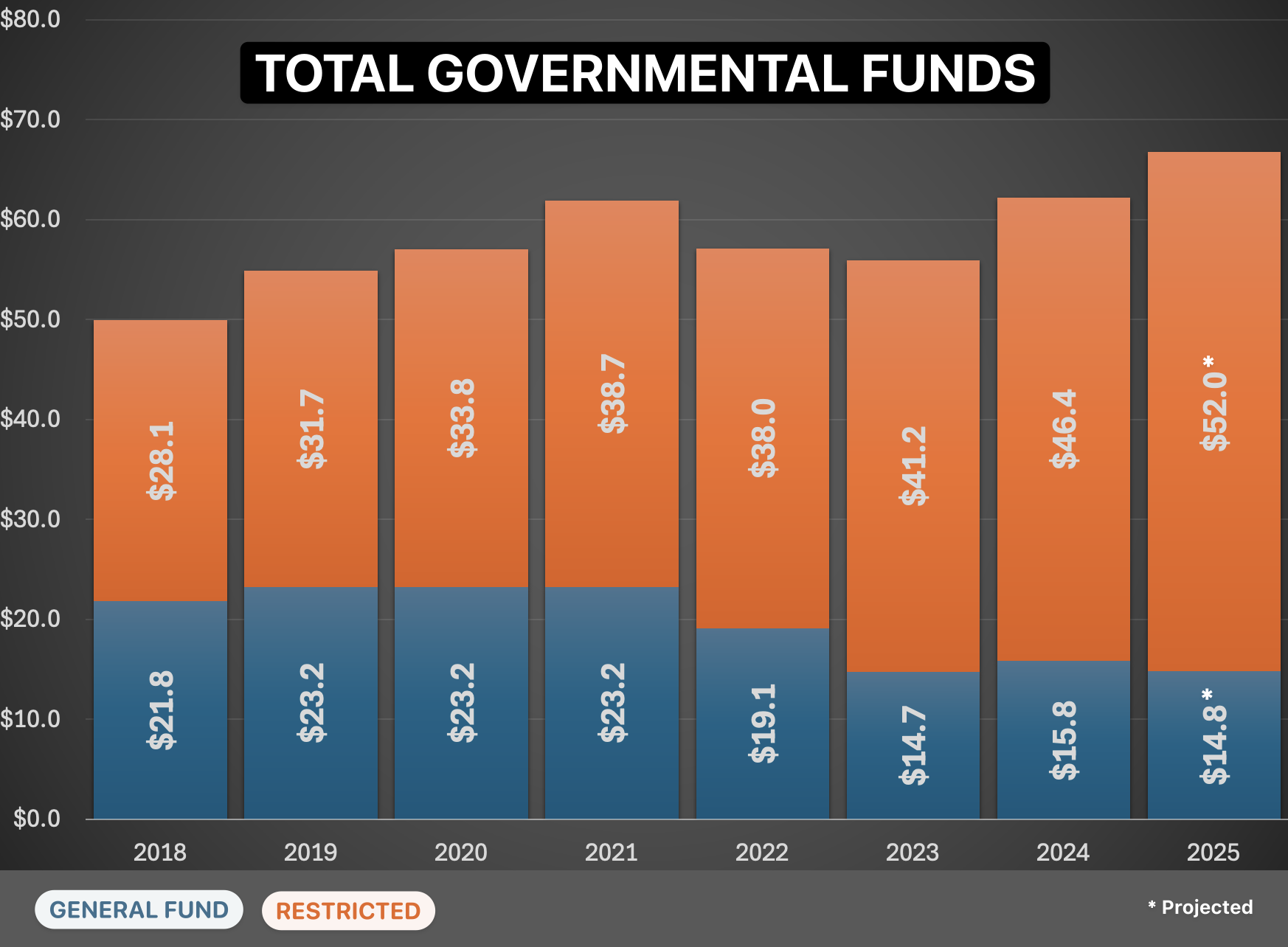
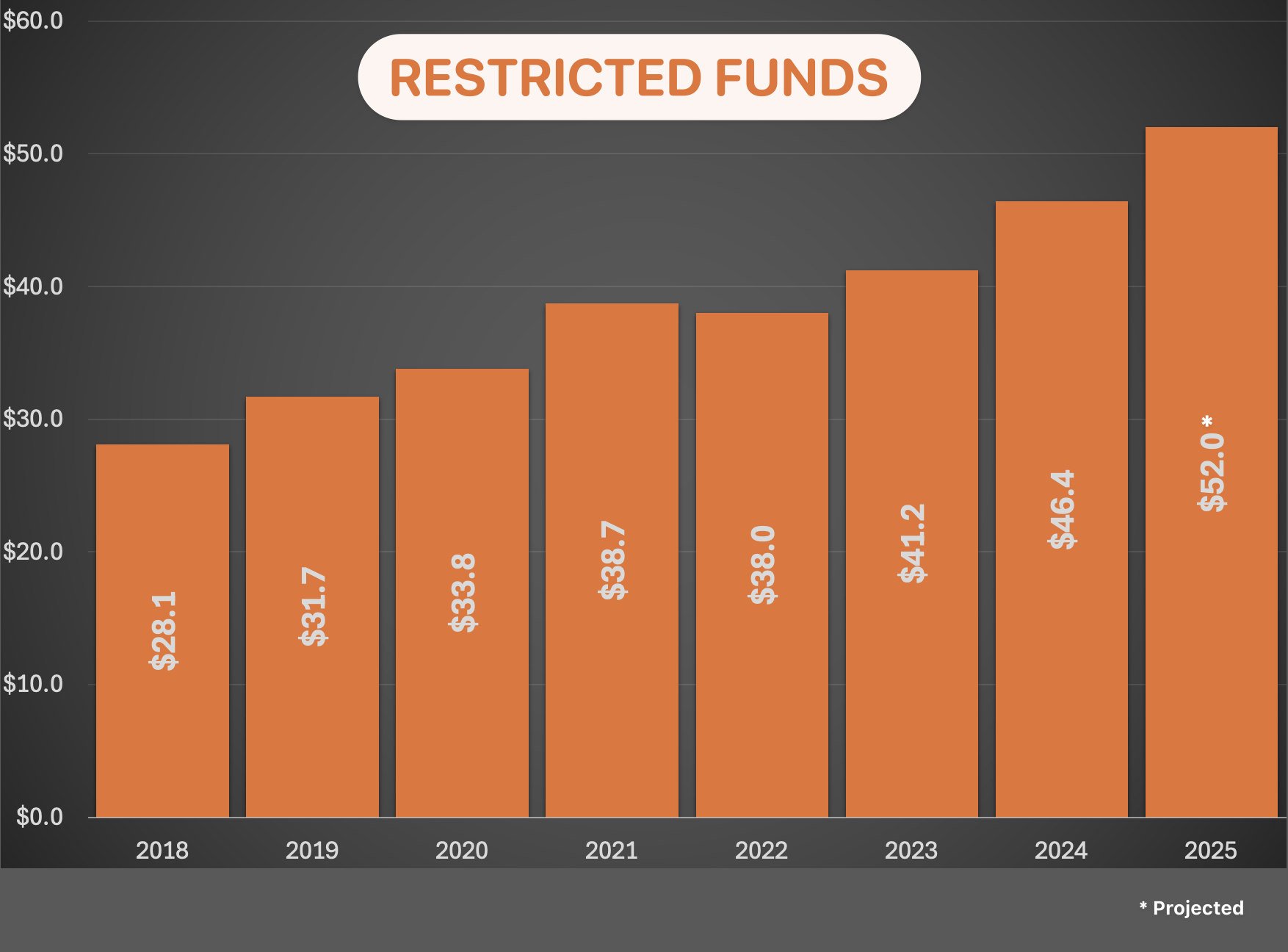

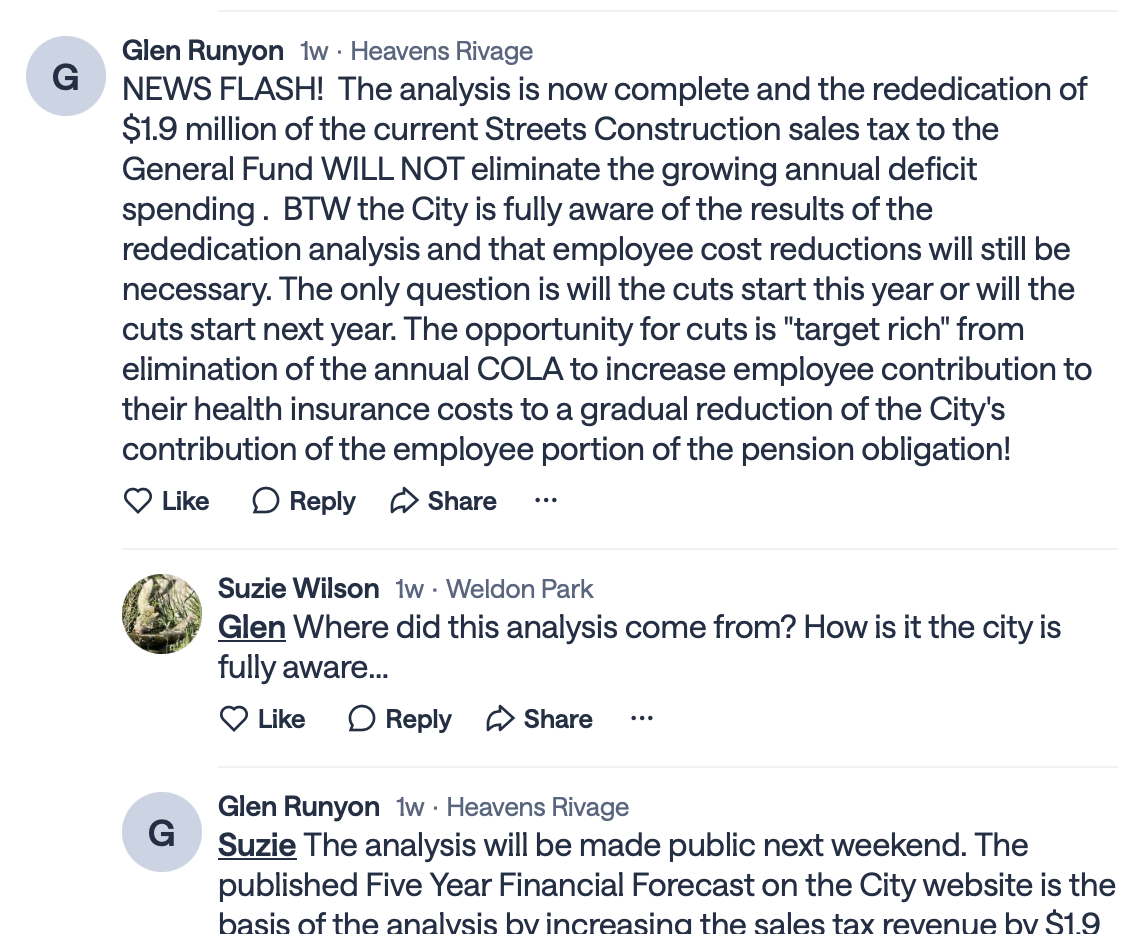
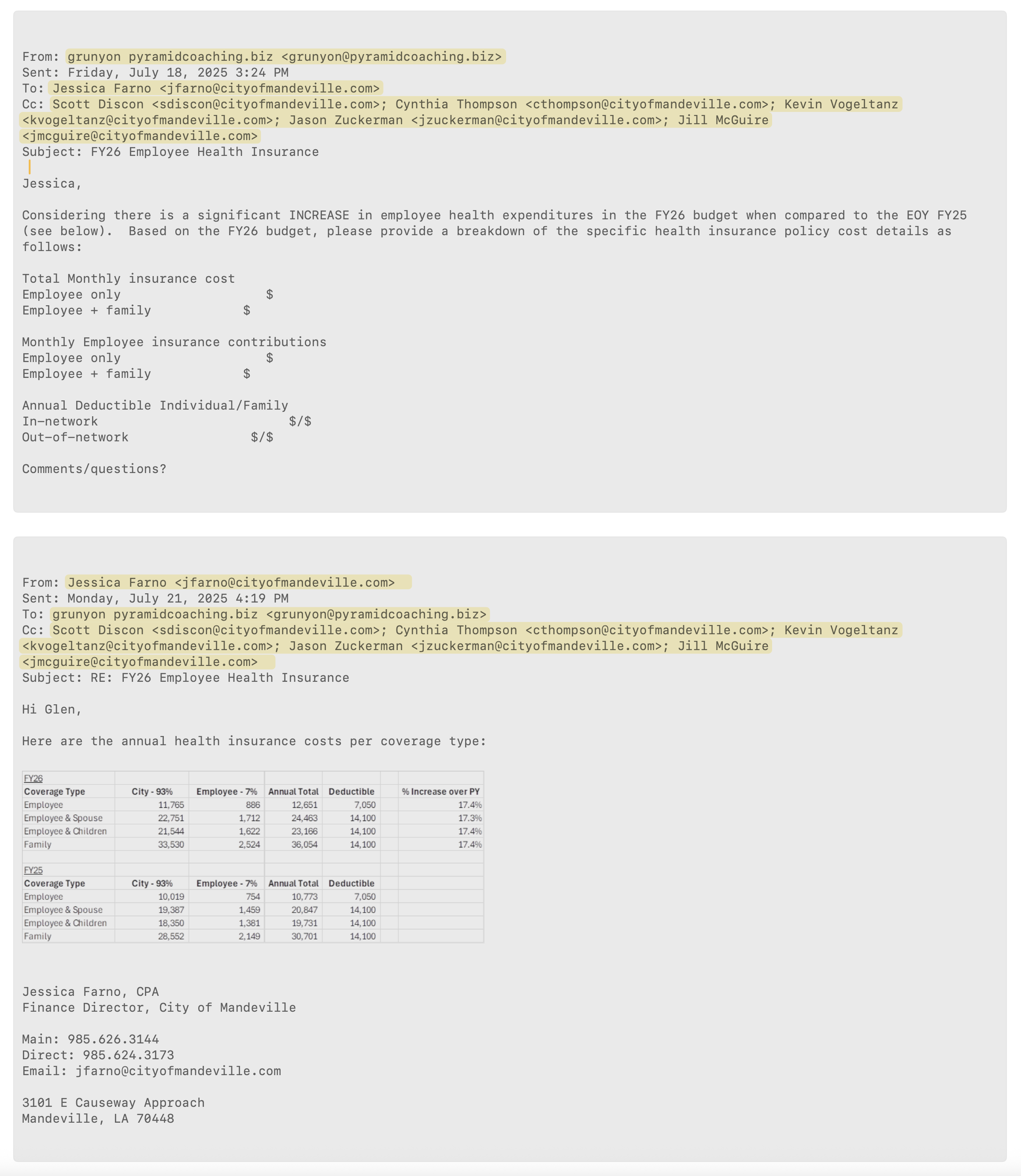
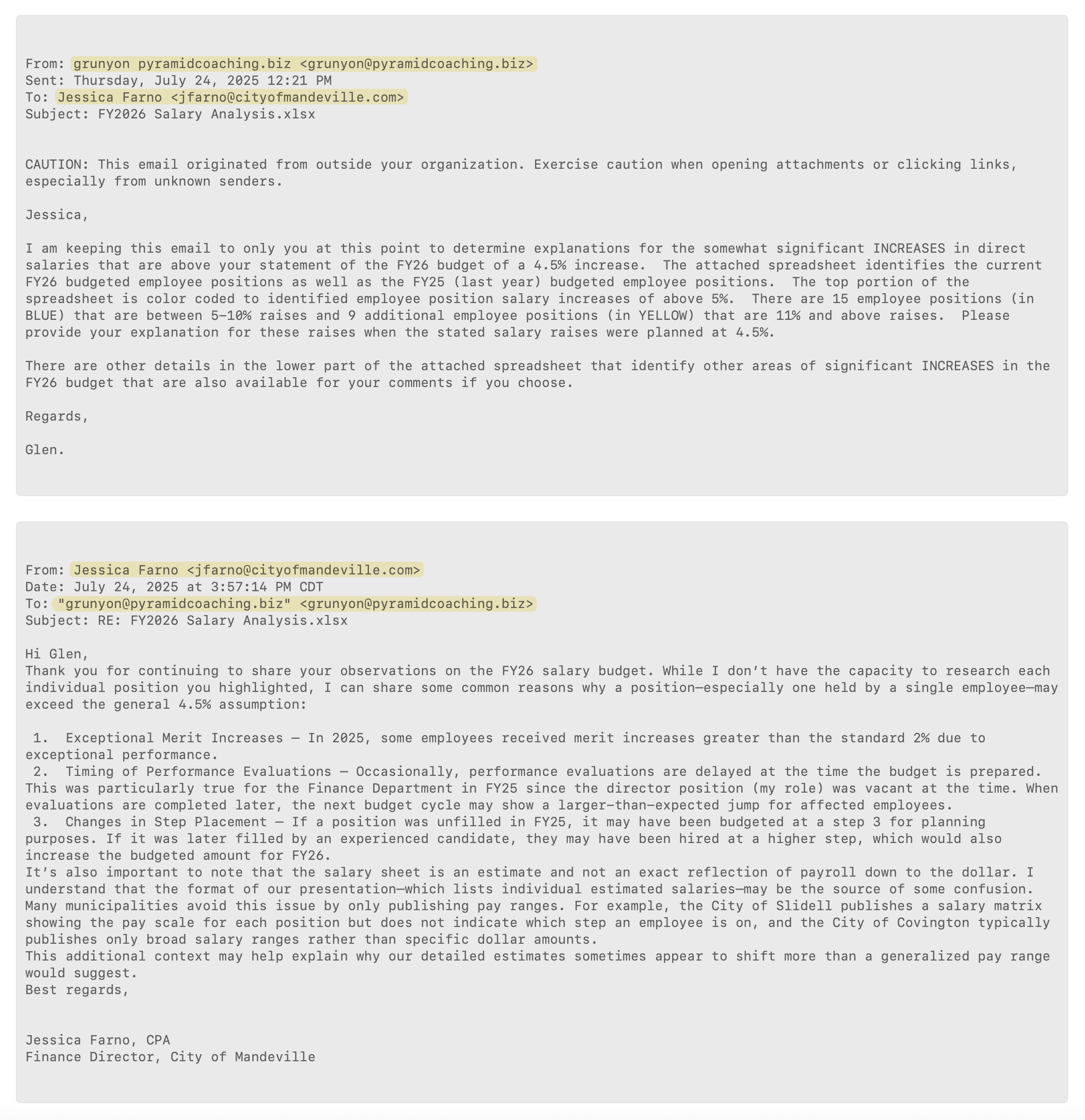


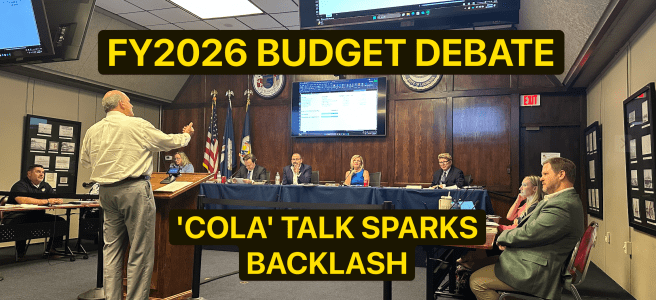
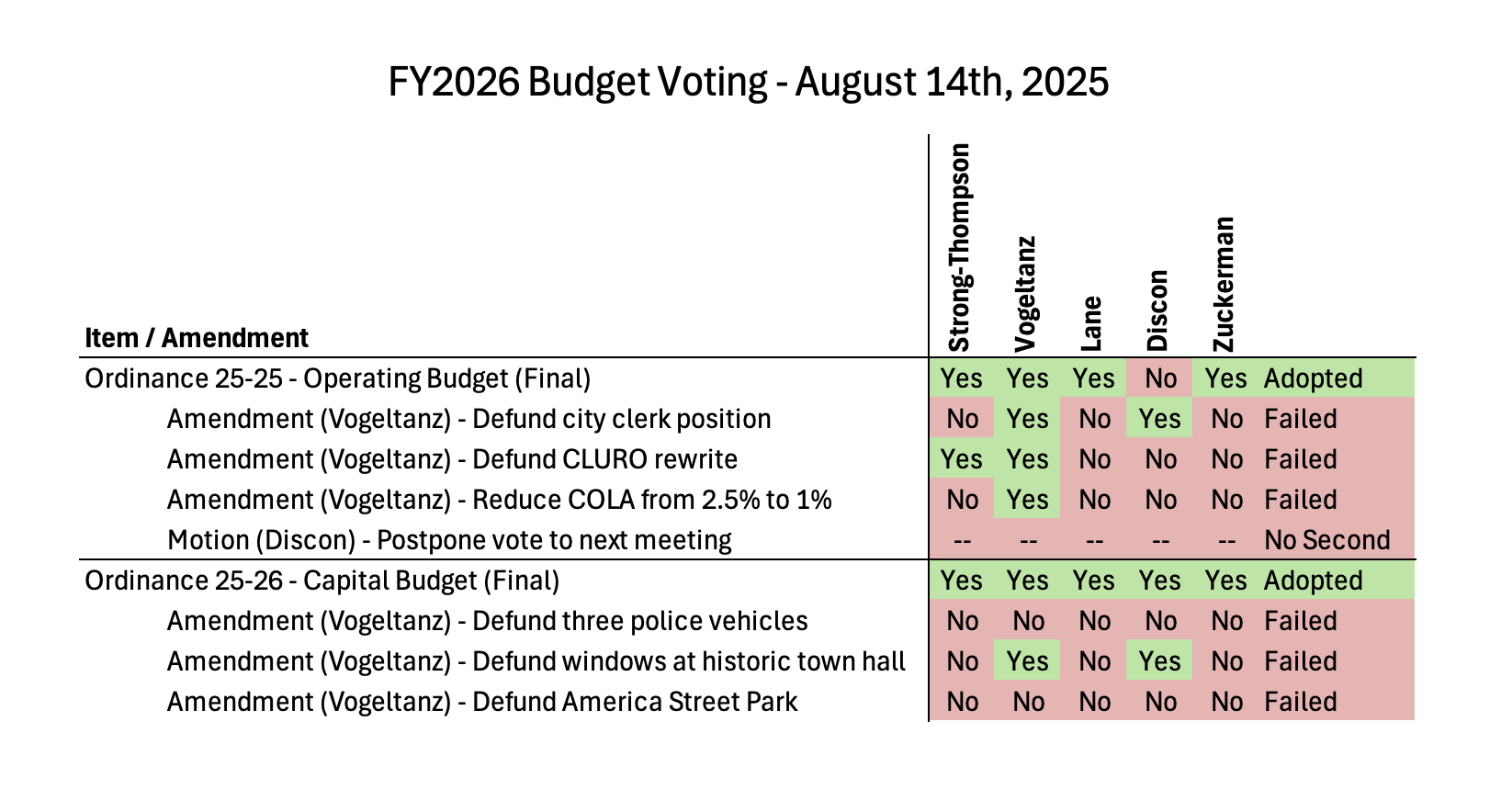
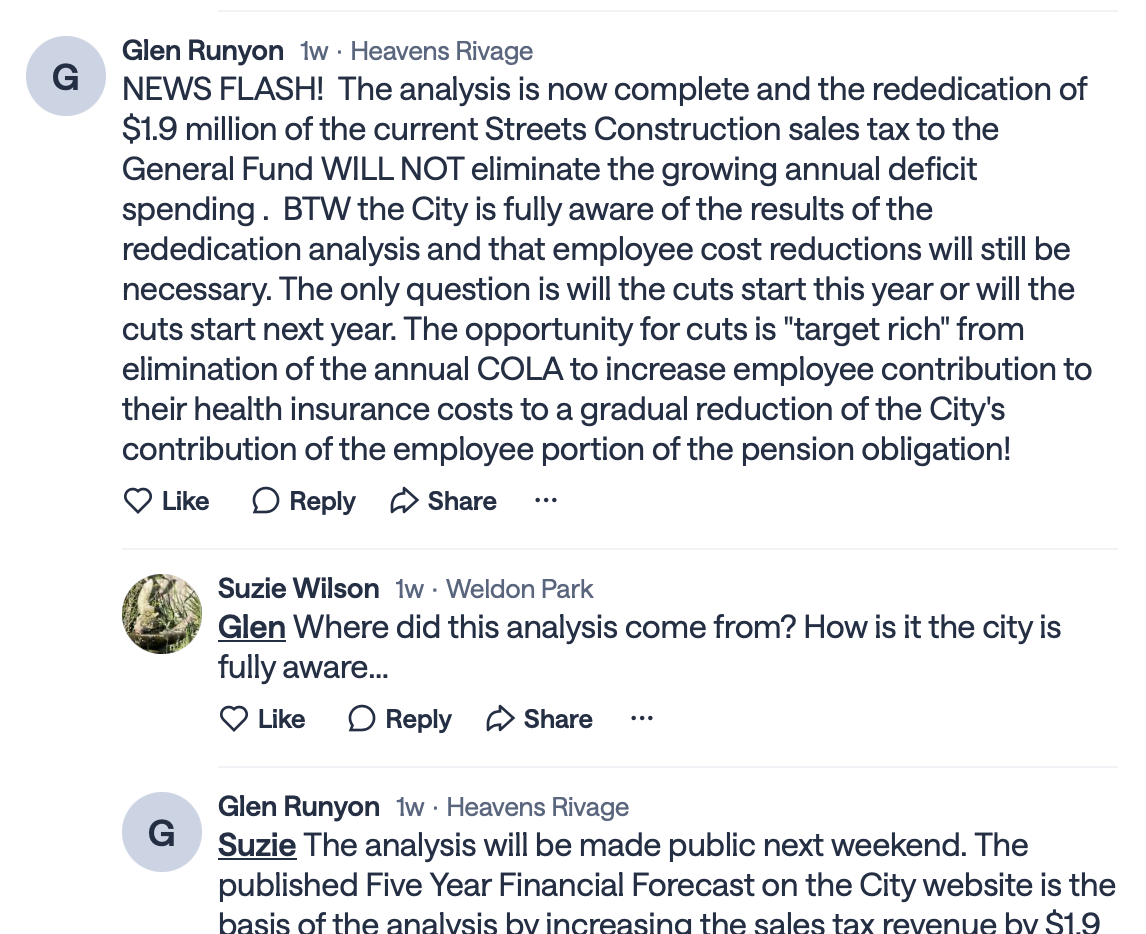
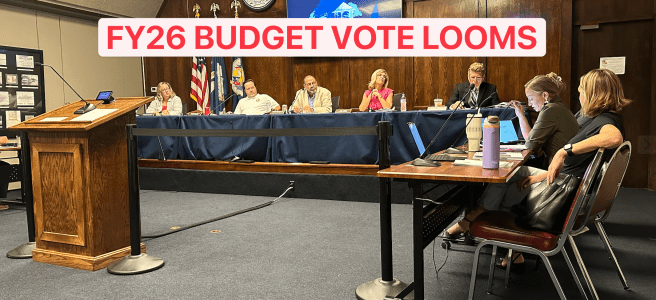
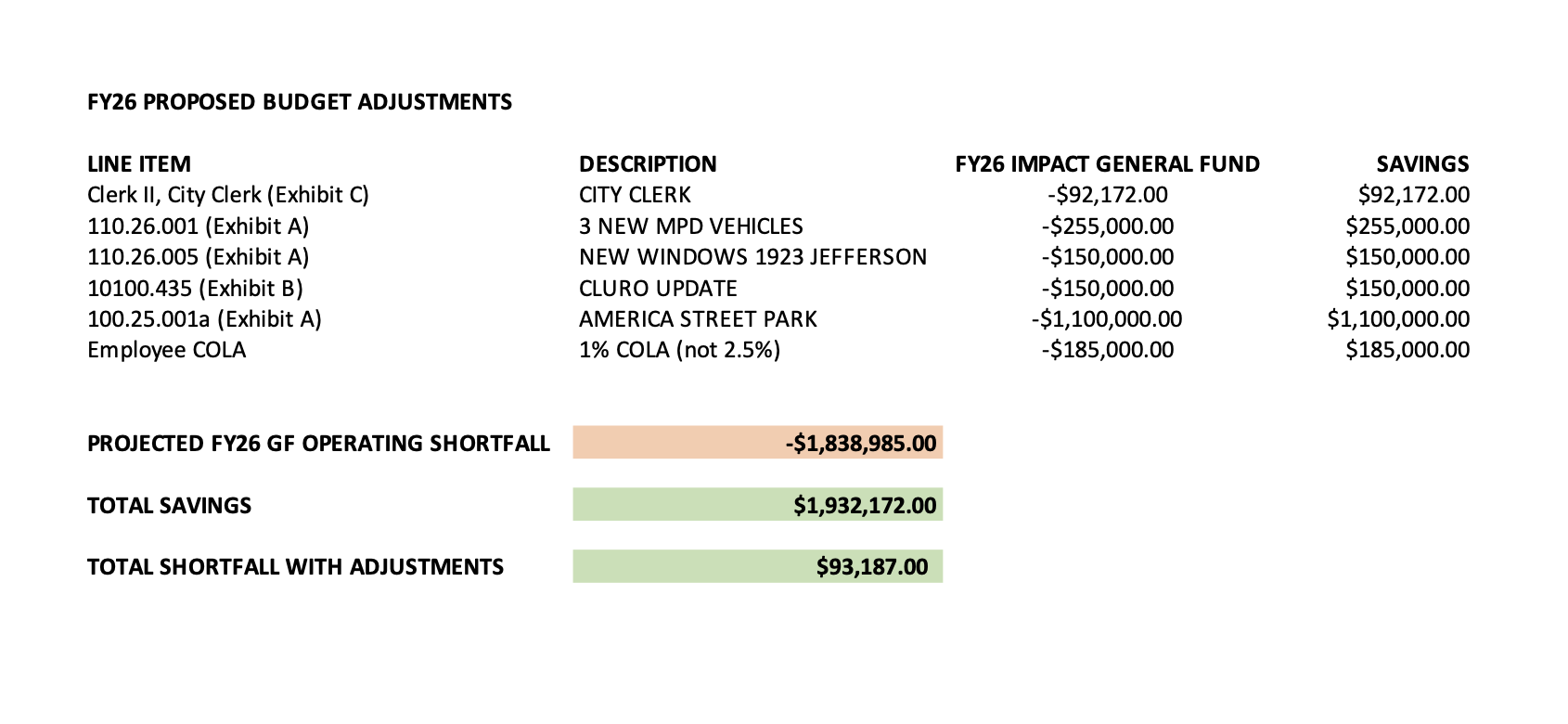

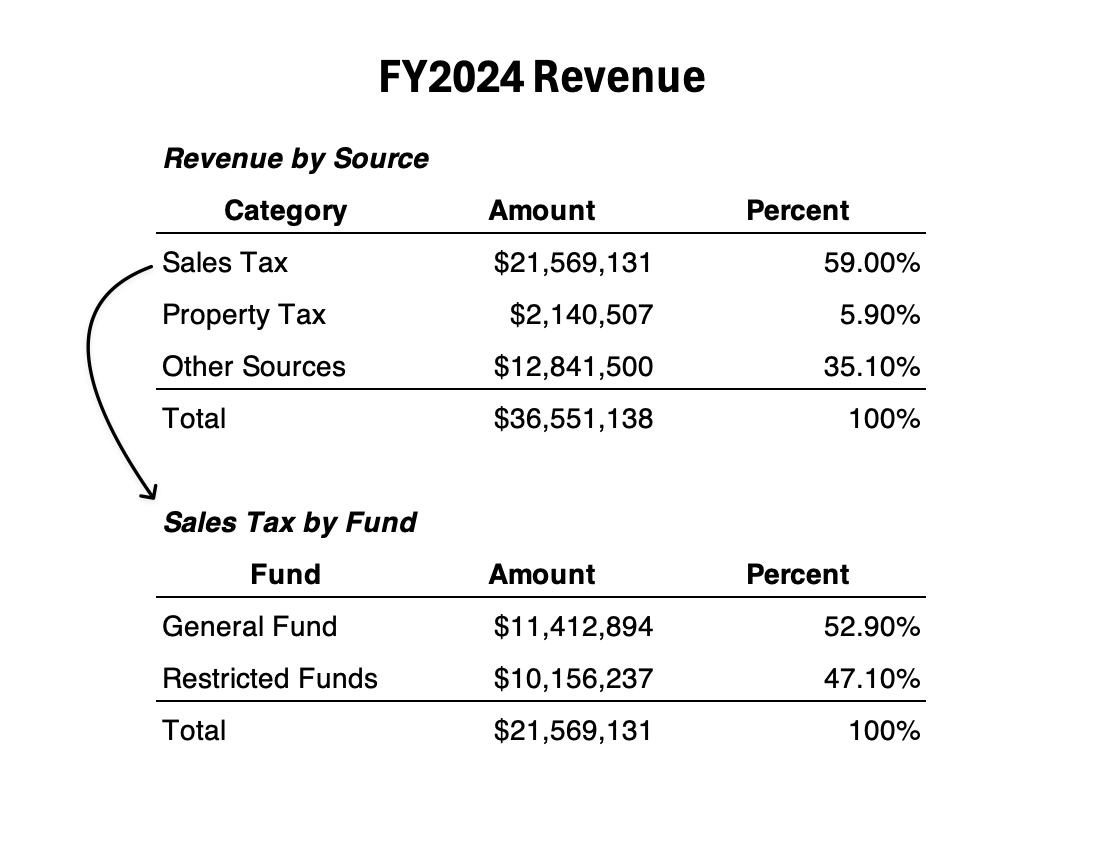
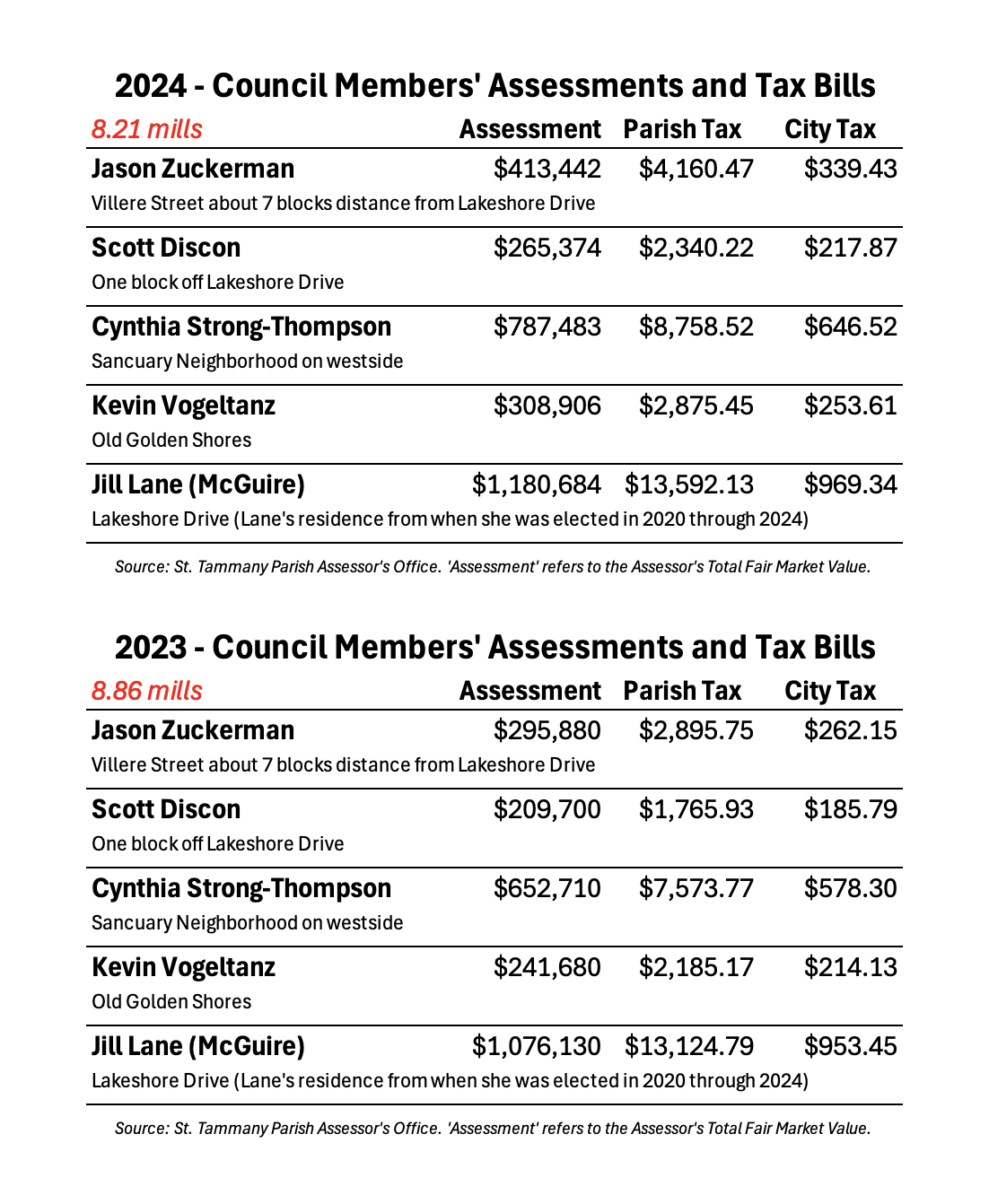
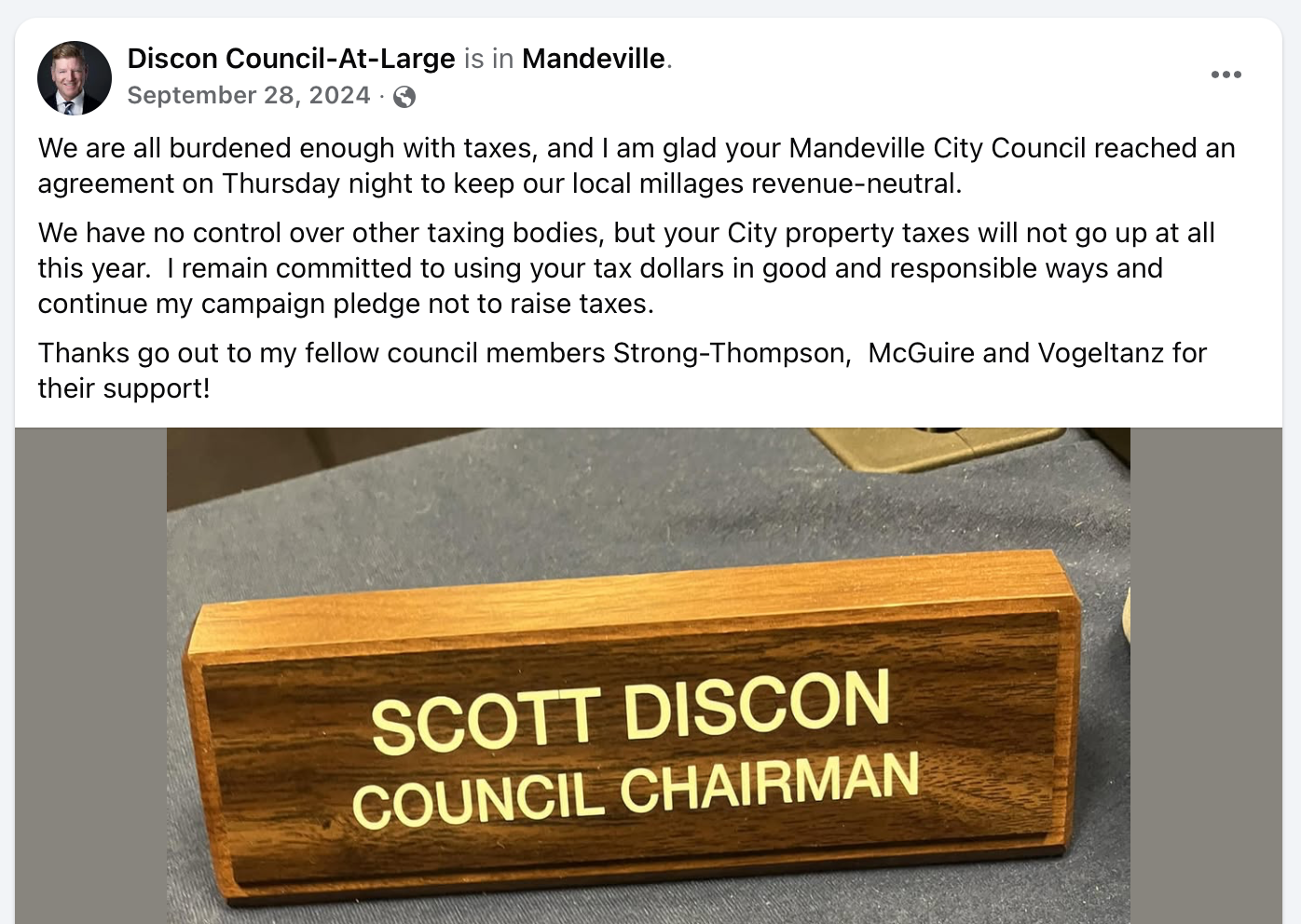
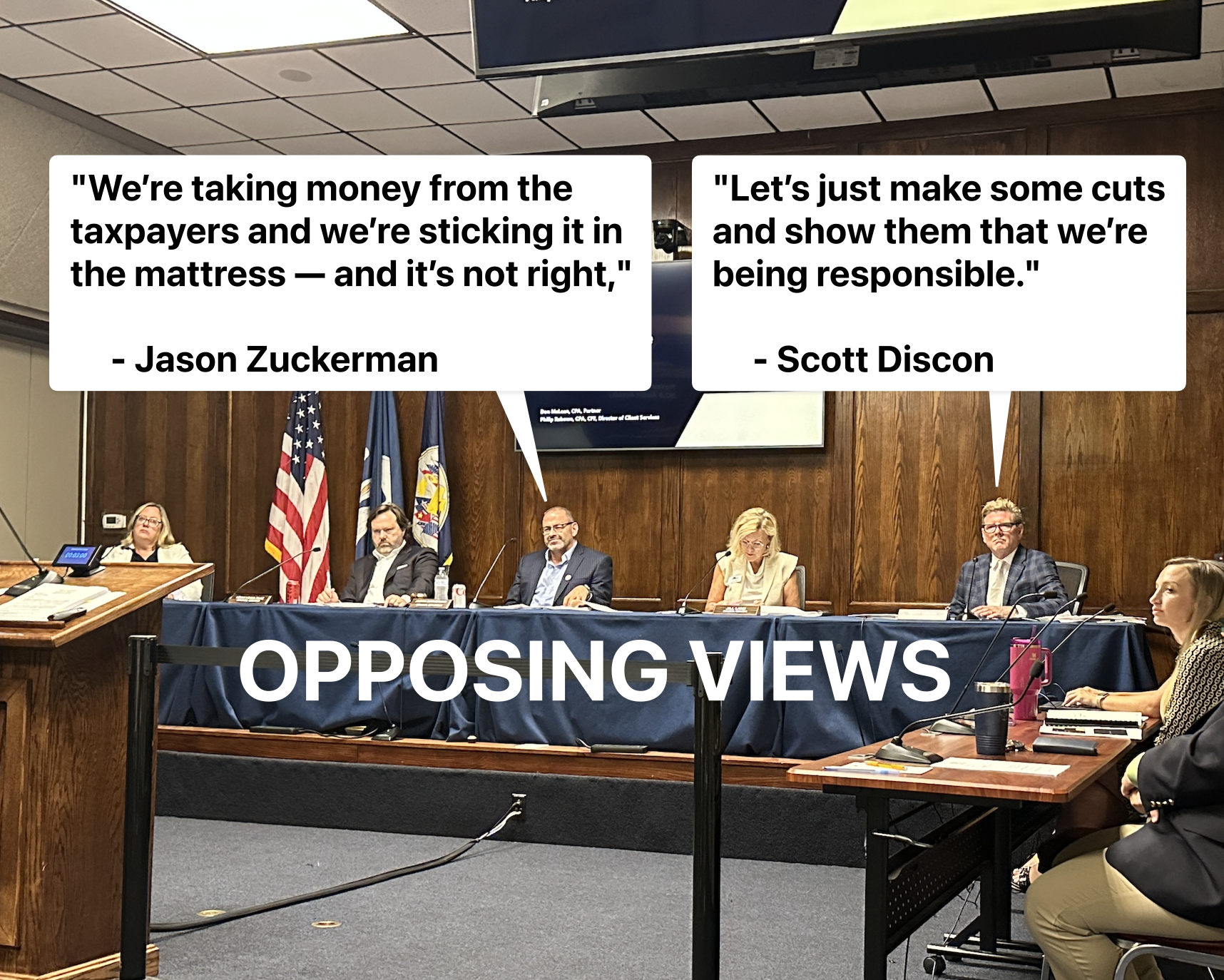
 Mandeville Daily