Incumbent Zuckerman joined by 2020 also-ran and former councilman in race for 2 at-large seats
Newcomer takes District I unopposed
Kreller to face anti-Sucette stalwart newcomer in District II
McGuire unopposed in District III
Updated 12/16/2023 at 6:48 a.m. — Adds list of candidates by race.
MANDEVILLE — Qualifying closed today (December 15th) for the March 2024 primary election, revealing that Mayor Clay Madden will be challenged by Billy Rosenthal and Jeff Lyons, the son of former Mandeville Mayor Bubby Lyons, while Councilman at Large Rick Danielson announced he will not seek re-election for Council at Large.
Former District III Councilman Ernest Burguières and Mandeville Parks and Parkways commissioner and 2020 District III also-ran Scott Discon will join incumbent Councilman at Large Jason Zuckerman in the race to fill the two at-large seats.
Anti-Sucette-Harbor stalwart and local attorney Kevin Vogeltanz will challenge Sucette-Harbor supporter and incumbent District II Councilman Dr. Skelly Kreller for his seat.
District III Councilwoman Jill McGuire receives a second term unopposed, and newcomer and local wealth manager Cynthia Thompson will capture the District I seat unopposed as Rebecca Bush opted not to seek re-election.
Danielson posted a statement on social media today that reads in part:
“After a lot of serious thought and a few restless nights, I have decided to not seek re-election as a Mandeville Councilman-at-Large. l am deeply grateful for the opportunity to have served on the Mandeville City Council for almost 8 years now but at this time, I have several other priorities that I am focused on to include our business that we opened almost a year ago.”
In the coming days, Mandeville Daily will research and report on the general backgrounds of each candidate running for mayor and city council in the March 23, 2024, primary election, using publicly available records such as those on file with the St. Tammany Parish Clerk of Court’s Office, as well as other public resources.
If you are one of the candidates mentioned above, we welcome any information you wish to provide, including your positions on issues important to Mandeville: editor@mandevilledaily.news.
Candidates for Mandeville Offices in March 2024 Primary Election
Mayor:
Jeff Lyons (R) Clay Madden (R) (incumbent) Billy Rosenthal (R)
Council Members at Large (2 elected):
Ernest Burguières (R) Scott Discon (R) Jason Zuckerman (R) (incumbent)
Council Member District I:
Cynthia Strong Thompson (R) (unopposed)
Council Member District II:
Skelly Kreller (R) (incumbent) Keven S. Vogeltanz (R)
Council Member District III:
Jill Lane McGuire (R) (incumbent) (unopposed)
Incumbents who are not seeking re-election:
Councilman at Large Rick Danielson and District I Councilwoman Rebecca Bush
Updated 12/14/2023 at 4:23 p.m. — Adds language that clarifies what the law is versus what this ordinance proposes and removes some reporting concerning meetings being potentially adjourned as a tactic. The state Open Meetings Law already forces adjournment if the meeting is not “visible” and “audible” to the public. The was not reported in the initial release of this story. We regret any confusion this may have caused.
MANDEVILLE — A proposed ordinance scheduled for adoption tonight (December 14th) by the City Council would add Americans with Disabilities Act accommodations for remote participation by members of the public.
Ordinance 23-36 is intended to comply with recent changes to the state’s Open Meetings Law by adding accommodations for members of the public and City Council members who fall under the Americans with Disabilities Act provisions, allowing them not only to participate remotely but also to cast votes remotely.
Act 393 of the 2023 Regular Session amended La. R.S. 42:14(E) and 42:17.2.1 mandating that public bodies, such as the Mandeville City Council, make accommodations for people with disabilities recognized by the ADA.
This ordinance would allow members of the public to participate remotely using software like Zoom Meetings so that they could provide public comment similarly to how those in attendance do. The proposed ordinance would allow members of a public body — like the City Council — to cast votes and attend executive sessions remotely as if they were onsite.
Item “f” of the proposed Section 2-10, which if adopted would be added to the city charter, says that if a member of the public who has been granted ADA accommodations is having technical issues teleconferencing to a meeting and those issues cannot be resolved “within one hour,” then that meeting would be adjourned.
The language used in item “f” of this ordinance — while similar to language in the Open Meetings law at 42:17.2 (C)(5) — addresses ADA participants directly.
R.S. 42:17(A) says that a public body “may” allow its “members” to attend and participate via electronic means. And 42:17.2(C)(5) reads:
“If the public body is aware of a technical problem that causes the meeting to no longer be audible, or if applicable, visible and audible to the public, the meeting shall be recessed until the problem is resolved. If the problem is not resolved within one hour, the meeting shall be adjourned and the presiding officer shall make an effort to alert all participants to that fact.”
The language of Ordinance 23-36’s proposed 2-10(f) reads:
“If a technical problem impairs the ability of the disabled member of the public or disabled member of the public body to participate in the meeting, the meeting shall be recessed until the problem is resolved. If the technical issue is not resolved within one hour, the meeting shall be adjourned, and the presiding officer will use all reasonable means to notify all participants of that fact.”
Critics say this is vague and leaves the reader to wonder if this means that if the disabled person (having been granted these accommodations) participating remotely has a technical issue that the meeting would have to be adjourned.
All Mandeville City Council Meetings are currently streamed live on Facebook and via the city’s official website. However, the only way to provide public comment remotely is to email a member of the City Council or the council clerk and ask that a statement be read into the record. There is no legal requirement for the council to do so.
Tonight’s meeting is scheduled for 6 p.m. and will be held at the Mandeville City Hall Council Chambers.
Qualifying period opens today at 8:30 a.m. at Clerk of Court’s Office and runs through Friday
COVINGTON — Qualifying opens today (December 13th) for statewide races for the March 23, 2024, primary election, including those for Mandeville mayor and City Council.
Candidates can sign up starting at 8:30 a.m. at the Clerk of Court’s Office in the St. Tammany Parish Justice Center in Covington.
After qualifying closes, Mandeville Daily will provide a complete list of candidates for the Mandeville races along with any available background information from publicly available resources.
MANDEVILLE — The City of Mandeville and Councilman at Large Jason Zuckerman have filed motions to dismiss a complaint filed in October by the developer of the rejected Sucette Harbor project, Woodward Harbor, LLC, and the LSU Health Foundation.
The city filed two motions on the following grounds:
The City Council voted unanimously at the October 26th council meeting to confirm City Attorney Elizabeth Sconzert’s selections to provide legal representation for the City and Councilman at Large Jason Zuckerman.
Section 2-6 of the Code of Ordinances of the City of Mandeville stipulates the city “shall” provide legal representation to council members, as well as most other employees and officials, in situations where they are individually targeted in lawsuits. However, the law also requires that these officials would have to reimburse the city should the jurisdictional court find them at fault.
District II Councilman Dr. Skelly Kreller read a prepared statement at the October 26th meeting expressing that he was initially opposed to the city funding Zuckerman’s legal fees but that after discussions with Sconzert, he would support the measure.
Mariner’s Village Master Association President Eric McVicker, who has served as a campaign consultant for Kreller during the Sucette Harbor application process, submitted a statement to the City Council and asked that it be read into the record at the October 26th meeting, opposing the city funding Zuckerman’s defense.
Sucette Harbor would have been a massive hotel, events center, apartment complex and marina at the western end of the Mandeville lakefront between residential neighborhoods and Lake Pontchartrain:
Councilman at Large Rick Danielson and Kreller, on the other hand, both have expressed support for development on the property since 2021, having given supportive statements to local media outlets, including the Times-Picayune/Nola.com on August 2, 2021.
Woodward Harbor LLC (Woodward Interests) has until December 26th to file responses.
Council rejects measure that would have redefined, revived dormant 2012 panel
Council members said proposal wrested council budget authority
Danielson measure fails, 3-2
Updated 11/24/2023 at 6:28 a.m. — Expands coverage of the civil service compensation procedure.
MANDEVILLE — The City Council rejected a measure Thursday (November 16th) that would have breathed new life into the dormant “Financial Oversight Committee,” a panel of private citizens, council members and other officials that was created in 2012 to play an advisory role to the council concerning its budgeting process.
The MFOC is established by Sections 18-1, 18-2, 18-3 and 18-4 of the City of Mandeville Home Rule Charter, covering the committee’s composition, duties and responsibilities, meetings and terms, and rules of procedure, respectively.
Ordinance 23-34 would have changed the committee’s membership from having just three private-citizen voting members along with four ex-officio, non-voting members to seven voting members, including the two City Council members plus two members from the city administration.
Danielson’s proposal completely removed the term “ex-officio” (people who hold other offices), along with a clause that specifically said ex-officio members could not cast votes.
Ordinance 23-34 would have rewritten the “duties and responsibilities” of the MFOC, shifting its role away from being just an instrument of transparency concerning dedicated sales tax revenue and the overall budget administration process, including helping select and hire a CPA for audits, to acting more proactively, like a budget steering committee.
The new duties and responsibilities as proposed in Ordinance 23-34 would have included:
Study the city’s current fiscal year budget and provide recommendations.
Develop a recommended roadmap for future spending.
Make water and sewer rate recommendations.
Make recommendations concerning personnel pay structure and benefits.
Recommend the prioritization of future capital projects.
Recommend changes to the budget process.
Proposed changes to the Mandeville Financial Oversight Committee as defined in Ordinance 23-34. (Mandeville Daily)
This is where much of the opposition from others on the council was rooted. Councilman at Large Jason Zuckerman, District I Councilwoman Rebecca Bush and District III Councilwoman Jill McGuire all expressed that the changes were too drastic and broad.
Ordinance 23-34 would have changed the citizen member terms from being staggered to concurrent, presumably all being appointed or reappointed at the same time. The proposal also removed term limits from these appointees.
McGuire indicated that she felt the proposal would have usurped some of the responsibility of the City Council itself.
“This is one more board where we’re going to have people that are appointed and not elected, and they’re giving their input, and they’re going to make recommendations after a budget’s already been passed,” she said.
Danielson refuted a number of McGuire’s comments, pointing out that the committee as his proposal redefined it would have no policy-making authority.
“This committee, if needed, when needed, would meet to discuss certain tasks laid out by the City Council, to look at things, that we might not have the expertise to do. It is not to change the budget. This committee would have zero authority to do that, zero,” he said.
Zuckerman said he didn’t like the idea of “saddling” the next City Council with appointees having three-year terms, made near the end of the current council’s term.
“I just don’t think it’s the right thing to do, to saddle the next council, whoever that may be. It may be one of us, it may be all of us.”
Zuckerman added, “I think it’s a worthy idea, I don’t have a problem with that, but I just think it’s just not well thought out.”
Danielson took objection to that characterization: “It was well thought out in 2012 of which this ordinance is based off of.”
“But we took a lot out,” Zuckerman responded, referring to the changes proposed in Ordinance 23-34.
District II Councilman Dr. Skelly Kreller said he supported the proposal, citing his experience running his dental practice: “I’m on a medical/dental background and we had oversight. I’ve had it my whole life, in medicine.”
Bush said she felt the newly defined duties and responsibilities were framed too loosely, in a legal sense.
“I am cautious in that we can’t create a group of non-elected officials to substitute their opinion in place of or to be given greater weight, potentially, to an elected body charged with the budget. And I think that should be a concern for everyone,” she said.
Civil Service Board Chairman Brian Burke spoke during the public comment period, expressing concern over the wording of Ordinance 23-34 and the rewrite of Section 18-2, which would have charged the MFOC to: “Review Personnel Costs, including, but not limited to, pay structure and benefits and provide any recommendations.”
According to Louisiana Revised Statutes Act 84-164 — as amended by Acts 09-418 and 17-83 — the personnel director, who is indirectly appointed by the Municipal Police Employees Civil Service Board itself, creates the compensation plan which must be approved by the Civil Service Board after a public hearing, and then that proposal goes before the City Council for its approval, and, in addition to that, the City Council still must approve it as part of the annual budget in a separate step.
Danielson offered an amendment which was approved unanimously to remove item five, which would have had the MFOC review personnel pay and benefits, from Section 18-2, before the ordinance was defeated, 3-2. Only Danielson and Kreller voted in favor of the ordinance.
Judge needs to make council approve Sucette Harbor
Democrocy cannot survive if people are running around saying what they think
Boy, did we get this one wrong. How could we have been so stupid.
We humbly offer the supporters of Sucette Harbor and the downtrodden people of Mandeville who desperately need jobs as janitors and maids but were afraid to speak up, a huge apology.
And to you people out there who attempted to tear a hole in the very fabric of democracy by lobbying your council members and mayor, by showing up to council meetings and speaking out, by having the nerve and audacity to clap and disrupt the town square with fascist opinions, you should have just shut the hell up and let the adults run things. You are stupid and your money and investments in your homes do not entitle you to counterproductive opinions.
I cannot believe you swept me up in your talk of conservation and lofty faux platitudes about freedom, democracy, and keeping the Mandeville lakefront idyllic. This ain’t the olden-dude times of the Founding Fathers. No one’s invading ‘Merica last time I checked.
Your outdated, outmoded and downright stuffy attitudes violated the safe space the good people from Woodward Interests should have been afforded. They should have felt protected and valued when appearing at City Council meetings in their efforts to make sure that certain aloof council members did the job they were elected to do — which is to vote how the City Attorney and Planning Director tell them.
Snapshot from July 5th, 2023, City Council meeting where elected council members tried to usurp lawmaking authority from the City Attorney and Planning Director. (Mandeville Daily)
Were they not concerned with the chaos and lawsuits that were bound to ensue when the will of the people made it to a vote by their duly elected representatives in a public, open meeting?
That’s not the ‘Merica I want to live in.
Everyone flipped out over the beautiful conceptual site plan, nitpicking and scrutinizing every tiny detail. But hello people… It’s just “conceptual.” Once approved, it could have morphed into whatever was needed to best serve the 40,000-plus voters who wanted it. Think of the possibilities and the amenities they could have crammed into it. Who knows, we might have finally gotten a check-cashing store at the lakefront.
Who do we think we are? And what were these out-of-touch council members thinking? If the Planning Director says that multi-family residential really means commercial and not residential, then so be it. Everyone knows that whatever the Planning Directors says is law, regardless of whatever the hell the City Charter or the CLURO Articles 7.5.15.5 or 7.7 say.
The City Charter’s CLURO is a living, breathing document whose meaning is ever-changing and can only be interpreted by the Planning Director. It’s not easy to look into that crystal ball and keep the goalposts moving. Who are these council members to question anything the Planning Director says… anything at all… ever… in this lifetime… or the next.
Robert’s Rules of Order. Hah! Talk about stale. What good are rules if they stand in the way of progress? Those “rules” were written in the late 1800s by a relative of actual slave owners. Yeah, bet ya’ didn’t know that! It’s on the internet so it must be true.
And these so-called “citizens” — meeting with their council member at a publicly advertised secret outdoor meeting at a local pizzeria, that anyone could have attended, and, that outspoken proponents of the project did indeed attend and speak at — took the cake. Where were the Mandeville Police to break up such brazen acts of disinformation? Maybe being spread-eagle on the hood of a police cruiser would have taught some of these local ruffians a lesson or two about the true cost of freedom in Mandeville.
Yes, screw your freedom. It doesn’t outweigh the need for low-wage jobs that could have been created by a hotel-events-center-old-dude-apartments-restaurant-check-cashing-place-maybe-and-marina in the middle of existing “commercial” housing.
We pray the court will force the City Council — under the threat of arrest or double secret probation — to re-vote in favor of Sucette Harbor, bar the mayor from using his veto power, and place a gag order on the citizens of Mandeville from saying, writing or thinking anything negative about Sucette Harbor in public, in private or in “small group discussions,” so help them God.
And if any of those council members complain that it’s not fair, then hopefully the judge will say what Dean Vernon Wormer said in Animal House: “I’ll tell you what’s fair and what’s not!”
Dean Vernon Wormer from ‘Animal House’ (Mandeville Daily)
The judge should let these council members know that on all future ordinances they are to check with the City Attorney and Planning Director before casting their votes.
You can’t let freedom just… ring.
The very existence of democracy is at stake. We cannot afford to have a city council running around voting on things as they see fit. It’s unna-Merican.
Pray the judge does the right thing and gives us the hotel-events-center-old-dude-apartments-restaurant-check-cashing-place-maybe-and-marina that Mandeville desperately needs.
‘Lighten up Francis.’ The preceding was satire. Funnier to some than to others, I bet.
Asks court to force city to approve Sucette Harbor project
Names private citizens who attended meetings, spoke in opposition
Targets councilman at large individually
Updated October 6, 2023, at 10:04 p.m. — Expands coverage and background.
MANDEVILLE — The City of Mandeville and Councilman at Large Jason Zuckerman are the targets of a federal lawsuit filed yesterday, October 6th, by Woodward Harbor, LLC, the developer behind the rejected Sucette Harbor project.
The lawsuit was filed with the United States District Court, Eastern District of Louisiana. Zuckerman is being sued individually in the civil suit. The suit asks the court to force the city to approve the Sucette Harbor project as it was recommended by the Planning and Zoning commission by a narrow 4-3 vote on April 17th, 2023. The City Council rejected Ordinance 23-16 in a 5-0 vote September 5th, 2023.
Sucette Harbor would have been a massive hotel, events center, apartment complex and marina at the western end of the Mandeville lakefront between residential neighborhoods and Lake Pontchartrain:
82-room hotel and events center
Restaurant
201 presumably HUD-age-exempted apartments*
103-slip marina
The main allegations of the suit are that the City of Mandeville and/or Zuckerman violated Woodward’s rights under the due process and equal protection clauses of the U.S. Constitution, didn’t follow the city’s Comprehensive Land Use Regulations Ordinance (CLURO), violated Robert’s Rules of Order at one or more meetings on Sucette Harbor, among other allegations.
The suit additionally claims that Zuckerman and District III Councilwoman Jill McGuire used their personal opinions to gin up opposition to the project and consulted non-city attorneys during the months leading up to the failed bid.
“With Zuckerman taking the lead in unrestrained opposition, and McGuire supporting his efforts, their comments in denying the ordinance were best described as personal and individual interpretations of the CLURO, and all of their comments were intentionally designed to “kill” the proposed project and to prevent future, similar applications,” the suit reads.
The suit mentions attorneys Ernest Burguieres and Kevin Vogeltanz and local architect Vaughn Sollberger by name as those consulted by Zuckerman.
Excerpt from a lawsuit filed in federal court by the Sucette Harbor developer. (Mandeville Daily)
The suit also alleges violations of Robert’s Rules of Order on August 15th when presiding officer Councilman at Large Rick Danielson upheld two points of order by Zuckerman, not allowing a previously adopted amendment which capped the number of apartment units at 90 to be nullified or then reconsidered.
Woodward is saying the nullification of the amendment should have been allowed, but according to RROO, new amendments cannot nullify previous amendments on a motion (RROO §12:25) and a motion to reconsider must be done at the same or next meeting (RROO — §6:26 (4), §37:8 (b), §37:10 (b)) that the original amendment was adopted. The August 15th meeting was the second meeting after the 90-unit amendment was approved.
Seven amendments further strangled ordinance before defeat
Multitude of ‘wrecking amendments’ forced ardent supporters Kreller, Danielson to reject
Every vote against project was unanimous
Updated September 6, 2023, at 6:01 a.m. — Expands coverage on amendments and voting.
MANDEVILLE — The long-debated, often-criticized Sucette Harbor project was rejected tonight (September 5th) by the City Council after a months-long process that generated a groundswell of opposition to building a hotel, events center, and apartment complex in the middle of a residential area at the west end of the Mandeville Lakefront.
A heavily amended Ordinance 23-16 was rejected, 5-0, by a City Council that seemed to sense the proposal’s imminent defeat as Councilman at Large Jason Zuckerman and District III Councilwoman Jill McGuire teamed up for a whopping seven amendments that further constricted the proposal beyond an amendment adopted July 12th that cut the number of apartment units from 178 down to 90.
From removing a blanket stipulation granting “all variances and departures from the CLURO (Comprehensive Land Use Regulation Ordinance)” to prohibiting any use not specifically listed in the ordinance itself, the “wrecking amendments” signaled the end was near.
Each of tonight’s (September 5th) seven amendments were adopted 5-0, as the other council members offered no opposition, other than asking for clarifications, leading to a total of nine amendments, dating back to the July 12th special meeting.
Even the project’s two stalwarts — Councilman at Large Rick Danielson and District II Councilman Dr. Skelly Kreller — agreed to each new amendment and ultimately conceded defeat, joining the majority in killing the proposal.
Only weeks ago Kreller had attempted to break the 90-unit limit placed on the ordinance by Zuckerman’s July 12th amendment but was ruled out of order under parliamentary rules. Twice in the last month, Danielson put the brakes on further votes on the ordinance when it appeared defeat was imminent.
But tonight, nothing could save the ill-fated proposal. Every vote was unanimous.
Developer Bill Hoffman opened the meeting by flatly telling the City Council that they could not conform to the 90-unit amendment, insisting that 170 units was their floor.
-30-
Local attorney Kevin Vogeltanz addresses the City Council before a final vote. (Mandeville Daily/William Kropog)
Even approval of modest 90-units would open door to much larger development
By Ernest A. Burguières
September 3, 2023
Ernest A. Burguières is a Mandeville attorney who formerly served as District III Councilman. Mandeville Daily is honored to publish Mr. Burguières’ column with permission which is a combined reporting of the goings on in Mandeville government with his personal commentary.
As we stumble into the homestretch of our prolonged distraction, more subtle thoughts have come to mind for citizens who are concerned about this project.
On its face, the big battle seems to be the prospect of 90-plus apartments, 80 hotel rooms, an event center, a restaurant and a marina. Those are the immediate concerns because that is what was being presented.
But there is another more nefarious potential result.
If the City Council does not separate the issues of zoning change and conditional use approval, then there is a prospect that just one council member may justify in their mind that it is only “fair” that the developer get a shot.
And what if the mayor does not veto this if it passes?
The checker player says it’s over. The chess player says, not so fast. There are more shoes that could drop.
What happens if Sucette gets approval and is not vetoed? Then the developer has some time to decide if there is a smarter play given the economy.
Well, it would now be now zoned commercial. How about several multi-story towers and 1,000 apartments?
Maybe luxury units plus affordable units, to press all of the buttons.
A rooftop restaurant/night club, overlooking the lake.
Think of it… there would be nothing like it on either side of the lake. All of those height, parking, scale, compatibility and density issues fade away as the “planned district” cudgel is used to push a development in to the realm of the absurd. This sleepy time, virgin, coastal community would be forever violated. We would be done.
Sucette spent their first phase time and money to depict a general concept of a hotel, apartments, a restaurant, event center and marina that might attract some people. It was just a concept so the big investments had not yet been made. That could go away as just the cost of a diversion while the real money gears up for the whole enchilada. The chess move.
If the Council (and/or the mayor) want to avoid the risk of unintended consequences, they need to vote no to the re-zoning which is no to the project.
If you care, or if you just want to watch the slow motion train wreck, show up this Tuesday, September 5th, at 6:00 p.m. at the Spitzfaden Center.
Ernest A. Burguières is a Mandeville attorney who formerly served as District III Councilman. Mandeville Daily is honored to publish Mr. Burguières’ column with permission which is a combined reporting of the goings on in Mandeville government with his personal commentary.
On Tuesday, September 5th, the final act of our shared Sucette experience will be unveiled. There will be a council meeting and there will reportedly be a vote!
If you have enjoyed and/or suffered through the Sucette experience over the past year, it may very well come to a head at 6:00 p.m. Tuesday, September 5th, in the Spitzfaden Center. If there is a capacity crowd, you ought to arrive early or resign yourself to pressing your nose against the window to watch.
There are several reasons why you may want to attend.
It will be a defining experience.
At center stage will be our five beleaguered council members. The Sucette decision that night may have a significant effect on the political future of the council and the mayor.
We are told that our elected officials are supposed to represent the views and desires of the citizens. Each elected official will have to ask himself; do I side with my friends and constituents, or, do I side with the Sucette developers? Will my vote for Sucette be in the best interest of my friends and constituents? Will I be able to look my friends and constituents in the face and say, what I did is in your best interest? Or will I betray those friends and constituents and side with the Sucette developers? Will the city attorney and the Director of Planning make new efforts to thwart the sentiment of council members? Interesting times.
The mayor and the entire council will be up for election in 2024. Qualifying is in 90-plus days, December 13-15, 2023. The primary is March 23, 2024. The run-off, if required, is April 27, 2024.
Provocative questions abound.
Will the vote on Sucette be political suicide for some? You have to wonder how the constituent contact to each council member has been trending over the past 8 months, for or against Sucette? As a point of interest, I learned that my post entitled, “The August 15, 2023, Sucette Experience” had 4,300 views. The vast majority of comments I received were in opposition to Sucette. The numbers speak for themselves.
If the council votes to approve Sucette, what will the mayor do? Will he veto it? What are his chances for re-election in Council Districts II and III if he does not veto Sucette?
If a council member believes the mayor will ultimately veto any Sucette approval, why would that council member risk the political disadvantage of voting for Sucette?
When the vote comes, who will decide the order in which the council members’ names are called out to vote? Will the first council member called upon to vote set the stage for subsequent council members? What will the strategy be? The last council member on this issue will have the advantage of knowing how his four peers have already voted.
And think of the consequences of a vote in favor. You would have approved a change in the zoning from residential to commercial… forever. If this project is not built, it will still be zoned commercial, then what other commercial venture could be foisted on the citizens? We are supposedly still facing a recession in the next 12 to 18 months. There will be the presidential election of the century. Would a subsequent commercial venture be guided by the B-2 rules or B-1 rules? A car wash? A shopping center? A grand music / entertainment venue? How do you control these future potential consequences at this stage? Who wants to shoulder that risk?
An interesting spectacle.
Our opportunity to participate in this theater of the absurd ought to be a no-miss date. You are not likely to see more intriguing brinksmanship and stress in a local government experience. Come on down and sit in the peanut gallery with the rest of us pilgrims while this sausage is made!
’Adoption’ of Ordinance 23-16 set for September 5th
Editorial
The so-called cabal of city officials, lawyers and developers who have tried to ramrod the Sucette Harbor project through at any cost have seemingly exhausted all avenues to have a 90-unit wrecking amendment removed from Ordinance 23-16.
Or have they?
The Woodward Interests developers, headed by Bill Hoffman and represented by attorney Paul Harrison, had originally proposed 201 apartment units, later reducing it to 178, before being dealt a devastating blow on July 12th when a majority on the council approved a poison pill, or wrecking amendment, that capped the number of units at 90.
Two meetings later, on August 15th, they tried nullifying the amendment. That was ruled out of order. Then they tried a motion to reconsider. That too was out of order. And along the way they even tried to rule a fellow council member out of order for just asking to have the amendment read aloud for everyone to hear. It was a surreal night.
And now, we supposedly approach this critical juncture — a vote. What will they try next?
We think we might know what they have up their sleeves. We’ll start with the obvious option and then knock your socks off with a suspected “nuclear option.”
Option 1: Motion to Rescind/Amend Something Adopted
Problem: Out of order according to Robert’s Rules
Assistant City Attorney David Parnell Jr., who stood in for City Attorney Elizabeth Sconzert at the August 15th special meeting, unwittingly signaled what the cabal’s next move might be with remarks he made that night during one of his out-of-order interpretations.
“There’s also motion to amend something previously amended [perhaps he meant ‘adopted’], so I mean, there’s different options. Uhm. We feel it’s proper.”
He’s referring to motion to “rescind” and/or motion to “amend something already adopted.” These two motions are the opposite sides or the same coin. One strikes text from something adopted, the other adds text to something adopted.
But there’s a problem with this tactic. It too would be — or should be — ruled out of order.
“[Rescind and Amend Something Previously Adopted] Can be applied to anything (e.g., bylaw, rule, policy, decision, or choice) which has continuing force and effect and which was made or created at any time or times as the result of the adoption of one or more main motions.”
Notice the words “main motion” and “adoption.” Amendments are “subsidiary motions” according to §12:1 and nothing more, therefore §35 does not apply.
The “main motion” which is what currently sits before the City Council as its open or pending business is Ordinance 23-16, and it has not been adopted yet. All the amendments made to that main motion are subsidiary motions.
For either of these two motions to succeed, the presiding chairman Councilman at Large Rick Danielson and Sconzert would have to rule that the amendment itself is a main motion. We simply don’t see how that’s possible based on RROO.
But then again, we’ve seen amazing feats of linguistic intrepidity from the legal and planning departments thus far, so who knows.
Let’s continue.
Option 2 (Nuclear Option): Motion to Withdraw
Problem: Only McGuire can do it
Mandeville Daily noticed that when the September 5th agenda and meeting packet was published on the City of Mandeville’s website August 24th, Ordinance 23-16 had been updated to reflect the amendments from July 12th, but it was also altered to read “moved for introduction by Council Member Bush; seconded for introduction by Council Member McGuire.”
The problem is, this is not true.
The header of Ordinance 23-16 was modified to read that District I Councilwoman Rebecca Bush introduced it, when in reality it was District II Councilman Skelly Kreller. (Mandeville Daily)
Mandeville Daily wonders if this signals the cabal’s “nuclear option.” Although it was probably just an innocent mistake at City Hall, perhaps members of our shadow government saw this too and are preparing for this contingency.
Ordinance 23-16 was actually moved for introduction at the May 11th City Council meeting by District II Councilman Dr. Skelly Kreller and seconded by by District I Councilwoman Rebecca Bush.
An “introduction” does not bring business before the council — it just says this item will come before the council at a later date. It satisfies the legal requirement of advertisement. Ordinances are not discussed or voted on when they are introduced. In fact, the council quite often introduces multiple ordinances on the same night, but nothing happens at that time. No discussion. No votes. No nothing.
But the motion to actually consider the ordinance comes under “old business” and the council can only consider one such item at a time, and each such item remains before the council (for that session) until it is properly resolved via motions to adopt, postpone, withdraw, etc. before they can move to the next item, according to RROO.
Ordinance 23-16 was actually put before the City Council for consideration during the May 25th meeting based on a motion by District III Councilwoman Jill McGuire.
Only she can make a motion to “withdraw,” according to RROO:
§4:19
“Until the chair states the question, the maker has the right to modify his motion as he pleases or to withdraw it entirely. After the question has been stated by the chair, the motion becomes the property of the assembly, and then its maker can do neither of these things without the assembly’s consent (see 33:11–19); but while the motion is pending the assembly can change the wording of the motion by the process of amendment (12) before acting upon it.”
Why does this matter? You might want to don your tin-foil hat before you read the answer.
A successful motion to withdraw a main motion strips all amendments or changes to the motion, just as though they never happened. Ordinance 23-16 would in effect be “reset” to its original state, without the 90-unit limit, according to the interpretation we received.
§33:16
“… Any such motions that adhere to the main motion cease to be before the assembly and require no further disposition if the main motion is withdrawn.”
And — get ready to be further blown away — it doesn’t seem that there is anything that would stop a council member from making a new motion to bring it right back before the council, but this time, without the wrecking amendments attached. Why not? It is already on the agenda, is it not? Interesting question, for sure.
§33:18
“After a motion has been withdrawn, the situation is as though it had never been made; therefore, the same motion can be made again at the same meeting.”
The nuclear option. There you have it.
Because it was McGuire who made the motion, this should be a dead-end.
Had Bush or Kreller made that motion, then sure, this might be a thing.
Robert’s Rules really isn’t the ‘law’ you say?
Based on what we’ve seen so far, there is little reason to believe the bunch involved in this cabal will follow, let alone even acknowledge, the written rules that don’t work to their advantage.
In accordance with Section 2-06(c) of the Mandeville Home Rule Charter, the City Council is a ‘Robert’s Rules of Order’ body. (Mandeville Daily)
Twice already, Danielson unilaterally decided to suspend adding new amendments or holding a vote on the ordinance when it looked as though the proposal faced imminent death. The first time was July 24th and the second was August 15th.
Either he made those decisions without a consensus from the council or if he did consult them via phone, email, or in person, it would have constituted a walking quorum which would have violated Louisiana’s Open Meetings Law. We tend to believe it was the former rather than the later:
Excerpts from recent meeting agendas contrasted with events of meetings. (Mandeville Daily)
Shouldn’t it be considered just as wrong for the chairman not to allow fellow council members to vote on a matter as it would be if he were to tell them how to vote on a matter? Something to think about.
Now let’s suppose the legal department decides that Robert’s Rules of Order is really just a guide and the council doesn’t have to follow it to the letter.
The problem with that thinking is, Resolution 20-14, adopted shortly after the current City Council took office, sets the rules by which the City Council conducts its meetings, in accordance with Section 2-06(c) of the Mandeville Home Rule Charter.
This rule-setting Resolution 20-14 says our City Council is a “Robert’s Rules of Order” body. This should mean it’s the law, but again, no telling what interpretation we might be treated to September 5th.
Have you noticed how many times we’re having to put the word “should” in italics lately?
Will the truth matter on September 5th? Or is getting Sucette Harbor approved the only thing that matters?
Cressy asked to commit to serve full term before vote
MANDEVILLE — Nicholas Cressy was confirmed unanimously as the next appointee to the Planning and Zoning Commission to replace outgoing commissioner Nixon Adams whose term expires August 31st.
Before the vote, Councilman at Large Jason Zuckerman asked Cressy during the hearing at tonight’s meeting (August 24th) if he would commit publicly to serving out the entirety of his seven-year term if confirmed, to which Cressy agreed, pointing out that he is only 38 years old and wishes to learn from serving on the Planning and Zoning Commission.
Cressy is a second-generation attorney who was born in New Orleans and raised in Mandeville. He earned his Bachelor of Arts at Louisiana State University. After completing his undergraduate education, Cressy attended Loyola New Orleans College of Law.
Nicholas Cressy, the newest appointee to the Planning and Zoning Commission, addresses the City Council immediately before his successful confirmation vote. (Mandeville Daily)
Two other Mandevillians — Ann Haveman and Pat Rosenow — submitted their applications for consideration to replace Adams.
The City Council’s appointment process provides that the Council Chairman — in this case Councilman at Large Jason Zuckerman — makes the appointment after meeting with one of the district council members to discuss the matter. That name will be appointed at the specified regular meeting for discussion among the council members.
The Comprehensive Land Use Regulation Ordinance (CLURO) reads: “An appointment [to the Commission] shall be made, by the Council Chairman, subject to majority approval of the Council, for any vacancies.” This was amended by the City Council in 2022, changing the basic procedure, where before it read, “They [Commission members] shall be appointed and confirmed by a vote of the Council.”
There are seven Planning and Zoning commissioners and they are limited to two consecutive seven-year terms each, according to the City Charter.
A recurring theme seems to be that words don’t matter anymore, rules don’t matter anymore, and worse, does the actual law even matter, as long as Sucette Harbor gets approved?
We are going to walk through each violation of parliamentary procedure and each time the written word was ignored during the most recent Sucette Harbor special meeting August 15th. In the end, you too will feel as we do, Mandeveille has been seized by a shadow government, a cabal, of lawyers, council members, and appointees who all conspire to get around the rules and defy what the people actually want.
By the time you finish reading this, and if you go back and watch the video excerpts that we point to, you will be purchasing your copy of Robert’s Rules of Order (RROO) and making your tin foil hat to wear to the next Sucette Harbor special meeting.
Definition of ‘cabal’
Danielson discards advertised agenda, declaring there will be no vote on adoption
The advertised agenda clearly read “Adoption of Ordinance 23-16,” but at the outset, presiding chairman Councilman at Large Rick Danielson declared there would be no vote on the adoption of the ordinance that night, despite “adoption” having been legally advertised in accordance with Louisiana Open Meetings Law. His explanation was that the ordinance wasn’t ready yet for a final vote.
“I think it would be very difficult to vote on a final ordinance this evening until we have cleaned up everything in Ordinance 23-16, with any amendments, any conditions, any possible changes that we would discuss this evening. So the plan is to not vote on the final ordinance tonight.”
That may be well and good if you’re a Sucette Harbor proponent, but what about those council members who had the right to vote it down if they so chose?
Excerpt from the published agenda for the August 15, 2023, special meeting on Sucette Harbor. (Mandeville Daily)
Analysis:
Danielson’s surprise no-vote declaration at the start of the August 15th meeting seems to run contrary to Louisiana’s Open Meetings Law. We guess the cabal realized that if they didn’t quash a potential motion to adopt that night, it would have been completely over for Sucette Harbor.
Sometimes pieces of legislation become malformed or nonsensical due to so-called “poison pills” or “wrecking amendments,” forcing even the proponents to vote against their own proposals. It’s part of the process and it’s all fair game.
This is exactly what should have happened to Ordinance 23-16 on August 15th. The vote was legally advertised in accordance with Open Meetings Law.
Each council member should have had the right to move for adoption under RROO and state law, even if, or we should say particularly if, their intention was to kill it. That’s how the system is supposed to work. The proponents of Sucette Harbor likely would have felt compelled to vote against it.
Danielson was essentially saying that in case the results of the meeting would have been to yield a “good” ordinance which might have gained support from the majority, including a drastically changed site plan and other provisions, the ordinance may have needed to be re-advertised before a vote, not to mention the developer would have needed the time in which to make said changes.
But Mandeville Daily believes that if they wanted to change the scheduled vote, they should have used the rules to do so. This would have meant making the case to Council Chairman Councilman at Large Jason Zuckerman to publish an updated agenda reflecting that change before the legal deadline.
And as for the developer at this point, they were given marching orders from a majority on the council July 12th with the 90-unit limit. They should have (1) complied with the 90 units, (2) asked a council member to move to “reconsider” on July 24th and win that argument on merit, or (3) withdrawn their application.
If they had tried the motion to “reconsider” on July 24th, it sounds like they would have succeeded, based on District I Councilwoman Rebecca Bush’s comments August 15th, which we will dive into later in this piece.
Had they done that, we could have had a workable ordinance by now. This was their fault, and yet another unforced error. By all accounts, the ordinance deserved to be voted down August 15th.
City attorney offers absurd interpretation of time limits rule for ‘reconsideration’
The second stop on our journey to the Land of the Lawless happened when Zuckerman called his first point of order after Kreller moved to amend a previously adopted amendment. Citing RROO, the chairman should have immediately called Kreller out of order instead.
Parnell Jr., Council Clerk Kristine Scherer, acting Council Chairman Councilman at Large Rick Danielson and other officials huddled for about 20 minutes before returning the meeting to order under a ruling that a “motion to reconsider” instead of a new amendment could move forward.
This was an indirect acknowledgment that Zuckerman’s first point of order was indeed “well taken” in parliamentary terms, meaning, he was right. And under the prescribed procedure for considering a point of order, the job of the chairman, parliamentarian and lawyer is to strictly determine if the motioner, Kreller, is out of order, and not to find him some other means to achieve his objective.
And the issue really wasn’t resolved yet as we would soon find out.
Local attorney Kevin Vogeltanz spoke during public comment addressing assistant city attorney David Parnell Jr.:
Vogeltanz: “In a prior life, I did a lot of work with Robert’s Rules. I do not believe that this is a proper motion because under Robert’s Rules you can only make a motion to reconsider an amendment at the same meeting it was passed, or at the next meeting, and we are at least two meetings beyond when the 90 amendment passed. … Motions to reconsider can be made at the same night of the meeting, or at the next meeting. The motion should be withdrawn. Thank you.
Parnell Jr.: “It’s actually when that business has adjourned. And so these meetings have been adjourned, (but) there’s been no decisions on anything. The amendments have not been voted on finally. Uh, so the issue is still before the City Council, and there hasn’t been a finding. So he’s correct that you can’t carry over business to business to business, but this is still the same piece of business. There’s an ordinance in front of you that’s had seven meetings that have been adjourned, so…”
Danielson: “Ok. Alright.”
Analysis:
What the hell is Parnell Jr. talking about?
Vogeltanz was 100% correct. Based on his prior recommendation to Danielson, Parnell Jr. at the very least had stumbled upon §12:25 of RROO which says a new amendment cannot alter or nullify an existing amendment.
What’s more, three different sections of RROO — §6:26 (4), §37:8 (b), §37:10 (b) — all specifically say that the motion to “reconsider” a previously adopted amendment can only be done at the same meeting the amendment was adopted “or on the next succeeding day within the session” of multiple meetings. The August 15th meeting was the second Sucette session meeting after the amendment in question was adopted.
So Parnell Jr.’s statement that “it’s actually when that business has adjourned” is completely absurd and contradicts everything in RROO, which repeatedly uses the term “session” and defines it as either a single meeting, or a series of meetings, like at a convention, or the series of meetings on Sucette Harbor.
Did developers believe they had a deal with Bush?
Bush, who is seen by many as a potential swing vote in this matter, let everyone know right away at the August 15th meeting that the developer team — Woodward Interests President Bill Hoffman and attorney Paul Harrison — had met with her twice to discuss the situation.
“Let me reiterate the reason I made the motion and that was to make sure we have a full hearing and consideration of all the issues. And I met with the developer twice in the past few weeks. … [Then, while looking to her left directly at Kreller] I’m a bit disappointed that this issue has come up at this juncture. I felt like there were some other things we could have addressed before, but here it is.”
Does this mean Bush was expecting this tactic and planning for it, but Kreller screwed things by showing the developer’s hand too early… had he been instructed to wait until after less controversial pieces of the ordinance had been fixed?
Consider Bush’s next statement only minutes later:
Bush: “One thing in response … One of the reasons why I wanted to listen to the new information is, my big issue, two of my big issues are scale [and density], and what I see before me did a lot toward scale. I don’t know how I will vote, and we still have to address the number of units, but I think it’s worth discussing.”
Analysis:
Is this why the developers, despite having been asked to return with a site plan that matched the 90-unit amendment, showed up August 15th with so-called “new information” or a site plan for 178 units instead?
Does this mean that Hoffman and Harrison felt they had reached a deal with Bush, by conceding one of her issues — scale — in exchange for her allowing the 90-unit limit to be lifted?
She was very quick to offer the “motion to reconsider” once Zuckerman won his first point of order against Kreller. And she did say “we still have to address the number of units.” Because she was one of the votes for the 90-unit limit July 12th, could this be interpreted to mean she was now willing to nullify that previous action?
Having amendment read aloud considered dangerous to the cause
At one point, Zuckerman asked Scherer to read his original amendment from July 12th for which the motion to reconsider was being debated. Danielson ruled him out of order, saying that discussion was limited strictly to whether the motion to reconsider should move forward or not, to which Kreller quickly concurred.
Zuckerman: “Can I ask you to read back the previous amendment that we passed? I want to make sure we’re not putting some different spin on what we passed previously. I just think it would be helpful for everyone…”
Danielson: “But I think that is out of order as well because that’s getting to that amendment and we’re not at the amendment yet.”
Kreller: “I agree, that is out of order.”
Zuckerman: “All I’m asking is as part of this discussion of whether or not to reopen the amendment is if we can read the amendment we’re discussing reopening. Can we do that? … I don’t think that’s out of order.”
After a few minutes of back-and-forth and then asking Parnell Jr. for his sacred permission, he relented and allowed Scherer to read the minutes from the July 12th meeting that described Zuckerman’s amendment.
Analysis:
We knew the fix was in — that all the events of August 15th were being orchestrated by the shadow government — when Danielson tried to block the public from merely hearing the words read aloud.
Words. Just words. The truth. The public isn’t allowed to hear the truth. It might confuse them. It could destabilize the shadow government.
Zuckerman’s amendment — adopted by a majority of the council July 12th — is so dangerous and damaging to their cabal, the public wasn’t even going to be allowed to hear the words.
RROO §37:18 reads: “Whenever the motion to Reconsider is taken up, it is debatable if the motion proposed to be reconsidered is debatable, and debate can go into the merits of the question proposed to be reconsidered, as noted in Standard Characteristic 5.”
Zuckerman was right. He had in effect called a second point of order. But sadly, the point of order was “well taken” not because Parnell Jr. consulted RROO as we did here, but rather because he believed it would end up serving their long game to get around the 90-unit limit. Read his answer carefully:
Parnell Jr.: “But again, her motion is to reconsider that based on new information. Those are the only grounds you can file a motion to reconsider. You can’t just say I changed my mind two weeks later. It’s based on the new information that’s been received. That’s been the motion that’s made, seconded and is being discussed now. So again, I think it’s a good idea to find that original … amendment to the application, because you’re contemplating going back to what the applicant originally said, versus what the amendment y’all did the first time, or some other new amendment that may pass tonight.”
We peasants humbly thank Parnell Jr. for his magnanimous act of allowing us to hear words from the minutes of a meeting subject to Louisiana’s Open Meetings Law read aloud.
And we feel obligated to correct the record here, seeing that Parnell Jr. opened the door so widely.
This whole notion that the only way you can “reconsider” under Robert’s Rules is if there is some “new information” is poppycock.
It is a reason you can reconsider, but not the only reason you can reconsider.
“Those are the only grounds you can file a motion to reconsider,” he said.
RROO §37:1 reads: “The purpose of reconsidering a vote is to permit correction of hasty, ill-advised, or erroneous action, or to take into account added information or a changed situation that has developed since the taking of the vote.”
So really, the council could reconsider a previous action for whatever reason they want — not just “new information” — as long as it is within the time limitations that Parnell Jr. repeatedly ignored. Pretty much anything can fit into “ill-advised” if you are one of the affirmative swing votes who had changed their mind.
Parnell Jr. started repeating this “new information” mantra during the meeting, and soon other council members started repeating it too, but it was not based in rules that govern the motion to reconsider.
So where did he get it from?
Under §6:25 and §6:26, which is sort of like the table of contents for motions “that bring a question again before the assembly,” you will find: “pull from the table,” “rescind,” “amend something previously adopted,” “discharge to committee,” and last but not least “reconsider,” each with a brief summary of what they are with pointers to their respective detail sections.
But §6:26 does not set the rules for those items. The rules for “reconsider” are found at §37. This summary list at §6:26 is the only mention of the term “new information” in the entire body of RROO and it is non-binding, but the details found at §37are binding.
Artwork: Robert’s Rules of Order violations.
City attorney forced to concede after Zuckerman pressed another point of order
And then about 10 minutes later, the absurd turned into insanity, when Zuckerman essentially called a third point of order:
Zuckerman: “I just heard an interpretation from you to say, well, the business of the council, this overall issue hasn’t been concluded, … I’d like somebody to just read that out of Robert’s Rules, whether it’s the parliamentarian or the city attorney.”
District III Councilwoman Jill McGuire: “And we did vote on the amendment.” [Parnell Jr. had minutes earlier said, “The amendments have not been voted on finally.”]
Parnell Jr.: “But the motion to reconsider was brought based on new information which is the only grounds it can be brought.”
Zuckerman: “I’m questioning your interpretation of whether it can be brought several meetings later after it’s been voted on. I’d just like somebody to read that.”
Parnell Jr.: “There’s also motion to amend something previously amended, so I mean, there’s different options. Uhm. We feel it’s proper.”
Person in Audience: “Could somebody read the rules, please?”
Zuckerman: “I’m just asking for somebody to read the rule.”
Analysis:
He could not answer the question. When given the benefit of the doubt and asked to show where — four times by Zuckerman and once by some lady in the audience — he could not even point to a general section or chapter of RROO.
Instead, he ominously let everyone know that they — this shadow government — have other “options” that they are willing to use in order to remove the 90-unit limit and to get this project pushed through. It was a reminder that they, this cabal, are the ones in charge, not us.
Parnell Jr. made another peculiar statement, by saying that the amendments weren’t really adopted yet, prompting the earlier retort from District III Councilwoman Jill McGuire.
So we finally ended up getting a second recess during which members of the audience were treated to several scrums of council members, developers, city officials, lawyers and members of the public who also happened to be lawyers.
The result, as we all know by now, was Danielson kinda-sorta acknowledging — without actually saying the words — that Zuckerman’s third point of order was also “well taken.” Zuckerman was three for three, even if Danielson refused to admit it.
What’s next?
At least some good came from Parnell Jr.’s performance that night. He unwittingly telegraphed the cabal’s next move: “There’s also motion to amend something previously amended [perhaps he meant ‘adopted’], so I mean, there’s different options. Uhm. We feel it’s proper.”
Hoffman et al are not likely to just go away and surrender the issue even though they’ve been backed into a corner. They may very well try what Parnell Jr. signaled with his “different options” remark.
In RROO, motion to “Rescind” or motion to “Amend Something Previously Adopted” found at §35 in RROO could very well be their last attempt to strike the 90-unit amendment using actual rules.
These motions allow one to either strike text from a previously adopted main motion or modify text of a previously adopted main motion.
§35:2: “[Rescind and Amend Something Previously Adopted] Can be applied to anything (e.g., bylaw, rule, policy, decision, or choice) which has continuing force and effect and which was made or created at any time or times as the result of the adoption of one or more main motions.”
Notice the words “main motion.” Amendments are “subsidiary motions” according to §12:1 and nothing more, therefore §35 should not apply.
According to the rules, such a motion would be ruled — or should be ruled — out of order.
But based on what we’ve seen during this process, there is no telling what this bunch involved in the cabal will do.
Sucette Harbor must be approved at all costs.
Let’s pray that Zuckerman and McGuire have their copies or RROO on-hand at the next meeting. Better yet, maybe they should hire attorneys to attend the meetings with them.
Don’t forget your tin foil hats.
-30-
The published agenda for the August 15, 2023, special meeting on Sucette Harbor. (Mandeville Daily)
Mandeville Daily has assembled a cheat sheet of the Robert’s Rules of Order excerpts that have had or might have some bearing on the Sucette Harbor deliberations.
Amendments to ordinances are ‘subsidiary motions’
§12:1
“The subsidiary motion to Amend is a motion to modify the wording—and within certain limits the meaning—of a pending motion before the pending motion itself is acted upon.”
Robert’s Rules of Order clearly defines an amendment as a subsidiary motion which is enacted on a main motion, or ordinance. This is important because most of the tactics to undo the effects of the previous amendments are only applicable to ‘main motions.’
Motions to ‘Rescind’ and ‘Amend Something Previously Adopted’ apply to previously adopted ‘main motions,’ such as ordinances
§35:1
“By means of the motions to Rescind and to Amend Something Previously Adopted—which are two forms of one incidental main motion governed by identical rules—the assembly can change an action previously taken or ordered. Rescind—also known as Repeal or Annul—is the motion by which a previous action or order can be canceled or countermanded. The effect of Rescind is to strike out an entire main motion, resolution, order, or rule that has been adopted at some previous time. Amend Something Previously Adopted is the motion that can be used if it is desired to change only a part of the text, or to substitute a different version.”
These allow the assembly (the council) to strike or modify previously adopted main motions such as ordinances but not subsidiary motions like amendments.
’Rescind’ and ‘Amend Something Previously Adopted’ can only be applied to ‘main motions’ that have been adopted
§35:2
“2. Can be applied to anything (e.g., bylaw, rule, policy, decision, or choice) which has continuing force and effect and which was made or created at any time or times as the result of the adoption of one or more main motions. (However, see below for actions that cannot be rescinded or amended.) All of the subsidiary motions can be applied to the motions to Rescind and to Amend Something Previously Adopted.”
These can only be applied to main motions which have already been adopted. Ordinance 23-16 has not been adopted. Furthermore, these cannot be applied to subsidiary motions which is what amendments are.
An amendment cannot alter or nullify a previously adopted amendment
§12:25
“It should be noted that many of the rules governing the different forms of amendment are particular applications of the following principle: After the assembly has voted that certain words (or a certain paragraph) shall, or shall not, form part of a pending resolution, it is not in order, during the same session at which that vote was taken, to make another motion to Amend that raises the same question of content and effect. Common sense should guide the presiding officer in interpreting the rules, both to give freedom for improvement of the main motion finally to be voted on, and at the same time to protect the assembly from motions for amendment that present questions it has already decided.”
Robert’s Rules of Order defines a ‘session’ as being a single meeting or multiple meetings. This means Zuckerman’s amendment from July 12th cannot be nullified or altered by a new amendment on the same ordinance, even days or weeks later.
Amendments can be ‘reconsidered’ by the council under certain circumstances
§12:7 (8)
“Can be reconsidered.”
This is what opened the door to ‘reconsideration’ of an adopted amendment but strictly in accordance with §37 or Robert’s Rules of Order. Once Parnell Jr. and Danielson realized Zuckerman’s first point of order had to be well-taken, they moved to the motion to reconsider as the path to lift the 90-unit limit.
Council has latitude over what they choose to ‘reconsider’
§37:1
“Reconsider—a motion of American origin—enables a majority in an assembly, within a limited time and without notice, to bring back for further consideration a motion that has already been voted on. The purpose of reconsidering a vote is to permit correction of hasty, ill-advised, or erroneous action, or to take into account added information or a changed situation that has developed since the taking of the vote.”
The wording here suggests the City Council can reconsider previous actions for a wide array of reasons and not just for new or added information. Even a swing vote having changed their mind could be used as justification. Who could argue if a council member says ‘I was hasty in my vote and hadn’t reflected properly.’
Only amendments on ordinances that have not been adopted and are before the council can be ‘reconsidered’
§37:9 (2)(h)
“In the case of subsidiary or incidental motions that adhered to a main motion, however, Reconsider can be applied only in such a way that the reconsideration takes place while the main motion to which they adhered is pending—either before the main motion is voted on or when it is being reconsidered at the same time.”
Amendments can only be ‘reconsidered’ while the main motion (ordinance) is before the council and before a final vote occurs. Once an ordinance is adopted, all amendments become the ordinance and cease to exist separately.
Debate on motion to reconsider can consider merits of item to be reconsidered
§37:18
“Whenever the motion to Reconsider is taken up, it is debatable if the motion proposed to be reconsidered is debatable, and debate can go into the merits of the question proposed to be reconsidered, as noted in Standard Characteristic 5.”
During debate on whether to reconsider the 90-unit-limit amendment from July 12th, Danielson attempted to rule — and Kreller concurred — that Zuckerman’s request to have that original amendment read aloud was “out of order” when clearly that is not the case.
A motion to ‘reconsider’ an amendment is subject to time limits
§6:26 (4)
“If, in the same session that a motion has been voted on but no later than the same day or the next day on which a business meeting is held, new information or a changed situation makes it appear that a different result might reflect the true will of the assembly, a member who voted with the prevailing side can, by moving to Reconsider (37) the vote, propose that the question come before the assembly again as if it had not previously been voted on.”
§37:10 (b)
“The making of this motion is subject to time limits, as follows: In a session of one day—such as an ordinary meeting of a club or a one-day convention—the motion to Reconsider can be made only on the same day the vote to be reconsidered was taken. In a convention or session of more than one day, a reconsideration can be moved only on the same day the original vote was taken or on the next succeeding day within the session on which a business meeting is held. ”
§37:8 (b)
“Except in committees, it must be moved either on the same day the original vote was taken or on the next succeeding day within the same session on which a business meeting is held.”
A motion to ‘reconsider’ an amendment must be done at the same meeting or at the very next meeting if part of a multi-meeting or multi-day session. This is where Parnell Jr. returned inaccurate information to the council chairman in an attempt to find a workable way for Kreller to move to undo the 90-apartment limit. The result was, Zuckerman’s second point of order ended up being well-taken also.
MANDEVILLE — The City Council’s special meeting on Sucette Harbor August 15th degenerated into near chaos during a parliamentary standoff, triggering two separate recesses during which assistant city attorney David Parnel Jr., council members, as well as local attorneys in attendance all huddled and debated competing interpretations of Robert’s Rules of Order. The end result was, the 90-unit limit remained in place.
After an opening pitch from developer Bill Hoffman, asking that the council consider increasing the number of apartments from the previously amended 90-unit limit to an earlier 178-unit limit, District II Councilman Skelly Kreller made a motion to comply with the request from the outset.
Councilman at Large Jason Zuckerman immediately called for a “point of order” under Robert’s Rules of Order, alleging that such an amendment is out of order because it would have a nullification effect on a previous amendment.
When a member calls a pointer of order, the chairman is supposed to consult with the parliamentarian and then after a possible recess, announce to the assembly that the point of order was either “well taken” or “not well taken.” These rulings can be appealed.
According to Robert’s Rules of Order, §12:25 on amendments, a new amendment cannot alter or nullify an existing amendment on a ordinance that is still before the council, even across multiple-day sessions. A session is not limited to a single meeting. (See a full explanation are reference from Robert’s Rules or Order at the end of this piece.)
This triggered the first of two recesses where Parnell Jr., Council Clerk Kristine Scherer, acting Council Chairman Councilman at Large Rick Danielson and other officials huddled for about 20 minutes before returning the meeting to order under a ruling that a “motion to reconsider” instead of a new amendment could move forward.
This was an indirect acknowledgment that Zuckerman’s first point of order was indeed “well taken” in parliamentary terms, meaning, he was right.
A motion to reconsider a previously adopted amendment, if allowed to proceed, would essentially allow the council to vote again on the amendment that was adopted July 12th.
Robert’s Rules of Order addresses the motion to reconsider under §37 where it basically says this can only be done at the same meeting the amendment was adopted or only at the very next meeting, if the business spans multiple meetings.
Robert’s Rules §37:10 (b) reads:
“The making of this motion is subject to time limits, as follows: In a session of one day—such as an ordinary meeting of a club or a one-day convention—the motion to Reconsider can be made only on the same day the vote to be reconsidered was taken. In a convention or session of more than one day, a reconsideration can be moved only on the same day the original vote was taken or on the next succeeding day within the session on which a business meeting is held.”
(See a full explanation and excerpts from Robert’s Rules or Order at the end of this piece.)
But for a reason that remains unclear, Parnell Jr. returned a factually incorrect opinion to Danielson, stating that because the business of Ordinance 23-16 was still ongoing, the motion to reconsider was still in order.
As the meeting proceeded, the procedural dust-up continued while council members debated the motion to reconsider the previous amendment, which was adopted July 12th.
At one point, Zuckerman asked Scherer to read his original amendment from July 12th for which the motion to reconsider was being debated. Danielson said the request was out of order, saying discussion was limited strictly to whether the motion to reconsider should move forward or not, to which Kreller quickly concurred.
But Zuckerman insisted that the amendment itself was germane:
“All I’m asking is as part of this discussion of whether or not to reopen the amendment is if we can read the amendment we’re discussing reopening. Can we do that? … I think it’s very important before we make a motion to reconsider an amendment if we’re all on the same page as to what that amendment was. I don’t think that’s out of order.”
After waiting for Parnell Jr. to agree that it was OK to have the amendment read aloud, Scherer read from the July 12th meeting minutes.
Again, according to Robert’s Rules of Order §37:18, “Whenever the motion to Reconsider is taken up, it is debatable if the motion proposed to be reconsidered is debatable, and debate can go into the merits of the question proposed to be reconsidered, as noted in Standard Characteristic 5.”
The back-and-forth continued among council and members of the public until Zuckerman basically called a second point of order, asking for Parnell Jr. to read from Robert’s Rules of Order exactly where he pulled his first interpretation which said that the matter could be revisited. Parnell Jr. could not immediately provide an answer.
This caused a parliamentary impasse, leading to a second recess of roughly 25 minutes while the same officials huddled, looked up information on their computers and smart phones. This time round, a few local attorneys who happened to be in attendance joined the fray.
Finally, Danielson returned with a ruling that Kreller’s motion to reconsider was out of order and, like his earlier amendment attempting to remove the 90-unit limit, could not move forward either.
“The decision is we will not vote on the motion to reconsider… that is killed, OK… We are multiple meetings past… So the position from my position is, we will not, and that motion then to reconsider is killed,” Danielson explained.
This is the equivalent of the acting chairman acknowledging that Zuckerman’s second “point of order” was considered “well taken” like his earlier one. Danielson’s remark “we are multiple meetings past” is an obvious reference to Robert’s Rules of Order §37:10 (b) (found at the bottom of this piece).
The 90-unit apartment limit, established by the amendment offered by Zuckerman at the July 12th meeting and adopted by the council, will remain in place, and cannot be undone moving forward.
Below are the relevant sections and subsections of Robert’s Rules of Order for the reader’s examination:
Robert’s Rules of Order
An amendment cannot alter or nullify a previously adopted amendment
§12:25
“It should be noted that many of the rules governing the different forms of amendment are particular applications of the following principle: After the assembly has voted that certain words (or a certain paragraph) shall, or shall not, form part of a pending resolution, it is not in order, during the same session at which that vote was taken, to make another motion to Amend that raises the same question of content and effect. Common sense should guide the presiding officer in interpreting the rules, both to give freedom for improvement of the main motion finally to be voted on, and at the same time to protect the assembly from motions for amendment that present questions it has already decided.”
Robert’s Rules of Order defines a ‘session’ as being a single meeting or multiple meetings. This means Zuckerman’s amendment from July 12th cannot be nullified or altered by a new amendment on the same ordinance, even days or weeks later.
Amendments can be ‘reconsidered’ by the council under certain circumstances
§12:7 (8)
“Can be reconsidered.”
This is what opened the door to ‘reconsideration’ of an adopted amendment but strictly in accordance with §37 or Robert’s Rules of Order. Once Parnell Jr. and Danielson realized Zuckerman’s first point of order had to be well-taken, they moved to the motion to reconsider as the path to lift the 90-unit limit.
Only amendments on ordinances that have not been adopted and are before the council can be ‘reconsidered’
§37:9 (2)(h)
“In the case of subsidiary or incidental motions that adhered to a main motion, however, Reconsider can be applied only in such a way that the reconsideration takes place while the main motion to which they adhered is pending—either before the main motion is voted on or when it is being reconsidered at the same time.”
Amendments can only be ‘reconsidered’ while the main motion (ordinance) is before the council and before a final vote occurs. Once an ordinance is adopted, all amendments become the ordinance and cease to exist separately.
Debate on motion to reconsider can consider merits of item to be reconsidered
§37:18
“Whenever the motion to Reconsider is taken up, it is debatable if the motion proposed to be reconsidered is debatable, and debate can go into the merits of the question proposed to be reconsidered, as noted in Standard Characteristic 5.”
During debate on whether to reconsider the 90-unit-limit amendment from July 12th, Danielson attempted to rule — and Kreller concurred — that Zuckerman’s request to have that original amendment read aloud was “out of order” when clearly that is not the case.
A motion to ‘reconsider’ an amendment is subject to time limits
§37:10 (b)
“The making of this motion is subject to time limits, as follows: In a session of one day—such as an ordinary meeting of a club or a one-day convention—the motion to Reconsider can be made only on the same day the vote to be reconsidered was taken. In a convention or session of more than one day, a reconsideration can be moved only on the same day the original vote was taken or on the next succeeding day within the session on which a business meeting is held. ”
§37:8 (b)
“Except in committees, it must be moved either on the same day the original vote was taken or on the next succeeding day within the same session on which a business meeting is held.”
A motion to ‘reconsider’ an amendment must be done at the same meeting or at the very next meeting if part of a multi-meeting or multi-day session. This is where Parnell Jr. returned inaccurate information to the council chairman in an attempt to find a workable way for Kreller to move to undo the 90-apartment limit. The result was, Zuckerman’s second point of order ended up being well-taken also.
MANDEVILLE — The City Council’s special meeting on Sucette Harbor tonight (August 15th) degenerated into near chaos during a parliamentary standoff, triggering two separate recesses during which assistant city attorney David Parnel Jr., council members, as well as local attorneys in attendance all huddled and debated competing interpretations of Robert’s Rules of Order. The end result was the 90-unit limit remained in place.
After an opening pitch from developer Bill Hoffman, asking that the council consider increasing the number of apartments from the previously amended 90-unit limit to an earlier 178-unit limit, District II Councilman Skelly Kreller made a motion to comply with the request.
Councilman at Large Jason Zuckerman immediately called for a “point of order” under Robert’s Rules of Order, alleging that such an amendment is out of order because it would have a nullification effect on a previous amendment.
This triggered the first of two recesses where Parnell Jr., Council Clerk Kristine Scherer, acting Council Chairman Councilman at Large Rick Danielson and other officials huddled for about 20 minutes before returning the meeting to order under a ruling that a “motion to reconsider” would could move forward.
As the meeting proceeded, the procedural dust-up continued while council members debated the motion to reconsider the previous amendment which was adopted July 12th. Finally, Zuckerman called a second point of order — really more of a point of information — asking for Parnell Jr. to read from Robert’s Rules of Order exactly where he pulled his first interpretation which said that the matter could be revisited.
This essentially caused a parliamentary impasse, leading to a second recess of roughly 25 minutes while the same officials huddled, looked up information on their computers and smart phones. This time round, a few local attorneys who happened to be in attendance joined the fray.
Finally Danielson returned with a ruling that Kreller’s motion to reconsider was not in order and could not move forward, essentially killing the issue. The 90-unit apartment limit, established by an amendment offered by Zuckerman at the July 12th meeting and adopted by the council, will remain in place.
Admit the people have a right to know who is being considered
Should be transparent, open from start to finish
Editorial
The Planning & Zoning Commission is a big deal to a lot of people, and rightfully so. Surely the City knows this by now, yet they seem to continue to struggle with openness, transparency, and consistency when it comes to the selection process.
City officials — both elected and appointed — have claimed in the past that the reason the process here in Mandeville is so guarded is in an effort to protect the privacy of the applicants. This claim comes despite them being well aware that the Louisiana Public Records law very clearly says that most of the information concerning such applicants is public and must be made available.
Of course, there are those who claim the real reason the process is so secretive here is that elected officials generally would rather avoid the inevitable criticism over who they do not pick.
The Louisiana Public Records Law, or Title 44, specifically addresses these applicants. R.S. 44:12.1 (A) reads:
“The name of each applicant for a public position of authority or a public position with policymaking duties, the qualifications of such an applicant related to such position, and any relevant employment history or experience of such an applicant shall be available for public inspection, examination, copying, or reproduction as provided in Part II of this Chapter.”
This does not say the City has to release copies of the resumes or whatever documents an applicant may have mailed, emailed or faxed to the City. While such documents could be obtained via a public records request — such as the one made by Mandeville Daily August 11th, Section 12.1 (A) is really only directing the City to make certain information available. There is a difference.
Mandeville Daily believes that the requirements of R.S. 44:12.1 (A) could have been satisfied — as far as we are concerned — by publishing a complete list of applicants, containing the information required by law, specifically: the name of each applicant, their qualifications for the position, and their relevant employment history.
It would have been that simple. Mandeville Daily would have felt no need to exercise its right to submit a public records request. People are naturally going to be suspicious of their government — as they should be — when that government, either by accident or by intention, creates the appearance of impropriety.
So the solution to this problem is really very simple:
2) Set up a form on the City’s website for people to submit their applications for the Planning & Zoning Commission, while making them aware which parts of their information will be made public in accordance with the applicable state law (R.S. 44:12.1). Once the application period closes, all the applicants’ information which is covered by law will immediately be viewable by the public online, in one nice, consistent list where each application is treated equally and fairly in the eyes of the public.
Boom. Done.
This stuff with the Cressy appointment was an unforced error.
City Attorney Elizabeth Sconzert initially responded to the request late-morning, stating, “It is the legal opinion that the best practice is to request consent of the applicants before posting the resumes to the City website; notwithstanding, consent is not required prior to release of said records pursuant to La. R.S. 44:12.1, which is why it was suggested at last night’s meeting that a public records request be submitted for the applicant’s resume.”
It is still unclear why the City of Mandeville made the other two applicants’ information — Ann Haveman and Pat Rosenow — available for download in June if in fact the City’s policy is as Sconzert stated above in her response to the public records request.
Mandeville Daily confirmed with each of the other two applicants that they were not contacted and asked their permission to post their resumes, despite Sconzert saying it is the “best practice” for the City of Mandeville to do so.
City says public records request necessary for Cressy’s resume, information
Other 2 applicants’ resumes were already made available for download in June, but not Cressy’s
MANDEVILLE — Nicholas Cressy was named as the appointee to the Planning and Zoning Commission to replace outgoing commissioner Nixon Adams whose term expires August 31st. The confirmation vote is set for the August 24th City Council meeting.
Two other Mandevillians — Ann Haveman and Pat Rosenow — submitted their applications for consideration to replace Adams.
However, Cressy’s resume was not part of that packet and has not appeared in any other packets for download. What’s more, the City is now apparently telling the voters they must file a public records request in order to receive it.
At tonight’s meeting (August 10th), when asked by a citizen if more information on Cressy would be made available to the public — there has been none so far — City Attorney Elizabeth Sconzert said there is a section of the law that requires a public records request to be made in order to see the information. Perhaps she is referring to Louisiana Revised Statutes Title 44:1, also known as the Louisiana Public Records Law.
The law “requires that the name, related qualifications, relevant employment history or experience of each applicant for a public position of authority or a public position with policymaking duties shall be available for public inspection, examination, copying, or reproduction…”
Excerpt from Louisiana’s Public Records Law, Revised Statutes 44:12.1 (Mandeville Daily)
But considering that the other two applicants’ resumes were already made available on the city website, having been properly redacted, it is unclear why the same thing has not been done for Cressy nor why the city attorney is suggesting citizens must take legal steps to force the city to provide the information that the law so plainly says they must provide, and that they already provided via download for the competing applicants without anyone having made public records requests for those.
Before 2020, the City of Mandeville used to make this information available on the city website without having to make such requests. In fact, the City makes a host of information, which is covered by the Public Records Law, freely available for viewing or download on the City’s website and without the public having to submit public records requests.
For example, copies of proposed ordinances and resolutions are not required to be posted in advance of meetings… only notice of the meeting date, time and place along with a detailed agenda. Yet, the City of Mandeville provides proposed ordinances, resolutions, and so-called meeting packets for download in advance and without anyone having submitted a public records request.
Councilman at Large Jason Zuckerman said they would contact Cressy and ask him if he didn’t mind releasing his information.
The City Council’s appointment process provides that the Council Chairman — in this case Councilman at Large Jason Zuckerman — makes the appointment after meeting with one of the district council members to discuss the matter. That name will be appointed at the specified regular meeting for discussion among the council members.
The Comprehensive Land Use Regulation Ordinance (CLURO) reads: “An appointment [to the Commission] shall be made, by the Council Chairman, subject to majority approval of the Council, for any vacancies.” This was amended by the City Council in 2022, changing the basic procedure, where before it read, “They [Commission members] shall be appointed and confirmed by a vote of the Council.”
The confirmation vote on the nominee will occur at the August 24th regular meeting, at which time the public will have an opportunity for comment. If a majority of the City Council does not agree, the nomination process repeats until the council can agree on a new commissioner.
There are seven Planning and Zoning commissioners and they are limited to two consecutive seven-year terms each, according to the City Charter.
Procedure changed by Council in 2022: chairman makes appointment, council confirms
Updated 8/10/2023 to include the amended CLURO language which changed how appointments are made to the P&Z Commission and a reference to Louisiana’s Public Records Law.
MANDEVILLE — The City Council will nominate and discuss a replacement on the Planning and Zoning Commission for outgoing commissioner Nixon Adams whose term expires August 31st.
Three Mandevillians — Ann Haveman, Pat Rosenow, and Nick Cressy — submitted their applications for consideration to replace Adams.
Louisiana’s Public Records Law “requires that the name, related qualifications, relevant employment history or experience of each applicant for a public position of authority or a public position with policymaking duties shall be available for public inspection, examination, copying, or reproduction…”
The City Council’s appointment process provides that the Council Chairman — in this case Councilman at Large Jason Zuckerman — makes the appointment after meeting with one of the district council members to discuss the matter. That name will be appointed at the specified regular meeting for discussion among the council members, which in this case will be August 10th.
The Comprehensive Land Use Regulation Ordinance (CLURO) reads: “An appointment [to the Commission] shall be made, by the Council Chairman, subject to majority approval of the Council, for any vacancies.” This was amended by the City Council in 2022, changing the basic procedure, where before it read, “They [Commission members] shall be appointed and confirmed by a vote of the Council.”
The confirmation vote on the nominee will occur at the August 24th regular meeting, at which time the public will have an opportunity for comment. If a majority of the City Council does not agree, the nomination process repeats until the council can agree on a new commissioner.
There are seven Planning and Zoning commissioners and they are limited to two consecutive seven-year terms each, according to the City Charter.
-30-
Excerpt from Louisiana’s Public Records Law, Revised Statutes 44:12.1 (Mandeville Daily)
City Council, Civil Service Board discuss budget details and forecast
Affirm previous recommendation made July 18th
Reflect on nearby municipalities one-upping Mandeville’s starting pay
Consensus of Council members onboard with 5.8% now
MANDEVILLE — The Municipal Police Employees Civil Service Board affirmed their previously recommended 5.8-percent cost of living adjustment (COLA) after a second joint meeting with the City Council tonight (August 7th).
Council members and Civil Service Board members asked numerous questions of Finance Director Kathleen Sides and Mayor Clay Madden. Madden had originally proposed a 2.7-percent COLA in his fiscal year 2024 proposed budget, but after the 5.8-percent recommendation from the July 18th joint Civil Service Board and City Council meeting, Madden said he reworked his budget to include a 5.8-percent COLA.
Most of the City Council members seemed to be onboard with the 5.8-percent COLA by the end of the roughly hour-and-a-half meeting.
This means an ordinance adopting a new pay scale to reflect the COLA as well as the FY24 budget ordinance which will fund the COLA should both be adopted by the City Council with no problem now.
Both acts are required by law in order for the COLA to be enacted.
1984 state act says City Council has final say after Civil Service Board signs off
Council first votes to approve raise then separate vote to fund it
Council ‘no’ vote does not mean ‘unfunded mandate’
Contradicts board member’s statements from July 18th meeting
Editorial
Updated 8/7/2023 at 6:41 a.m. to include a reference to the first COLA from one year ago.
Does the Municipal Police Employees Civil Service Board have the authority to set police pay and then leave the City Council obligated to fund it, a notion we have been led to believe for years?
The presumption of absolute authority
During the July 18th joint Civil Service Board and City Council meeting, longtime board member Jack B. McGuire reminded everyone: “So this board has the authority to set the salaries of the police officers who are covered by the police system and that is our sole authority subject to funding by the City Council.”
McGuire then dropped a not-so-subtle hint to the City Council members in attendance about what could happen if they didn’t fund the request. He recounted the events of four years earlier when the Civil Service Board was asking for a 15-percent across-the-board increase but the City Council at that time initially only wanted to grant 3.5 percent.
“But thanks to a large number of city employees and police officers who attended some meetings then, the council eventually adopted 14.2 percent, which probably is the highest annual raise that we’ve ever had and that was made the same for non-employees and municipal employees,” McGuire said.
The joint meeting came about because this City Council put into law that a cost-of-living adjustment (COLA) would be proposed in the Mayor’s annual budget. This was on the heels of what many saw as a generous yet much-needed pay scale overhaul in 2022, where most city employees saw 10- to 40-percent raises, followed by the first annual COLA of 5.9-percent last year.
The peculiar story behind Act 84-164
But does the Civil Service Board have the authority to unilaterally set police pay and then if the City Council doesn’t fund it, it becomes an unfunded mandate?
The answer may be unsettling to some, but the evidence supporting the case we are about to make has been right under our noses the entire time. Here is the real story:
Mandeville was granted a special carveout of sorts in 1984 by the Louisiana State Legislature when it passed Act 84-164, creating a separate municipal police civil service board for Mandeville. The legislation describes the board’s responsibilities and duties, how they are appointed, and so on. It was amended in 2009 and again in 2017, mostly to change who appoints the police chief, how the board members themselves are appointed, and how the personnel director is hired.
McGuire referred to this act as if it were sacrosanct legislation:
“One [civil service system] for police was enacted by municipal ordinance of the board of alderman [which preceded the City Council form of government Mandeville now has] and was then to ensure that a future board of alderman meeting could not by a majority of vote repeal it, enshrined it in a state legislative act. So the police system is actually regulated by a state act. The only change that can be made in that is if you change the state act,” he told the council members in attendance that night.
The text in Section 3 which lists the duties of the personnel director reads: “To develop and to administer a compensation plan for all positions in the classified civil service. Such compensation plan shall be effective only upon approval by the (Civil Service) board after public hearing thereon and approval by the municipal governing authority [the City Council].”
Louisiana Revised Statutes Act 84-164 — as amended by Acts 09-418 and 17-83, Section 3.
Louisiana Revised Statutes Act 84-164 — as amended by Acts 09-418 and 17-83, Section 4.
It is important to note that because Section 3 mentions that a duty of the Civil Service Board is to approve the compensation plan, that same duty is subsequently repeated under Section 4 which lists all the duties of the board. But this in no way means that only the Civil Service Board approves the compensation plan.
Talk of unfunded mandates
Perhaps this is what has led to a misunderstanding by some over the years. If one were to read or quote only Section 4, they might be inclined to misinterpret the entire act as saying the Civil Service board alone sets the pay scale. This is clearly not the case.
Up until this point, more than one city official has thrown around the term “unfunded mandate” as if the compensation plan for police would magically go into effect without an ordinance once the Civil Service Board approves it from the personnel director.
But as we can see now, this is clearly not what Act 84-164, Section 3 B(2) does. In fact, we only need to go as far back as February 2022 to prove it.
Council has always had right to just say ‘no’
The way city government works is, anytime they do something that requires spending money, not only do they have to pass an ordinance authorizing the thing they want to do, but then they have to adopt a second ordinance, called a budget adjustment, that gives them the money to do the thing they just approved. (Or they simply include the money in the next annual budget and wait until then to do the thing they want to do.)
But la pièce de résistance can be found in the wording of Ordinance 22-02:
Excerpt from City of Mandeville Ordinance 22-02.
Notice the first and fifth “Whereas” clauses. These make our case.
Because Act 84-164 is specifically cited means the City is, and always has been, very aware of the role the Civil Service Board plays, and while that role is significant, it is still very limited. By the way, the exact same language was used in the first COLA adopted and funded roughly one year ago, Ordinance 22-24.
In other words, the City Council has to first approve the pay scale change in one piece of legislation, and then, in a completely separate act, they must approve to fund it. So it actually takes two different votes by the City Council to enact one pay scale change.
The only way it could ever become an unfunded mandate would be if the City Council were to vote for the pay scale change ordinance but then — for some weird reason — vote against the budget adjustment ordinance.
If what McGuire is saying were true, then the City Council wouldn’t have needed Ordinances 22-02 (pay scale overhaul) or 22-24 (first COLA); the raises would have simply become the law after the Civil Service Board approved them, leaving the City Council only a perfunctory duty in adopting budget adjustments for each.
But that’s not what the Act 84-164 says, and of course, that’s not what happened in 2022, or any other time a pay scale change has happened.
Act 84-164 gave Civil Service Board seat at the table
The only material thing Act 84-164 did when it comes to the police compensation plan was it ensured the Civil Service Board a role in negotiating police compensation plans.
Sure, it’s possible they could get a lone council member to introduce an ordinance without full council support, but it would simply fail, and there would be no raises, and there definitely would be no unfunded mandate.
This brings us back to the current situation and the debate over the proposed 5.8-percent COLA recommended by the Civil Service Board. Mayor Clay Madden had proposed a 2.7-percent COLA. What will happen August 7th when the two parties meet again?
Mandeville Daily has a strong suspicion they will come to an agreement on a new number. They’ll negotiate, just as Act 84-164 really intended they do.
The complete text of Louisiana Revised Statutes Act 84-164 — as amended by Acts 09-418 and 17-83 — can be downloaded here.
MANDEVILLE — The City Council is set to vote August 15th on whether the controversial Sucette Harbor project will move forward or fall by the wayside like other attempted developments on the west end of the Mandeville lakefront.
Developers hope to build a sprawling hotel, events center, adult living apartments, and marina on land donated to the LSU Health Foundation by Al Copeland Jr.
Ordinance 23-16 — introduced by Councilman at Large Rick Danielson about three months ago on May 11th — is scheduled for possible adoption at the next special meeting of the City Council August 15th at 6 p.m.
At the last special meeting, Bill Hoffman, president of Woodward Interests, the project developer, warned the council that with the number of apartments locked at 90, plans for a new marina might have to be scrapped.
The meeting will be held at the Paul Spitzfaden Community Center at 6 p.m.
Some on council soften, recant support for higher COLA at recent budget meeting
Who really said what at the first joint Civil Service meeting?
Editorial
No good deed goes unpunished.
What started out as a noble gesture to the hard-working employees of the City of Mandeville — after decades where pay scale adjustments were few and far between — the City Council decided to put into law that a cost-of-living adjustment (COLA) would be part of the Mayor’s annually proposed budget.
This was on the heels of what many saw as a generous yet much-needed pay scale overhaul in 2022, where most city employees saw significant raises, which also baked in an annual COLA moving forward to be based on the Social Security Administration’s annual number. No one ever imagined that we’d see the 8.7 number that was announced this year due to inflation during the Biden administration. The Mandeville COLA mandate was later amended to give both the Municipal Employees Civil Service Board (MECSB) as well as the City more flexibility in negotiating a COLA at a joint meeting.
The only problem is, what happens when the two parties are seemingly a mile apart on their numbers?
That’s what we’re seeing play out now.
5.8 percent versus 2.7 percent
The Civil Service Board returned a recommendation of a 5.8-percent COLA for the upcoming fiscal year, but Mayor Clay Madden proposed only 2.7 percent, which some on the council seem fine with, by the way.
Others on the council, like Councilman at Large Rick Danielson and District II Councilman Dr. Skelly Kreller, sent mixed signals, advocating 5-percent and 4.5-percent COLAs respectively during the July 18th joint Civil Service Board meeting, but then during later City Council meetings they seemed to back off those prior statements made in front of the Civil Service Board members and moved toward advocating a second joint Civil Service Board meeting.
To be fair, Danielson did take care to surgically qualify his recommendation at the joint meeting, saying “but that’s going to be a budgeting thing.”
Kreller, however, did such an about-face during the special budget meeting just eight days later on July 26th — suggesting a pay freeze for 2024, cutting City-paid retirement system contributions, as well as a pay increase for the City Council — that Councilman at Large Jason Zuckerman expressed frustration at the contradiction.
As for Zuckerman, he had deferred offering a specific number during the July 18th joint Civil Service Board meeting, only saying that he wanted to wait until the council moved deeper into the budget review process, which is still going on as of this posting.
Mandeville Daily submitted a public records request for and received the audio recording of the July 18th joint Civil Service Board meeting. A transcript of key exchanges from that meeting as well as the City Council special budget meeting July 26th can be found at the end of this piece.
Overshooting the mark
It was during the July 26th special budget meeting that a consensus of resistance to the Civil Service Board’s 5.8 number began to materialize, not just from Kreller’s reversal.
Danielson, Zuckerman, Kreller, District III Councilwoman Jill McGuire, District I Councilwoman Rebecca Bush… they all peppered Finance Director Kathleen Sides with questions and scenarios during the meeting.
Zuckerman warned of the risk of “overshooting” the number by going too high, especially considering that the pay scale overhaul of 2022 — which established and paid a 5.9-percent COLA that first year after the new pay scale — was less than 18 months ago.
Most City of Mandeville employees, including police, saw anywhere between 10 and 40-percent raises, even without that first COLA of 5.9 percent.
Zuckerman drummed up enough support from his fellow council members at the July 27th regular meeting to ask the Civil Service Board if they’d be willing to meet to reconsider the COLA.
And now it would appear that Zuckerman has been granted his request with the second joint meeting scheduled for August 7th at 6 p.m.
The City has about $48.9 million in the bank, so to speak, (excluding enterprise fund) and even with a 5.8-percent COLA is projected to continue a trend of surpluses in the millions.
But Zuckerman and others on the council expressed that they are not worried about this year, per se, but rather what could happen over the next decade.
A COLA is not the same thing as a one-time bonus which would be based on how well the City did just this year. The COLA is a percentage and it is permanently added to an employee’s pay rate which then becomes their new pay rate.
When Zuckerman says they don’t want to “overshoot the mark” he is likely referring to the effects of payroll growth outpacing revenue growth and compensation for certain positions moving beyond their real-world marketplace valuations.
Not-so-subtle hint
What further complicates things is the unique relationship that Mandeville’s Civil Service Board has with the City of Mandeville compared to other cities in Louisiana. According to longtime Municipal Employees Civil Service Board member Jack B. McGuire, they have the authority to outright set the salaries for police, even though the City Council still has to vote to fund it.
During the July 18th joint Civil Service Board meeting he said, “So this board has the authority to set the salaries of the police officers who are covered by the police system and that is our sole authority subject to funding by the city council.”
McGuire then dropped a not-so-subtle hint to the City Council members in attendance about what could happen if they didn’t fund the request. He recounted the events of four years earlier when the Civil Service Board was asking for a 15-percent across-the-board increase when the City Council at that time initially only wanted to grant 3.5 percent.
“But thanks to a large number of city employees and police officers who attended some meetings then, the council eventually adopted 14.2 percent, which probably is the highest annual raise that we’ve ever had and that was made the same for non-employees and municipal employees,” McGuire said.
At the July 26th City Council special budget meeting, when council members asked what would happen if they refuse to fund the Civil Service Board’s 5.8-percent request, Human Resources Director Joanna Anderson — who is hired by the Mandeville Personnel Committee, which in turn is appointed by the Civil Service Board — echoed McGuire’s sentiment with only two words, “unfunded mandate.”
Apparently, the Louisiana Legislature saw fit to create an exception for Mandeville in 1984 when it comes to civil service boards. With Act 164, it supposedly granted the Mandeville Civil Service Board the authority to set police pay, but not regular civil service pay. There have been other acts by the Legislature in the intervening years to amend the original act.
As of this posting, Mandeville Daily has requested the full text and an opinion of Act 84-164 from multiple state sources, including the Law Library of Louisiana.
And none of the city officials in attendance at the City Council meeting that night could expound on the “unfunded mandate” explanation. Sides deferred to the legal department, which was not represented at the meeting.
Can the Civil Service Board give themselves raises to whatever they want and the City Council simply must fund it? Or… will the board be willing to come to an agreement August 7th on a COLA that the City Council feels more comfortable with?
We shall see August 7th at 6 p.m.
Pull quotes:
Joint Civil Service Board meeting
July 18, 2023
Councilman at Large Rick Danielson:
29:48
“(O)ur number one asset is our employees, period. And when we did the salary survey, we made a major investment, we bit the bullet to do a catch-up that had not been done in a long time. What can we afford? What can we not afford?
“Me personally, I feel that 2.7 is too low. What’s the appropriate number? If I was going to pick a number, I’d say at least 5 percent, but that’s going to be a budgeting thing. That’s how I feel.
“I don’t know the perfect number, but I do think that 2.7 is too low.”
District II Councilman Dr. Skelly Kreller:
32:45
“The other thing too, and I agree with, um, Mr. Danielson, you know, when I was crunching the numbers, I thought we should have… I don’t think the city can afford an 8.7, but… the 2.7 figure is low, and I think we should be in the middle, and my number was about 4.5…
“Because what I think we need to consider is, along with that, the COLA, if it’s 4.5, and we give merit raise, OK, and let’s say this individual gets a 4… so that’s 8.7. That’s a nice number. Coming from a 2.7 and adding 4, that’s really, you know, I think kind of chintzy. So I would um, I’d like to meet little bit in the middle.”
Councilman at Large Jason Zuckerman:
48:00
“We want to pay highly competitive salaries and very good compensation packages so that we can retain, we can attract and retain.
“For me it comes down to what can we do and what’s reasonable. We’re just now getting into the budget process. … So I’m not ready to throw out a number yet that I can agree to. I think for me I need to get through much more of the budget process to decide what can we do.
“Certainly I’d like to do as much as we can. And I would certainly put it above other priorities to do as much as we can for our employees.”
District I Councilwoman Rebecca Bush: (did not speak)
District III Councilwoman Jill McGuire: (did not attend)
City Council special budget meeting
July 26, 2023
Zuckerman attempts to gauge support for COLA
41:05
Zuckerman: “So those are my thought’s on it. I know Dr. Kreller, you were at the meeting, and Mr. Danielson, you were at the meeting, were pushing for a higher COLA than what was being presented [the 2.7 in Madden’s budget].”
41:18
Kreller: “I’m gonna correct that. I was not pushing for a higher COLA. What I was listening to was, Mr. McGuire wanted it much higher than the 5.8 and what Brian Burke said and what they decided was, let’s get an average, and they asked us. And so my number 4.9* but they, you know, recommended 5.8, and so that’s where we are. But… a recommendation to us. Now, at that point, I didn’t have the budget in my hand, and so we’re going to have to take all that into consideration. Uh, 5.8, 5.8, and this was Kathleen’s number, it would affect $698,000. And 2.7 is $325,000. Um. So I mean that’s a significant change. I’m open to anything. Personally, I think our employees make good money… with the merit raise and with their package, and a COLA 2.7, or 3.5, whatever it is, I think they’re making a real nice, nice salary, and I mean that’s competitive.”
Zuckerman: “I hear ya, and I agree with a lot of that… I do wish that you would have verbalized that at the Civil Service joint meeting. Because what I heard at the joint Civil Service meeting was, you were recommending a 4.9-percent* COLA and you were good with that, when they came back to us all and asked so if 4.9* percent is, just say, that’s fine, I think that’s overshooting the mark. I think we need to stay conservative with it considering everything we’ve done in the last 18 months, but 4.9* is what came out of Dr. Kreller at the meeting. The recommendation from the Civil Service board was 5.8, um, we have to decide, like you said, we have to decide what we’re going to do.”
Kreller: “Quite frankly I’m not sure where you’re going with that but I stand, you’re right, I said 4.9*. I was trying to break it, get an an average there because I knew what they were doing.
Zuckerman: “I’m just trying to figure out, trying to move the discussion along and figure out where everybody’s at on what they think the COLA should be, that’s all.”
*Kreller had actually proposed a 4.5-percent COLA at the July 18th joint Civil Service meeting and not the 4.9 percent that Kreller first mentioned in this exchange at the July 26th meeting. It would appear that once Kreller mentioned 4.9, both he and Zuckerman kept referring to that number instead of what Kreller had actually said.
Kreller floats salary freeze for 2024
1:03:05
Kreller: “With the salary survey we brought everybody up and they’re getting paid very nicely and now with this high COLA, now I’m talking about the 5.8, OK, let’s just say that. Can we think about a possible salary freeze for 2024? And put a freeze on the salaries?”
Joanna Anderson, Human Resources Director: “We have civil service rules that talk about merit increases and words they use are ‘shall.’ It’d be pretty hard to get around the merit increases.”
Bush: “I’m not sure I’m conformable with that.” (chuckles)
Kreller: “Several years ago, if I’m not mistaking, they froze the salaries in the City of Mandeville.”
Danielson: “I think it was only for the directors.”
Kreller: “It was the directors? OK. So… it seems like that’s a possibility.”
Bush: “Look, the good will we have attained in the past year, you just, that all goes down the drain.”
Kreller: “You think the good will that we’ve raised all these salaries? … For the directors. That level.”
Bush: “I mean I think you have to … continue to strive to be an employer of choice. I want to attract top directors as well.”
Kreller: “I’m just throwing this out. I ran a business for 38 years and I assure you, some of these increases, I would have never done that, because I could not even afford that. And we are getting to a point here we need to consider down the line.”
Kreller asks about a pay raise for council members
1:38:05
Kreller: “I do have one item. On page 7. The council meeting fees. I just noticed. Those have been the same.”
Danielson: “That’s your pay.”
Kreller: “I know it is. That’s where I’m going. OK? I’m thinking about that you know as a retiree. You know, maybe we should adjust that a little bit.”
McGuire: “Have fun with that one, Dr. Kreller. You’re on an island on your own, my friend.”
Kathleen Sides, Finance Director: “I think the ordinance says you can adjust it for the next council.”
Kreller: “I would rather do it, you know, prior to an election.”
Danielson: “Although it did actually increase about four years ago. It was $60,000 and went to $72,000 because it was $1,000 a month and it went to $1,200.”
Kreller suggests asking employees to start paying city-funded retirement
1:52:08
Kreller: “We have got to think about not paying the 100 percent… The employees are going to have to participate… That’s my feeling, OK. Because it is absolutely, it cannot be sustained. And I don’t think it’s going to go five years.”
1:52:30
Anderson: “So the city of Covington felt that way for a very long time and recently they have started paying the employee portion of retirement, and it was to retain their employees and to attract the best of the best. And they’re doing a good job since they’ve done that.”
Kreller: “But they just did that, not too long ago.”
Anderson: “They did, a few years ago.”
Kreller: “But in the private sector, the employee pays something. That’s it, you know. That’s how you survive as a business owner.”
1:52:10
Zuckerman: “I don’t think you can make a general statement like that… I just think you have to look at the total package. What your total compensation is… I think what’s important is the total compensation. If pay is less, benefits might be higher. If pay is high and you gotta pay your own benefits, that’s gotta be taken into account… People do those calculations… they do that math. They see what the value of benefits is.”
Kreller: “The cards are gonna come falling down and we’re going to have to do something drastic.”
Understanding the differences between B-1 and B-2 zoning districts
By Ernest A. Burguières
July 31, 2023
Ernest A. Burguières is a Mandeville attorney who formerly served as District III Councilman. Mandeville Daily is honored to publish Mr. Burguières’ column with permission which is a combined reporting of the goings on in Mandeville government with his personal commentary.
I was listening to Larry Grundman and Councilman Jason Zuckerman’s comments about the application of the B-2 zoning designation in the Sucette case. What follows was inspired by them.
Something struck me at the last Council Sucette meeting… Director of Planning and Development Cara Bartholomew stated that with Sucette, it was the applicant that selected the use that it wanted to apply to their project. This in turn caused Planning to identify the zoning designation that would allow these uses.
I guess their thinking was the since planned development is theoretically open with no restrictions they could pick any use that they wanted.
Editor’s Note:
There are two zoning districts that could come into play here:
B-1 Neighborhood Business District: Businesses that are in a typical neighborhood.
B-2 Highway Business District: Businesses that are next to or near a highway or major thoroughfare.
What I came to realize from Cara’s comments is that it’s not necessarily the zoning classification they requested, but the uses they requested that could only fall into the classification B-2 for those areas of the property. Since the Planned District classification provides that the development regulations for the zoning classification under which those proposed uses are allowed as a “baseline” to consider departures from those regulations, one must first make the leap to agree that proposed uses under that zoning regulation (in this case B-2, Highway Commercial) are appropriate for that site. They are not.
I don’t recall any real discussion of this particular issue. The applicant in effect gets to select the zoning that they would like to apply and the city must accommodate?
Understanding what B-2 means
The B-2 zoning rules are found in 7.5 of the CLURO:
7.5. – BASE DISTRICT REGULATIONS BY ZONING DISTRICTS.
The regulations of this Article identify the purpose of each of the created zoning districts and shall be considered the minimum requirements, in addition to all other applicable regulations of this Comprehensive Land Use Regulations Ordinance or other laws of the City or state as provided, for the use and development of all land within the separate zoning districts in conjunction with the Table of Permitted Uses By Zoning District included in this Article.
7.5.9.5. Special B-2 Highway Business District Criteria.
Access. B-2 districts shall be located on lots with street frontage on major arterial or collector streets only and shall not require travel through existing or proposed residential districts to access the B-2 district.
Additionally, I believe B2 provides for the largest limit on a building, 100,000 square feet, more like what you see in the Rouse’s area or Whole Foods area. It should be noted that at 108,000 square feet the Sucette hotel is bigger than permitted even in B2.
Then I looked at the Planned Development regulations. When you drill down on the language certain things pop up.
7.5.15.1. Purpose of the Planned District.
Planned District applications shall contain a statement by the developer as to how the submitted plan departs from the existing requirements of this Land Use Regulations Ordinance and any other regulations applicable to the proposed use or uses for the district in which the proposed use could be established of right and how each departure improves what otherwise would be required under these regulations.
Have we heard how the Sucette departures improves what otherwise would be required under these regulations? I think I will have to check my notes, I would say, no.
7.5.15.2. Planned District Permitted Uses.
The uses permitted in this zoning district, including signage, shall be in accordance with those uses listed under this district in the Table of Permitted Uses By Zoning District found at the end of this Article and shall be subject to all applicable provisions of this Land Use Regulations Ordinance including any supplemental or special use criteria provided in Article 8 and the Sign Code in Article 10.
7.5.15.4. Flexible Site Planning.
When considering a Planned District application, the unique nature of each proposal may require, under proper circumstances, the departure from the strict enforcement of certain present codes and ordinances
And then under Commercial Uses:
B-2 Highway Business District, provided, however, that commercial uses designated on a site plan providing for a mix of commercial uses and residential uses shall comply with the requirements of the B-1 Neighborhood Business District.
B-1 should be used for Sucette
What does all this mean?
This looks like Sucette can use B-2 Highway Business District, however, if commercial uses designated on a site plan providing for a mix of commercial uses and residential uses then it shall comply with the requirements of the B-1 Neighborhood Business District.
Whoa!
Does that mean that we are not supposed to use a B-2 highway Business District mentality when there are a mix of commercial and residential and then you must use the B-1 rules instead?
This is kind of consistent with Rule 7.5.9.5. Special B-2 Highway Business District Criteria wherein B-2 districts shall be located on lots with street frontage on major arterial or collector streets only and shall not require travel through existing or proposed residential districts to access the B-2 district.
If Sucette has a mix of commercial and residential, and it is not located on a major arterial or collector street and access would require travel through existing or proposed residential districts to access the B-2 district, then it must be relegated to a B-1 zoning designation analysis.
If Sucette is relegated to a B-1 zoning designation analysis then the maximum size building would be 15,000 square feet, the same as in the B-3 area of old Mandeville. It is almost like there was a consistency of thought to not dump a huge departure in size, scale and density into a residential neighborhood. Who would have thought?
Sucette appears to have articulated uses to Planning that could be satisfied by B-2, highway business zoning. The problem with highway business is that it contemplates a business on a highway and therefore has much larger limits on the size of the uses and access. A business on a highway would be like West Causeway Approach, Hwy. 22, Causeway Blvd. and really East Causeway Approach before it joins Hwy. 190. A highway business will need more space for vehicles, especially large commercial vehicles, to routinely come in and out. Higher traffic is expected. And,… there is a limitation on B2 that shall be located on lots with street frontage on major arterial or collector streets only and shall not require travel through existing or proposed residential districts to access the B-2 district. Was this limitation considered? Even in the no rules arena of “Planned Development” was it contemplated that Sucette would not be on a major highway? Was it also contemplated that access would have to be through existing (unusually narrow) residential streets? Apparently not.
When you try to shoehorn a 100,000+ square foot structure into a residential area of narrow streets you have obvious density, compatibility and scale problems. Is this what was contemplated by the Mandeville CLURO? Is this what was contemplated by the Comprehensive Plan? Is this what was contemplated by the Planned Development idea? It seems to go against everything else in the CLURO about small town atmosphere, at least in our old town. An interpretation that fosters this B-2 development into a residential area is a perversion of the rule and concept. Are we talking strict enforcement or common sense of trying to put a square peg in a round hole?
The real problem
I realized that in reality, what’s causing all of the heartache is density, scale, proximity to residential and access to the site.
Sucette is proposing uses with development regulations for properties that are meant to be on a major artery (highway commercial) with truck access, no residential adjacency, etc. On top of that, they are requesting additional departures…increase in area, increase height, reductions in parking, etc. Unfortunately, they ignored the safety valve of access and proximity to residential areas. Plus, they quickly, and quietly, with virtually no discussion, seem to be on the verge of dispensing with five (5) mature (centuries old) live oak trees with no discussion.
The whole issue seems to me to be caused by requesting (demanding?) uses that can only be shoe-horned into B2 Highway Commercial zoning on that site and applying Highway Commercial site development criteria. This is viewing the rules through a tunnel.
If this is a “no rules football” scenario then there is no reason why a 30-story tower or a creosote plant could not be built on this 15 acres. The rules were not intended to be perverted by half-clever sophistry that might appear to allow such an aberration. Sucette is employing a perverted interpretation of the rules that absolutely ignores the context of Mandeville. and at the same time ignoring the common sense safety valve of access and proximity to residential neighborhoods. If this project were in Destin or Panama City, Florida they would never try to located it in an older, narrow area. They would locate it near the highway for visibility and access, something they do not have at Sucette Harbor.
It is useful to think of outlandish applications because it helps to drive home the point that if Planning believes that they have no say so except that once uses have been identified (by the applicant) they must go with the zoning designation that (they believe) fits the uses. If this is the case then the tail is wagging the dog. There is no place in the CLURO that anyone envisioned that a very dense, very tall, over-developed application could be placed right in the middle of a narrow residential area. I even doubt that such a dense proposal could fit on West Causeway Approach or Causeway Blvd., both serviced by four lane highways with a median.
If it were this simple why couldn’t anyone request a zoning change to planned development multi use? What is the argument against this? According to the Director of Planning there is none. How can that be? Doesn’t that lose sight of the big picture of what Mandeville is? This is not Destin or Panama City, and if it were, it would never be located on narrow back streets.
Sucette made comparisons to event centers, restaurants and B&B’s in the B-3 district. The B-3 designation is more like a B-1 designation where the absolute size of a structure is limited to 15,000 square feet. The Sucette hotel is 108,000 square feet. This was never intended in the big picture of Mandeville building and zoning regulations. It is the antithesis of what was intended. There is no comparison.
Is the situation we are in the result of some clever lawyer’s sophistry?
I’m simply asking, why? Why would we not first make the judgment as to whether or not B-2 Highway Commercial Uses are even appropriate for that site, rather than just say “well those are the uses the applicant proposed so we’re using that as a baseline as long as they comply with those – box checked,” or “here’s the minor deviation from those B-2 development standards that they propose.”
The intent of the CLURO
Sucette should at least be reviewed under the B-1 guidelines.
When you do this it is obvious what the CLURO was trying to do is not create the “high volume” highway businesses that would need to attract a large volume of customers that would come and go at the same time and therefore could overwhelm narrow neighborhood roads and keep those businesses instead at or adjacent to highways like strip shopping centers on Florida Ave. (Highway 190).
The CLURO certainly didn’t contemplate such 100,000-plus-square-foot commercial structures deeply imbedded on a peninsula, isolated by a single access point from/to a two-way residential street like Monroe and then on to unusually narrow streets, Antibes West and East in the middle of residential zoning and co-located with residential units. Hello?
The Council looked (subconsciously at first, then openly) at CLURO to give guidance on the apartments density question and should do the same for the commercial aspects. When they do, they will see the departure requested is not 9,000 square feet but 90,000-plus square feet.
The Director of Planning keeps telling us: Developers can put most any uses in a multiple use zone.
But this is not an absolute. What they should say is that they could put in any use that fits in the application process.
The Planning Department is abdicating their role as gatekeeper and protector of Old Mandeville.






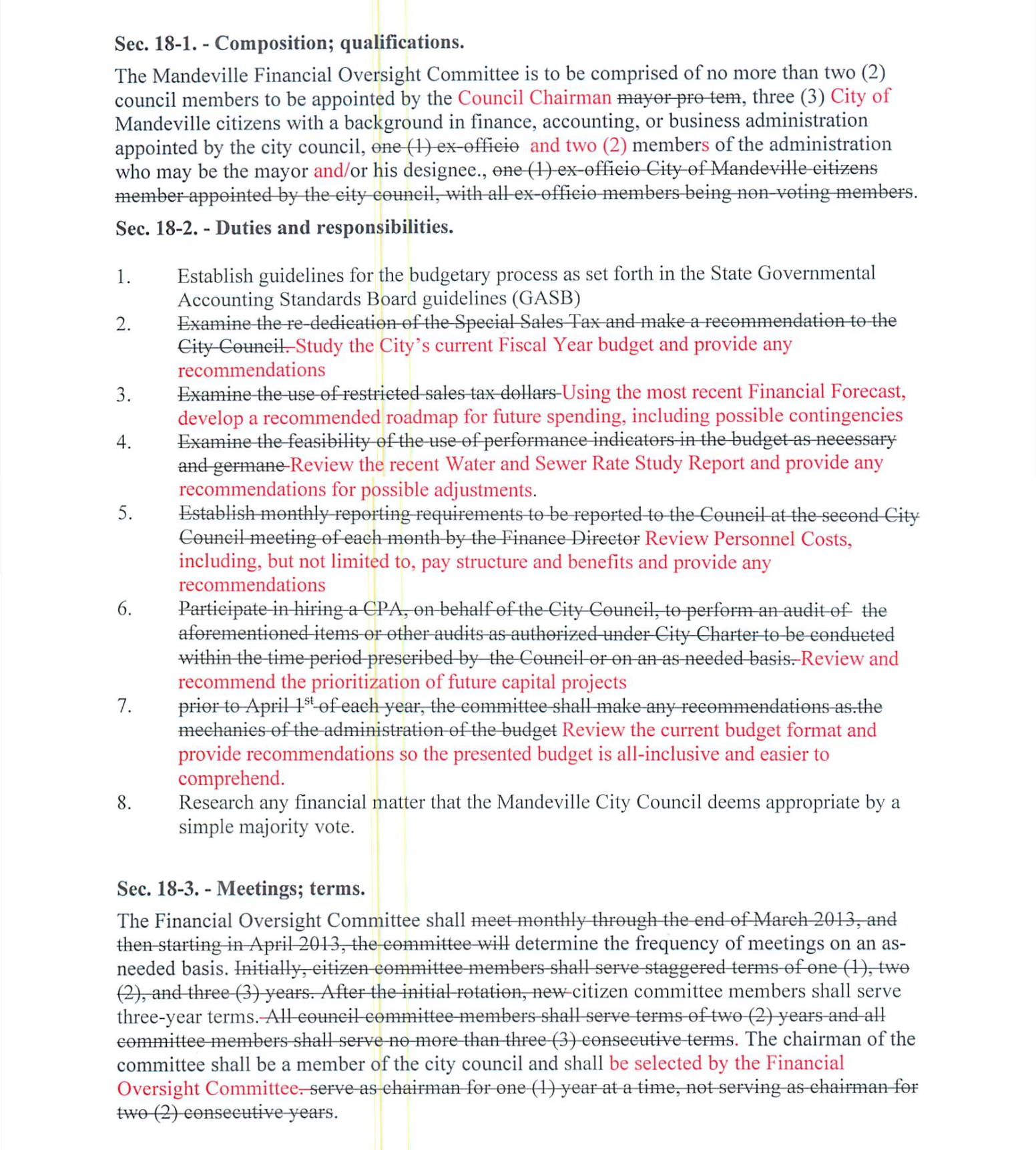



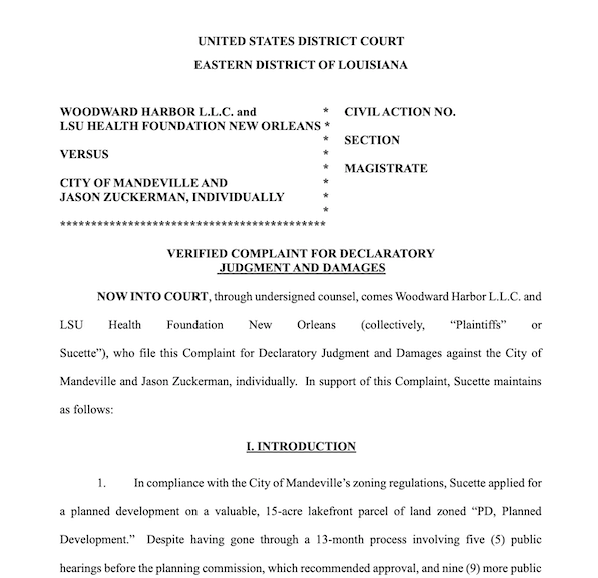


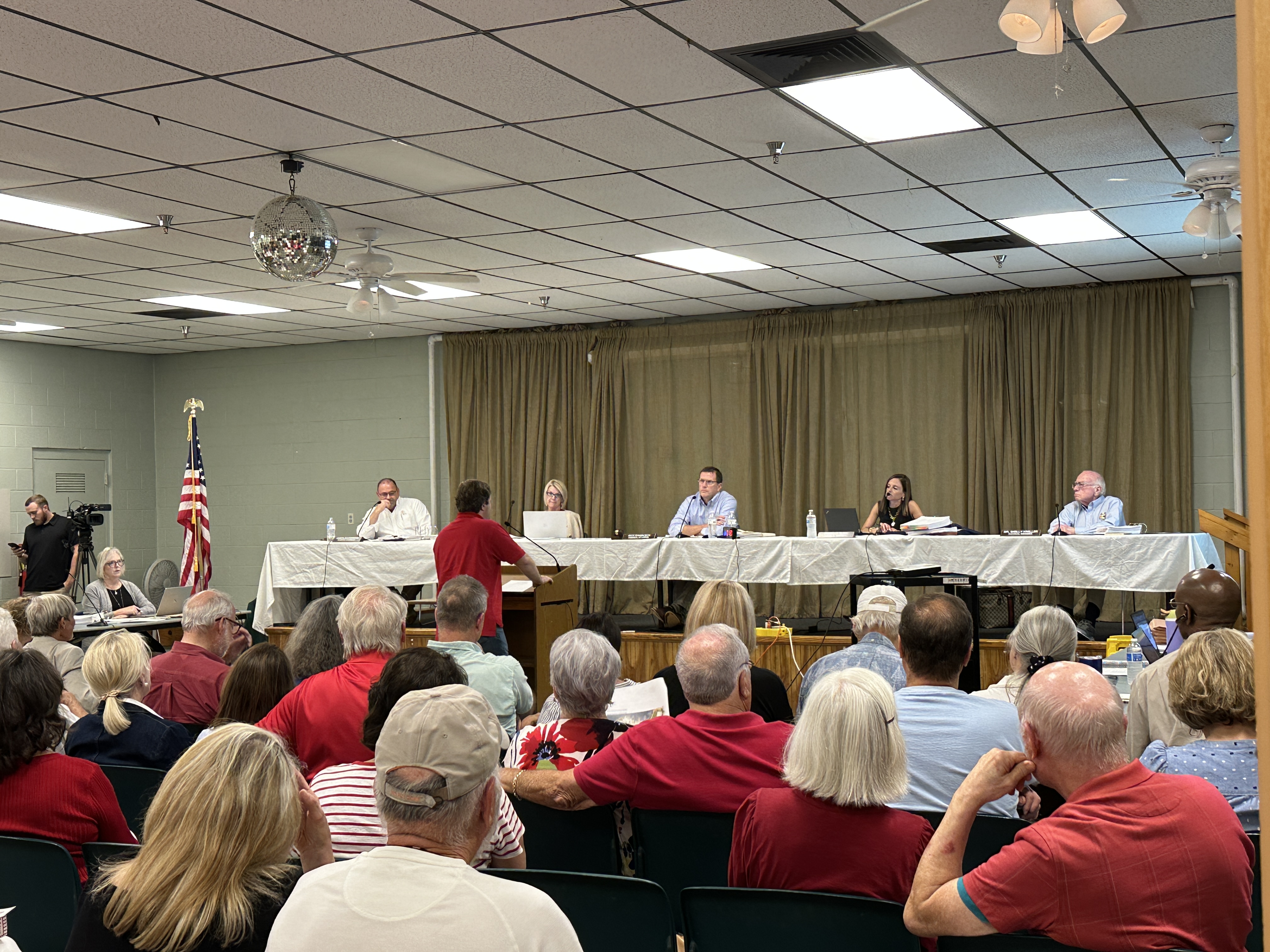


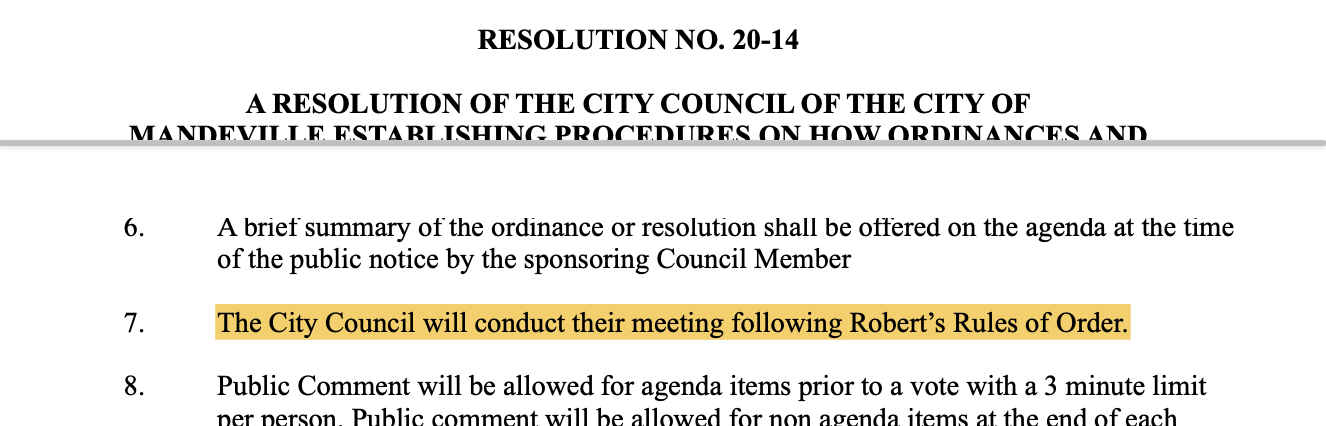





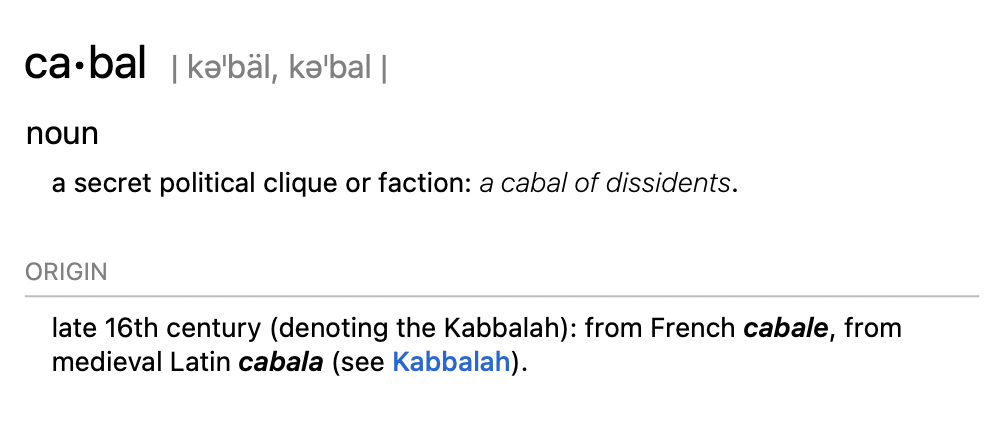
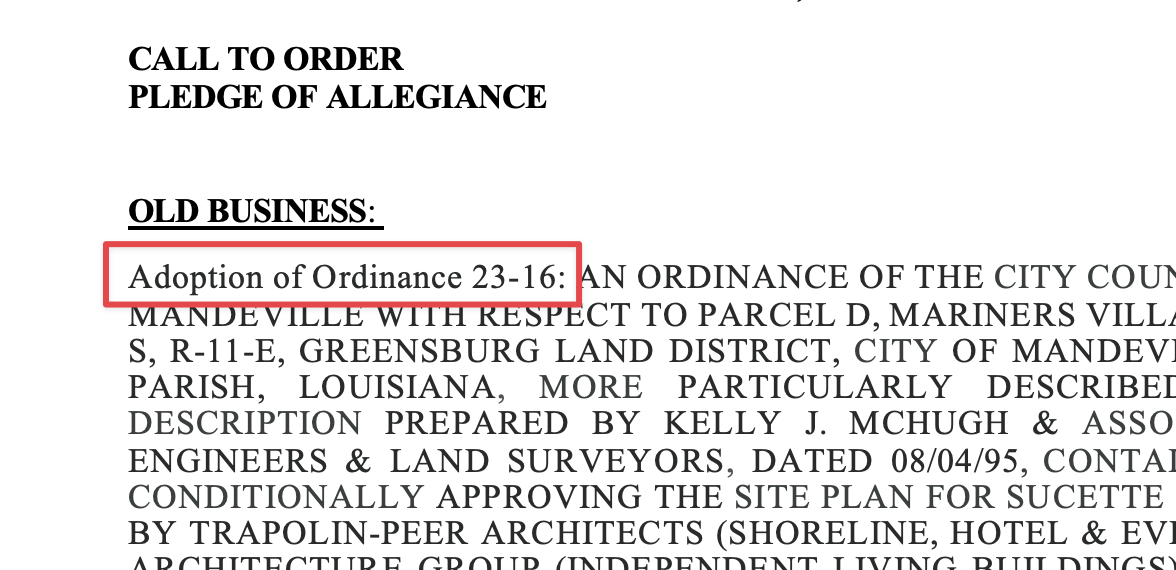


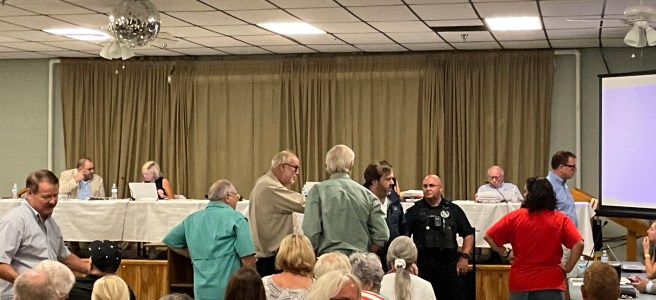

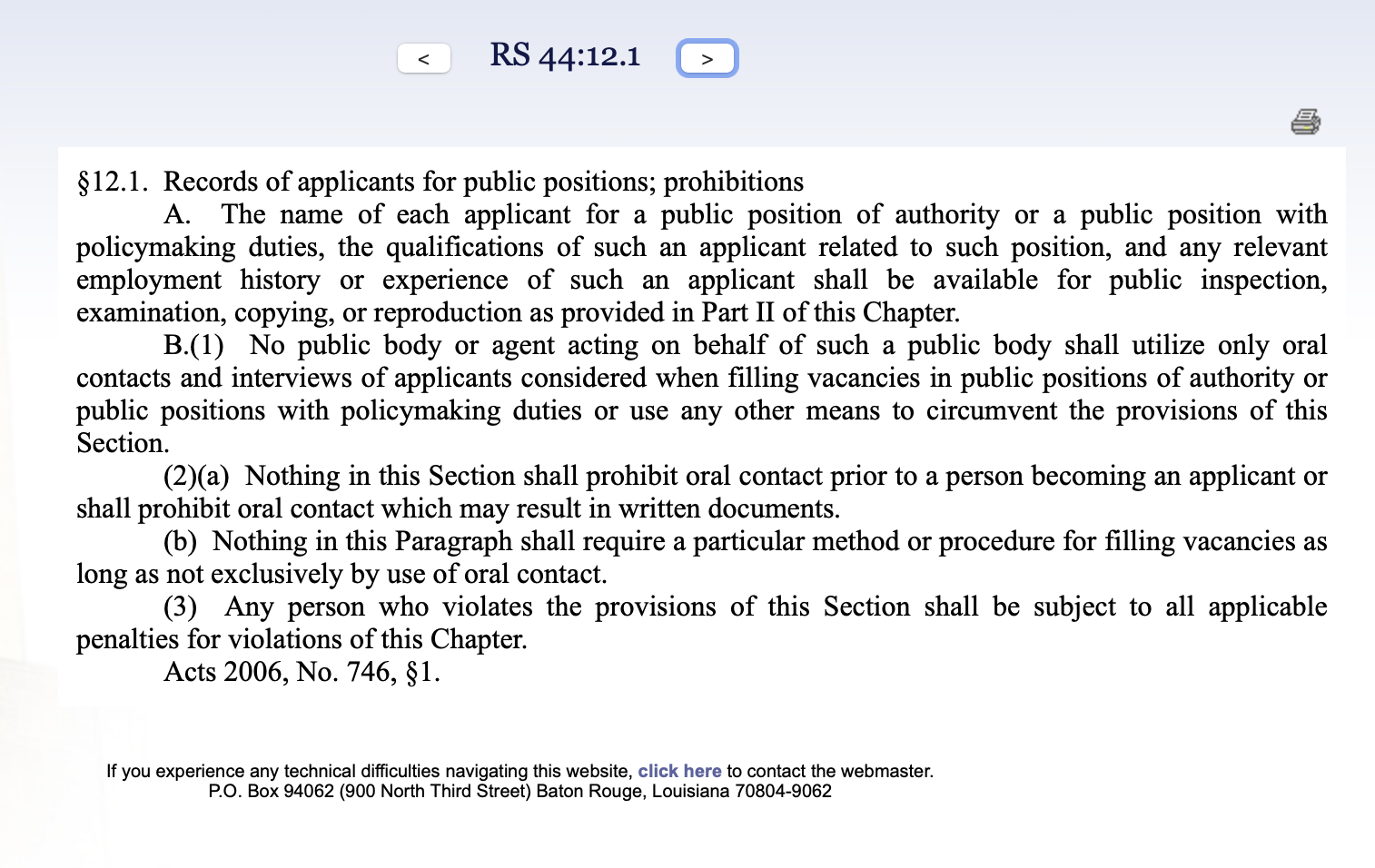


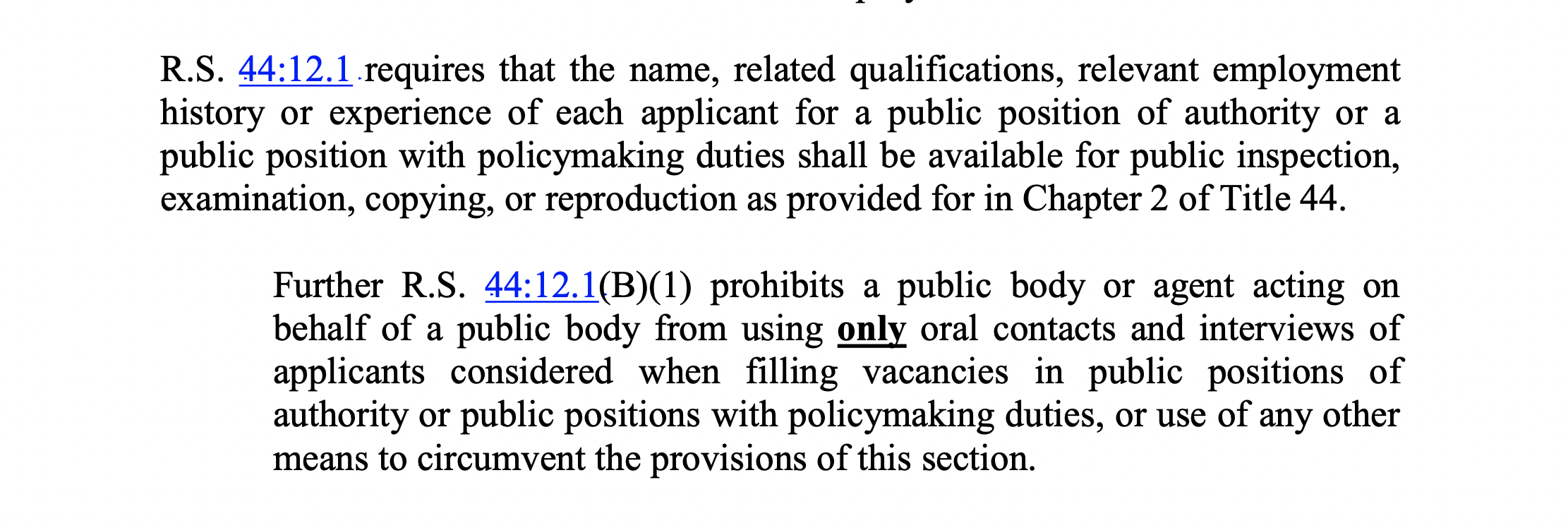

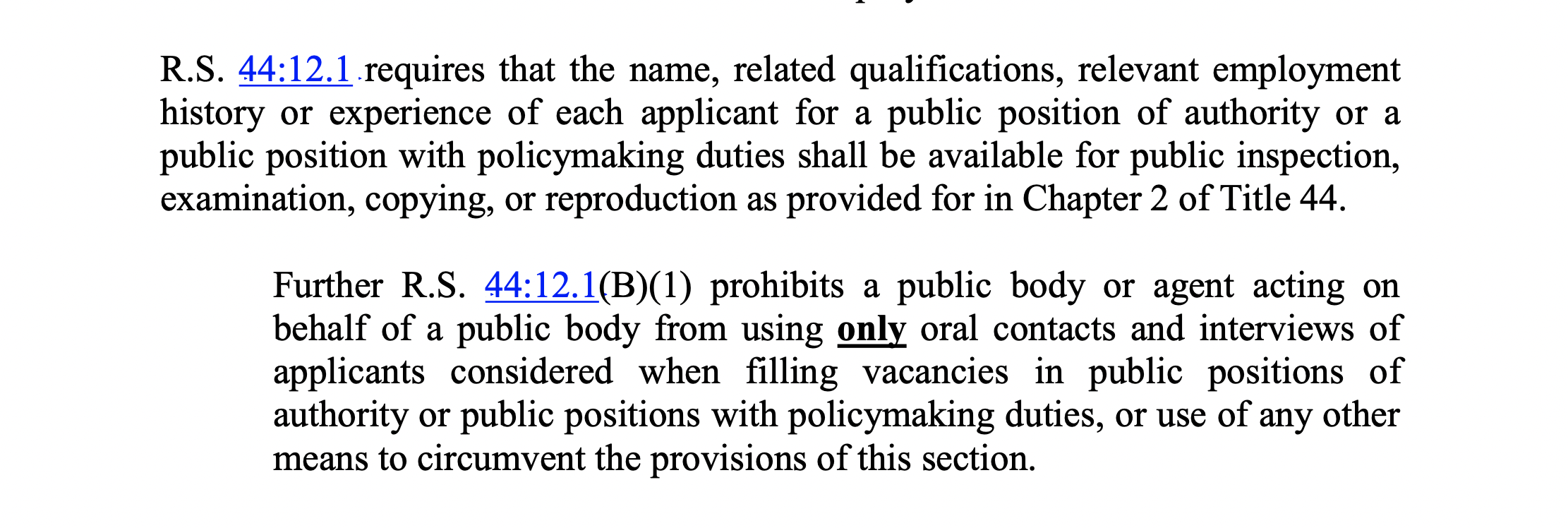


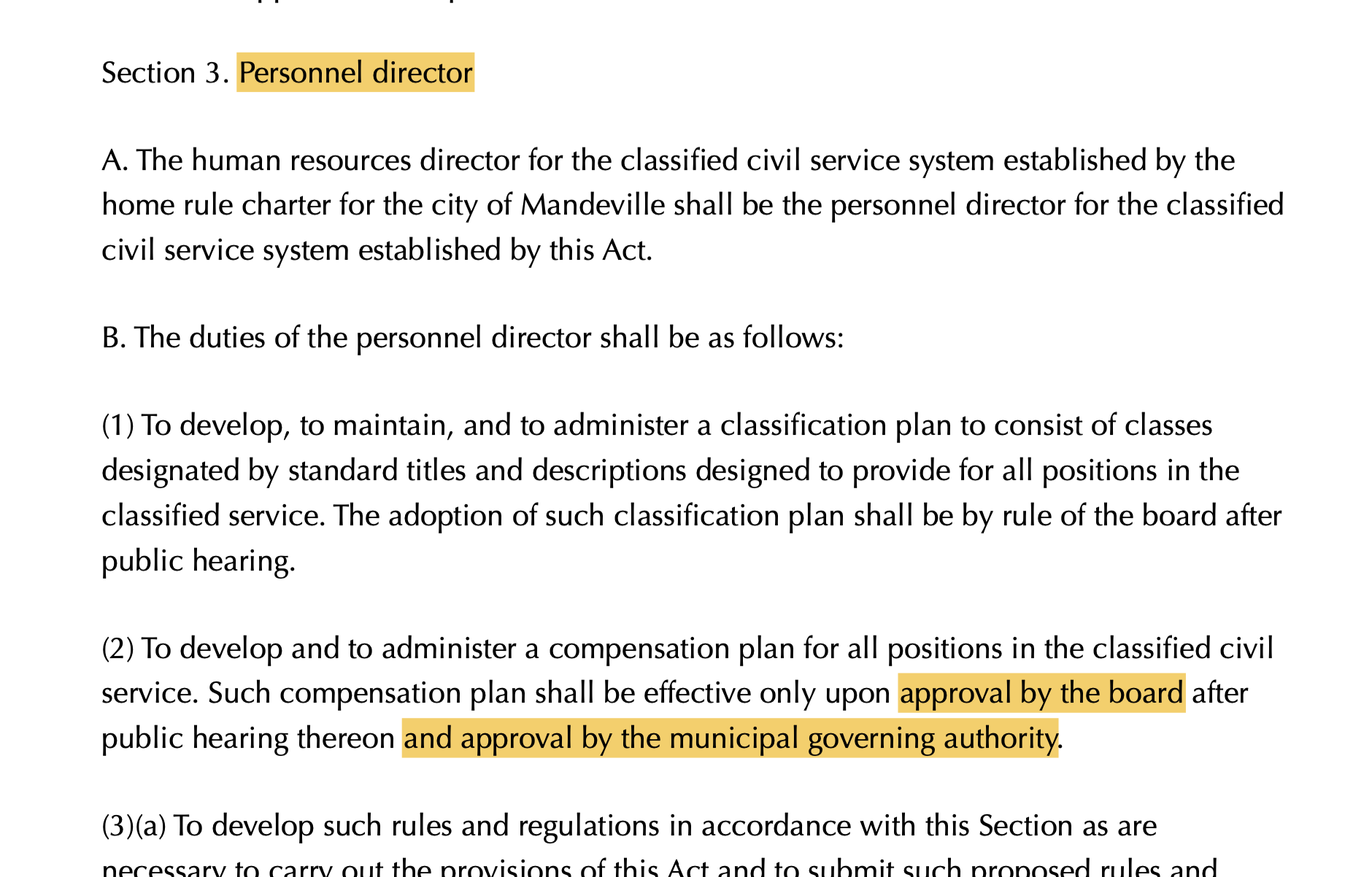

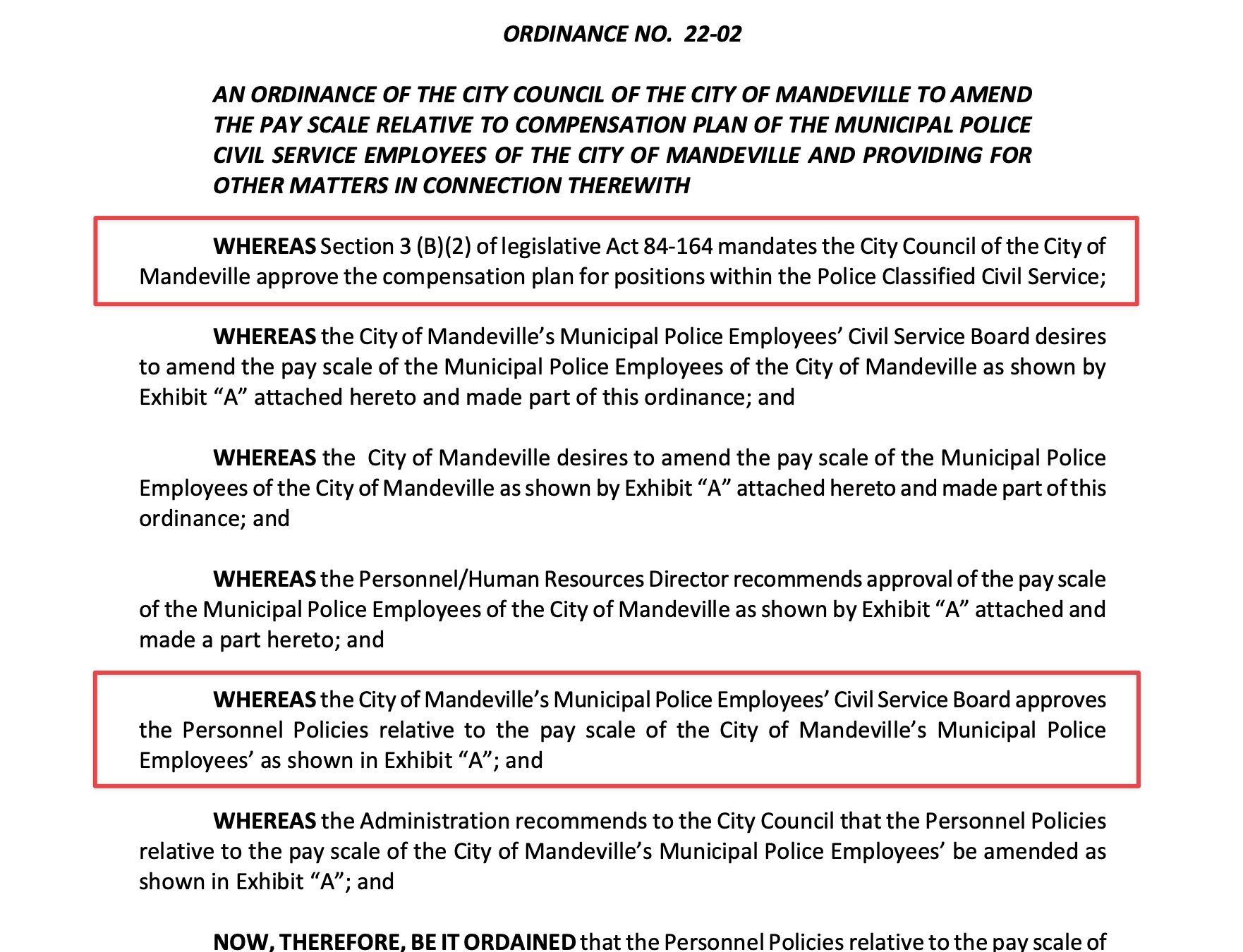


 Mandeville Daily