

Seen as direct response to email, social media posts from activist opposing Sucette Harbor
Could have ‘chilling effect’ on future dissent
Editorial
Updated to expand argument concerning free speech and the word ‘bribe.’
The controversial Sucette Harbor project will likely see a final vote by the end of the summer, bringing to a close the often heated and nasty debate over whether the Mandeville lakefront will get a new multi-story hotel, a special events center and a supposedly age-restricted apartment complex.
The Mandeville City Council is in the process of holding several public “discussion” sessions stuffed into its regular meetings. The first was on May 25th when the embers of a social media firestorm spilled into Council Chambers when District II Councilman Skelly Kreller and Sucette Harbor attorney Paul Harrison threatened lawsuits against anyone daring to impugn his integrity, or in the case of Kreller, anyone connected to a particular activist on the social media platform Nextdoor.
I have retained counsel to fully investigate her claims (activist’s social media posts) and everyone connected to these, and that legal action against her and then, if necessary, against them.
— District II Councilman Dr. Skelly Kreller
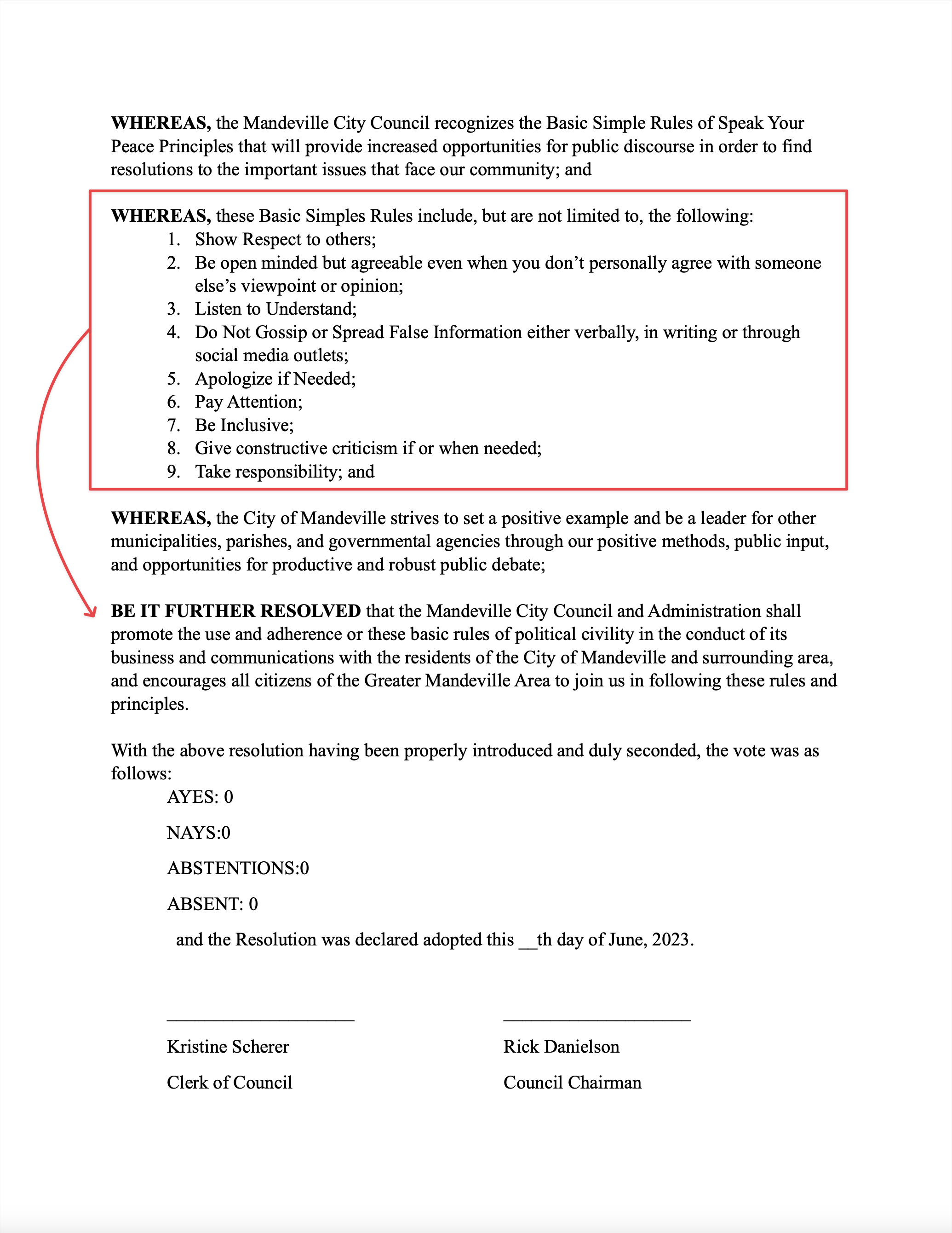
So now Councilman at Large Rick Danielson, sponsor of the Sucette Harbor project legislation, has introduced Resolution 23-22 that would ask citizens to limit their free speech in accordance with a set of rules laid out in the document.
Some might argue resolutions don’t carry the weight of law, only ordinances do. Well, this is true, except when it comes to the council saying what it will do as a body and how it will conduct itself.
Resolutions generally express the will or sentiment of the council or request some action. They are used to authorize the mayor to enter into legal agreements with contractors, or, for example, ask the State Attorney General for an opinion on a matter.
And, it is a resolution adopted by this City Council that establishes the rules by which it conducts itself related to its meetings. In fact, the three-minute time limit for public comment that we are now all-too-familiar with is established in Resolution 20-14, adopted by this City Council in July 2020.
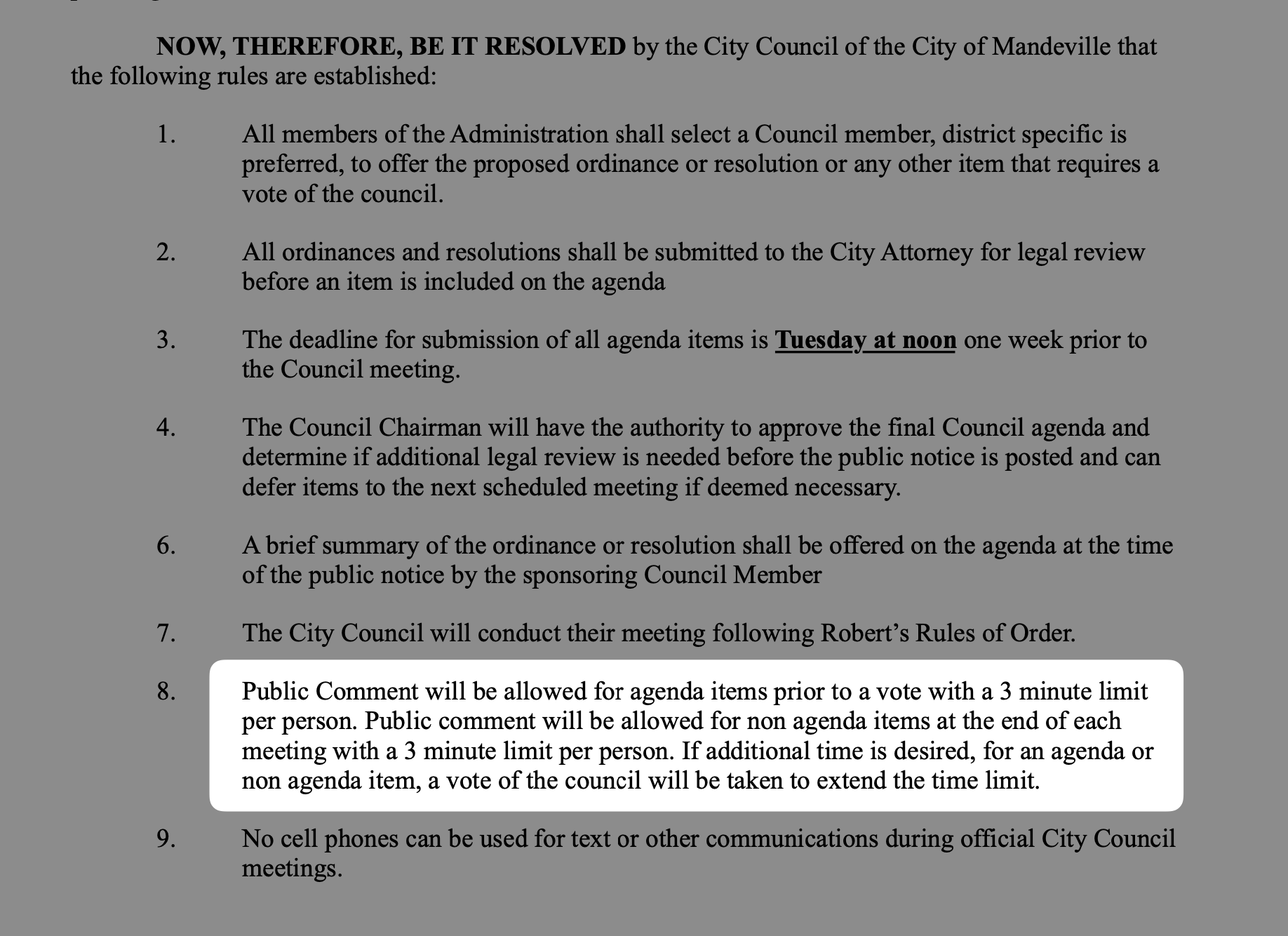
Resolution 20-14 establishes rules by which the public must abide inside Council Chambers. State law allows entities that are subject to the Louisiana Open Meetings law to set “reasonable rules and restrictions” for public comment. It’s up to the courts to decide what “reasonable” might be.

And that is precisely the problem with proposed Resolution 23-22, up for a vote at the June 8th council meeting.
Because proposed Ordinance 23-16 (Sucette Harbor) is only listed as being up for “discussion” and not “adoption” on the June 8th agenda, the City Council is under no obligation to let just anyone speak.
Technically, the council chair could pick and choose who is allowed to speak on Sucette Harbor as long as there is no vote on the issue. Louisiana state law only requires that public comment be allowed before an actual vote.
Considering that fact, combined with the wording of Resolution 23-22 which calls on people to “Apologize if Needed,” what is to stop the council from barring someone from speaking who made “personal attacks” on social media unless they are willing to apologize first? The answer is, nothing.
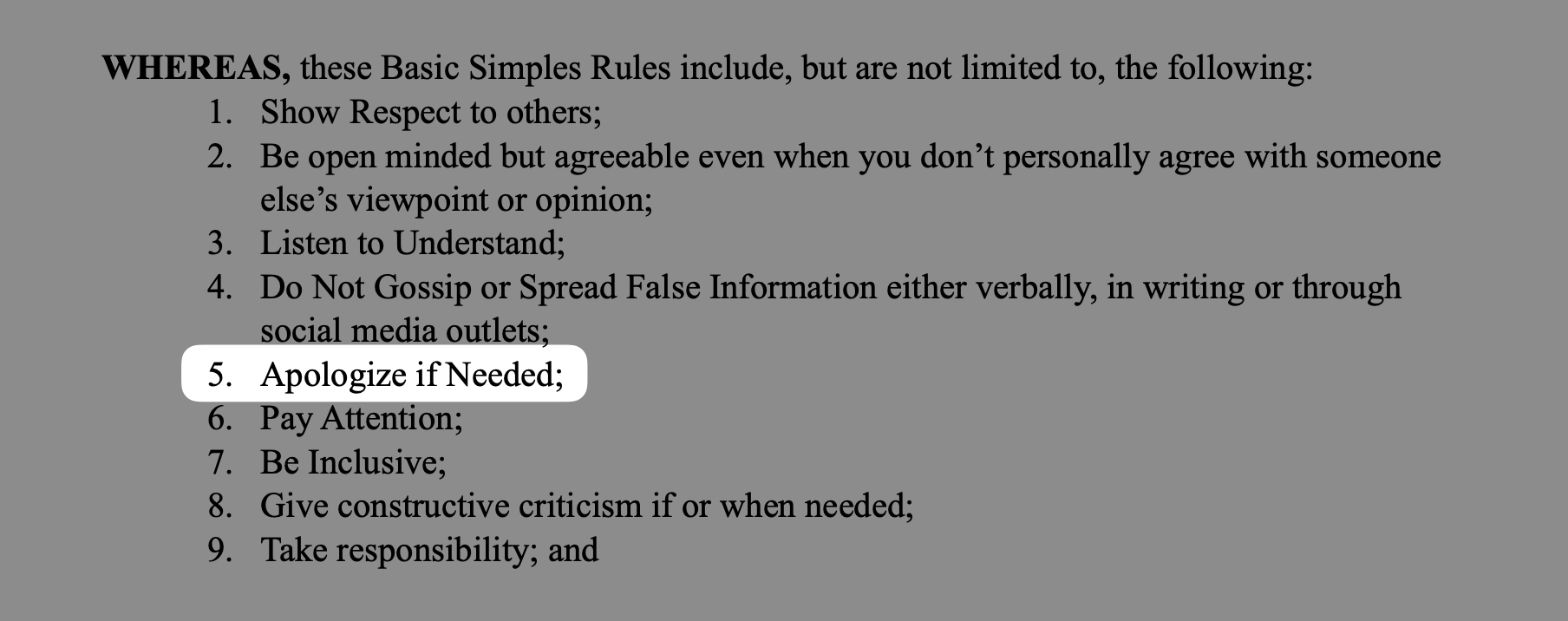
As council chairman, Danielson could probably do that now without this resolution (based solely on the aforementioned state law), but this resolution, if adopted, would provide political cover because it would become “the will of the council.”

It is the opinion of Mandeville Daily that just the mere introduction of this resolution is meant to intimidate the public from speaking or posting on social media in opposition to the Sucette Harbor project.
It’s one thing to have a rule governing public conduct inside Council Chambers, but it is part and parcel from a rule that puts the public on notice that they will be held responsible inside a public meeting for things they may have posted outside the meeting on social media, or in “small group discussions,” as the resolution states.
This could have a chilling effect on dissent with people feeling empowered to report their neighbors to the City Council for comments on social media or even among friends at a local tavern or other social gatherings.
Remember, we already had a sitting councilman — Kreller — state on the record at the last City Council meeting that he is investigating anyone connected to a person who made offending social media posts, along with a lawyer for Sucette Harbor threatening a lawsuit — also at the same council meeting — against anyone “insinuating” things about his integrity, presumably on social media. Both of these threats — allowed to go unchecked by the council chair — are beneath the decorum.
If someone defames me… online, you write it down. You will be sued the next day by my firm. Let’s be very clear about that… But you make an insinuation about MY integrity, you will get sued. That’s it.
— Paul Harrison, Sucette Harbor project attorney
It is the opinion of Mandeville Daily citizens should be held accountable only for what they say and how they behave inside Council Chambers and not on social media or in “small group discussions.” The people of Mandeville are owed an apology from Kreller, Harrison and Danielson. Regardless of what anyone wrote about them on social media, it does not justify broad threats against everyone else in the chamber nor does it justify this silly free speech resolution.
We particularly feel Danielson had an obligation to reign in the threat by Harrison as soon as it occurred, as it was broad and against everyone, not just the activist in question. Again, this was beneath the decorum.
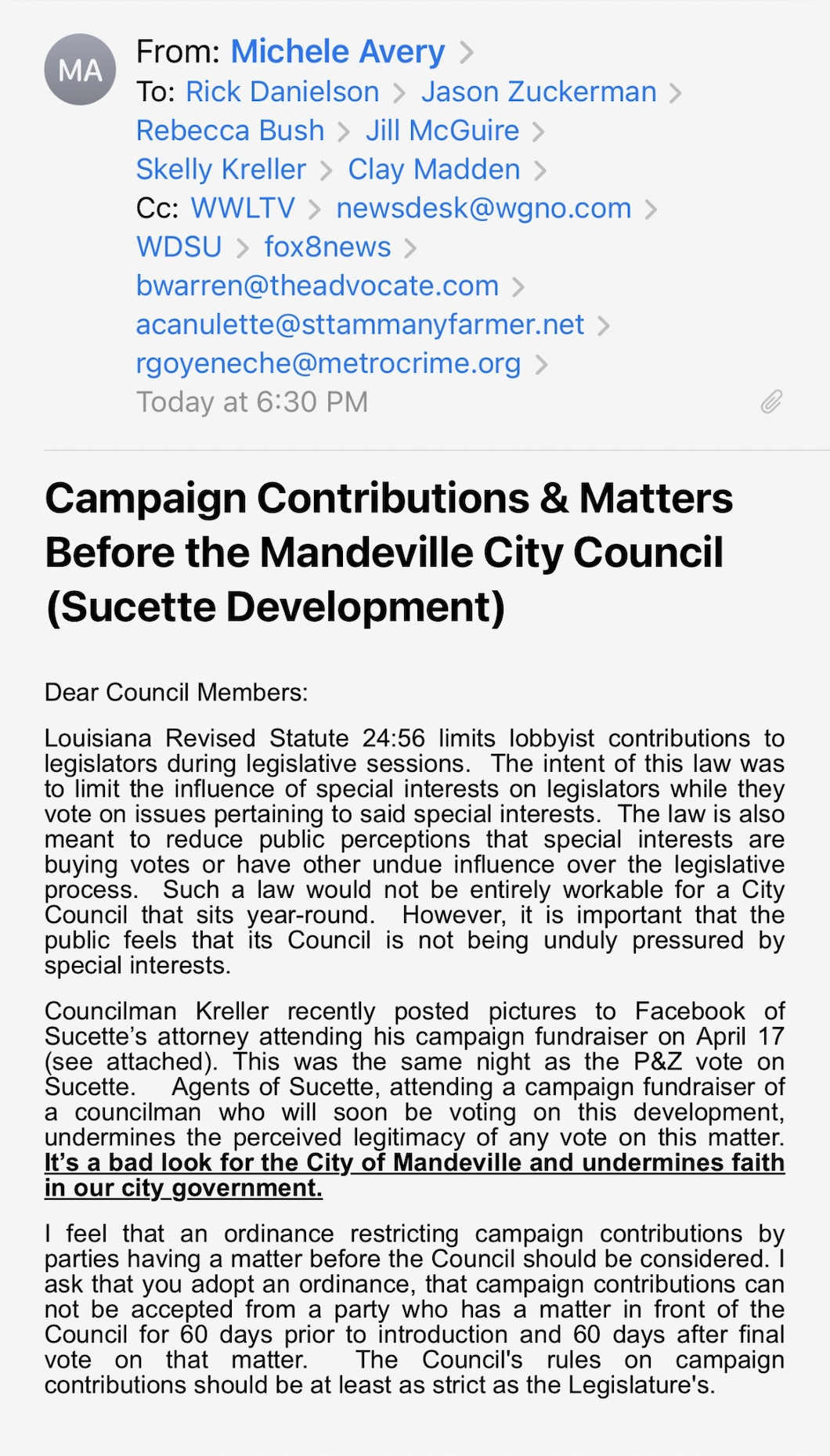
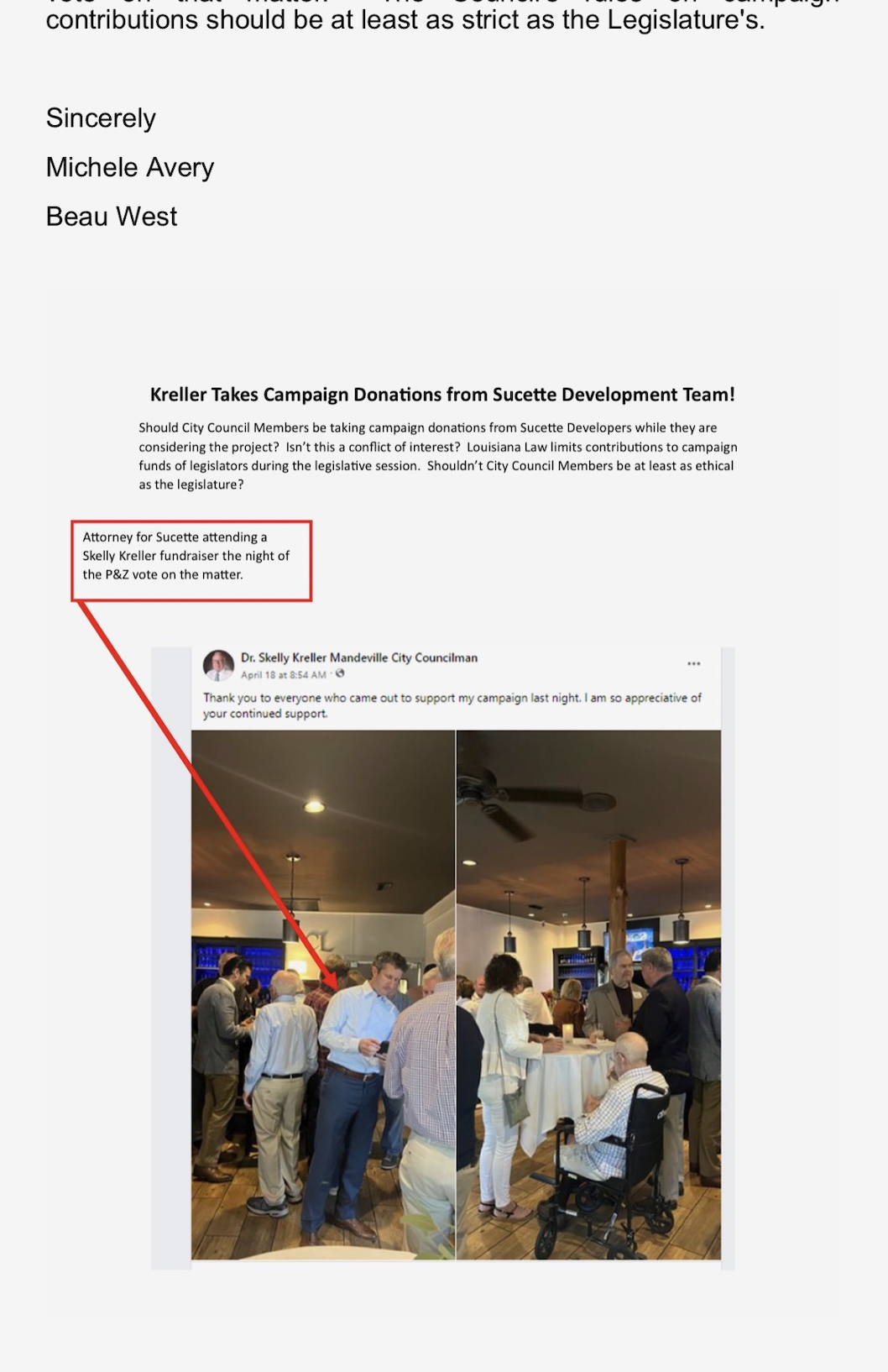
While Mandeville Daily categorically disagrees with the language used by the activist in question on social media as it only serves to invite trouble and divert attention from the issue at hand, we do, however, believe the activist’s body of comments on social media and the email they sent to the City Council on the matter are legally protected speech. The only thing they accused anyone of in the email was giving a campaign contribution, which is perfectly legal. (See full email below.)
Let’s just consider that email, as it was the only thing up to that point that was part of the public record as far as the council is concerned, and it contained no use of the word “bribe.” It did, however, contain a screenshot of a prior social media post — presumably by the activist in question — of another social media post made by Kreller showing Harrison at his campaign event, thanking everyone for their “continued support.” The screenshot was captioned “Kreller Takes Campaign Donations from Sucette Development Team!” At worst, the activist in question had a misstatement of fact if Kreller did not actually receive campaign contributions from anyone connected to the Sucette Harbor project.
The activist’s political position that campaign contributions near a vote should be illegal and are the same as “bribes” is a separate matter.
The activist accused Harrison of making campaign contributions, which are perfectly legal. The fact that the activist believes a legal campaign contribution is the same as a “bride” does not make it so. She accused him of a perfectly legal act. Her evidence is a social media post by Kreller’s own campaign at his legal fundraiser.
It seems it would be difficult to make the case that an individual was defamed with provable damages (one of the legal requirements) by being accused of giving perfectly legal campaign contributions at a campaign event that no one disputes they actually attended. Harrison himself even said he attended the event during the council meeting.
The only remaining question is, did he actually make a contribution to Kreller’s campaign? After all the indignant posturing and threats by Harrison and Kreller, not to mention this ill-conceived social media resolution, if it later comes out that a campaign contribution was indeed made, what did the activist do that was so wrong? Wouldn’t somebody be owed an apology?
Mandeville Daily believes it was ill-advised for Kreller to post to social media a picture of Harrison at his event, regardless if any campaign contributions were made by Harrison. It was also ill-advised for Harrison to attend such an event under these circumstances, much less make a contribution, when his client is asking the City Council for a change that will likely be extremely profitable for his client. It’s a bad look. Kreller and Harrison created this problem — they were not the victims.
With that said, Mandeville Daily categorically believes that any such campaign contributions are constitutionally protected speech. Law requires public reporting of such contributions. The voters can judge at election time if they were inappropriate.
Sure, it would be nice if elected officials — out of a desire for transparency and openness — would disclose such legal contributions under these particular circumstances before such votes rather than waiting for the year-end legally required reports to be filed. We shall see.
Regardless, the adoption of this social media resolution would place the City Council amok of the long-established “Chilling Effect Doctrine.”
The so-called “chilling effect” is the concept of deterring free speech protected by the First Amendment as a result of laws or actions that appear to target expression.
If you don’t agree with the argument presented in this piece by Mandeville Daily, then ask yourself: What if the disparaging and bellow-the-belt remarks made by an activist on a silly website like Nextdoor had been about a councilperson who was against the Sucette Harbor project instead of in favor? Would there even be a Resolution 23-22?
Finally, Mandeville Daily is of the opinion that this resolution is an insult to the public and should be withdrawn.



-30-

 Mandeville Daily
One thought on “OPINION: ‘Social media’ resolution thinly veiled attempt to intimidate public”