
Members debate whether to cut spending or wait as budget imbalance stems from restricted funds
Some council members weigh targeted cuts against the risk of deferring action on structural fix
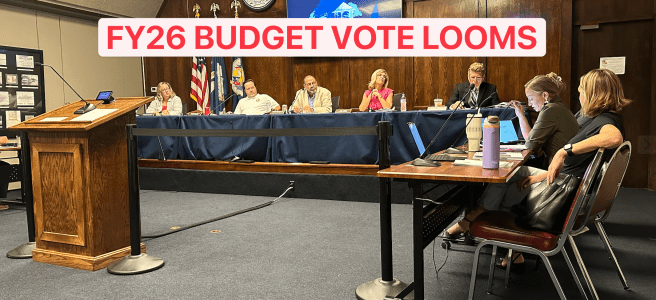
MANDEVILLE — The Mandeville City Council will decide Thursday whether to adopt the city’s fiscal 2026 operating and capital budgets, codified in Ordinances 25-25 and 25-26, following weeks of hearings that revealed clear philosophical differences but little movement in positions.
The consensus: the $28.8 million general fund budget is balanced, and the city remains in a strong financial position with reserves far exceeding recommended levels.
(Editor’s note: See “Budget hearings recap” later in this story.)
The dispute: whether to make cuts this year to reduce the projected $1.8 million gap between recurring revenue and general fund expenditures, or to pass the mayor’s proposal largely intact and focus on long-term fixes such as sales tax reallocation.
Councilman at Large Jason Zuckerman continues to push for a voter-approved shift in sales tax allocations paired with a rate cut, warning against overtaxing residents and deferring maintenance.
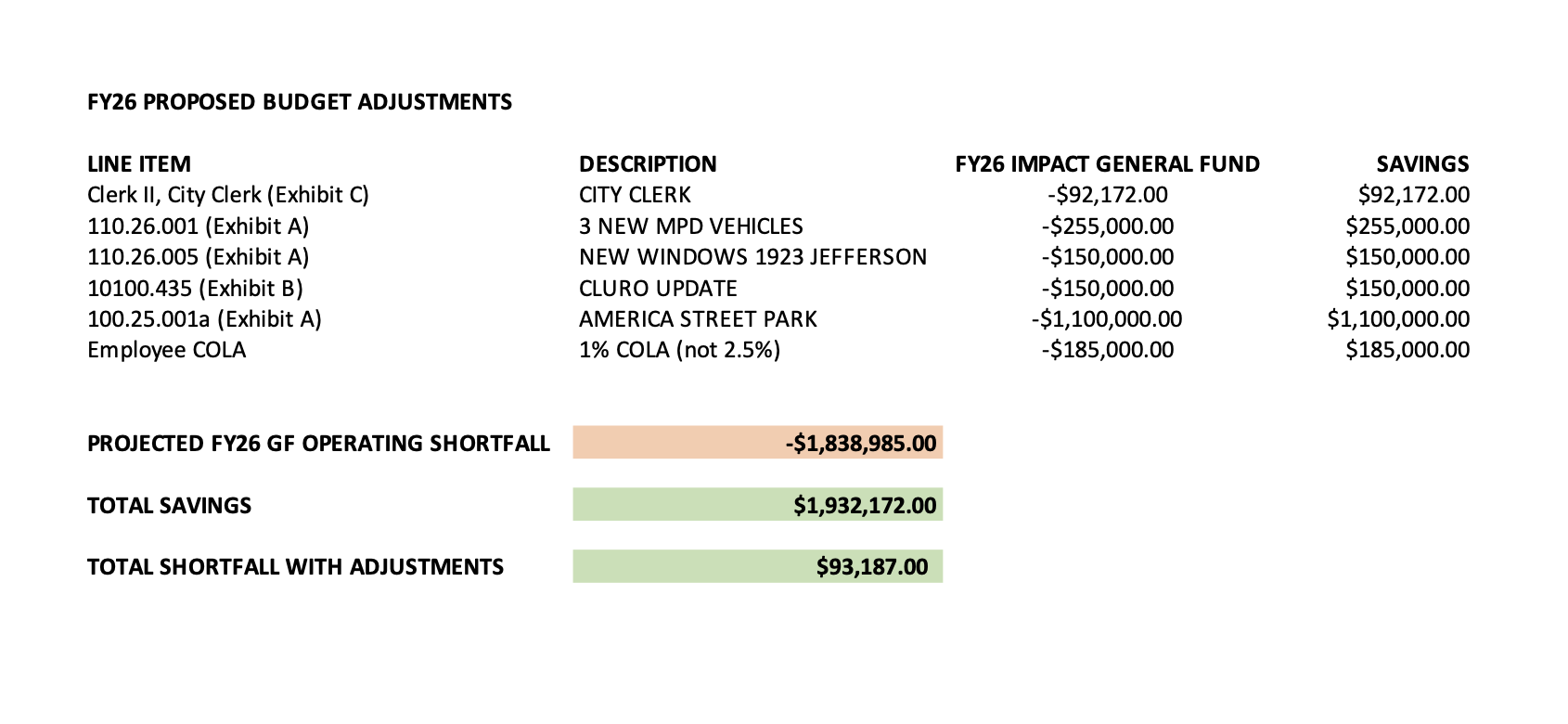
District II Councilman Kevin Vogeltanz has proposed $1.93 million in cuts to fully offset the shortfall this year, framing them as a starting point for debate.
Councilman at Large Scott Discon also favors trimming the budget but wants the administration, not the council, to identify the reductions.
District I Councilwoman Cynthia Strong-Thompson and District III Councilwoman Jill Lane oppose hasty cuts, stressing the need to avoid decisions that could increase costs later and expressing openness to a reallocation vote after public input.
Mayor Clay Madden stands by his budget, saying it funds the community improvements residents expect and rejects the “sky is falling” warnings that have surfaced in past budget cycles.
Finance Director Jessica Farno has defended the proposal as fiscally restrained and warned against what she called “short-sighted” last-minute reductions.
Thursday’s vote will cap a budget process that council members on all sides have called one of the most substantive in recent years. But it is unlikely to end the broader debate over how to resolve the city’s structural funding imbalance — an issue that could define next year’s budget talks.
Budget hearings recap: Each official’s stance and extended remarks
At its August 5th and 11th budget hearings, the final two in the series of five, council members sparred over whether to reduce general fund spending now — potentially delaying police purchases and capital improvements — or wait for a possible reallocation of sales taxes next year that could rebalance the city’s finances without cutting services.
Related:
Zuckerman calls for sales tax cut to fix budget imbalance without cutting services
No reallocation vote has been scheduled yet, but Councilman at Large Jason Zuckerman, the council chairman, has led calls for pursuing one.
Hear is a breakdown of each official’s remarks from the various budget hearings:
Jason Zuckerman: Tax relief through reallocation, warns against hoarding funds
Councilman at Large Jason Zuckerman reiterated that Mandeville’s FY26 budget is balanced and in the black, rejecting what he called “misinformation” about a deficit.
While acknowledging the problem of recurring general fund revenue falling short of general fund expenditures, he said that issue does not amount to a fiscal emergency and must be solved through a reallocation of sales tax revenue while simultaneously cutting taxes.
Zuckerman argued that deep cuts to capital and operating expenses this year would only add to the city’s already large excess fund balance, meaning “we have charged the taxpayers money and not spent it yet again.”
He said the city is “overtaxing our citizens year after year” and advocated for a voter-approved reallocation of sales taxes coupled with tax relief.
Without a unified council to promote it, he warned, the plan has no chance of passing. Zuckerman also cautioned against deferring maintenance and capital needs simply to set aside more money, calling that “sticking it in a mattress” and “kicking the can down the road.” While stressing the need to bring projected expenditure growth in line with slower revenue growth, he opposed making last-minute cuts this year that he said would hurt services without solving the long-term problem.
“We need to focus on fixing that [fund structure] rather than cutting services, which the people have already paid for.” Zuckerman said. “I’m not for defunding projects. I’m really not for cutting funding to the police department at this time.”
He reiterated his proposal to pursue a March 2026 reallocation of sales taxes to shift revenue into the general fund, calling it a long-term solution. Zuckerman added that the general fund balance — while down from its 2019 peak—is still well above the level auditors have said is healthy, and there is no immediate financial crisis.
Scott Discon: Supportive of reallocation, but remains skeptical
Councilman at Large Scott Discon maintained his position that the FY26 proposal is a deficit budget, citing a $1.74 million gap between revenues and expenses. While supportive of finding ways to cut back, he argued it should be the administration — not the council — that identifies specific reductions. Discon said department heads and the finance office are best positioned to develop the strategies needed to close the gap, as they have in past years.
He reiterated concerns over growing employee benefit costs and pointed to two large capital items he believes deserve scrutiny: the $3.31 million America Street Park project, which lies outside city limits, and $250,000 in city hall expenditures when the promised new police station remains unfinished. Calling the police facility the city’s “number one priority,” he said funds should first be secured to move officers into a safe, mold-free building.
Discon stressed that his aim was not to single out individuals but to raise questions about whether certain appropriations are appropriate given the city’s financial position.
“But I don’t see why as a councilman, I have to be the one to pick and choose and debate with my fellow councilmen up here, what has to be cut.”
He continued, “The other option is for us to sit up here tonight and then we would have to make offers of what we feel should be cut. And I don’t know if that’s really fair for us or fair for you.”
Discon said he supports Zuckerman’s reallocation idea but expressed doubt as to whether it would be approved by voters.
“Just like the parish, there are some people that are not gonna support it,” Discon said. “I’m just concerned … that just fixing the rededication is not gonna solve our problem.”
He questioned why projects he proposed for the city’s central neighborhoods continue to be delayed while funding remains committed to projects like America Street Park, which lies outside the city limits.
Kevin Vogeltanz: Offered cuts to nullify ‘shortfall’
District II Councilman Kevin Vogeltanz acknowledged the structural issue but presented possible cuts to the budget to neutralize what political foes of Mayor Clay Madden say is a shortfall in the general fund.
“We are told by our auditors that we are the only municipality in Louisiana … that has zero debt. We owe no money to anybody. We are masters of our own fate today. We have approximately … $60 million in cash and investments, $60 million,” Vogeltanz told the crowded Council Chambers.
“This is not a deficit budget. At the end of the budget year, we will have more money than we had at the beginning of the year.”
He continued, “It’s not deficit budget, but it’s a general fund shortfall.” However, “out of a sense of conservative fiscal outlook,” he was offering a series of proposed cuts to give the council and the public an option, should they chosoe it.
Vogeltanz presented a slate of proposed cuts totaling $1.932 million — enough to more than offset the projected “shortfall” and leave a small surplus.
The list includes reductions or deferrals in vehicle purchases, building maintenance, and other line items. Vogeltanz said the council and public should be prepared for the reality that “cutting the budget means cutting things that people want.” He emphasized that the discussion should inform both the current budget debate and future talks on sales tax reallocation.
Cynthia Strong-Thompson: Defends council’s diligence, highlights outside praise for Mandeville
District I Councilwoman Cynthia Strong-Thompson used part of her comments to counter suggestions that council members are acting with political motives or lack financial understanding.
She noted that all members recently traveled to Lake Charles for the Louisiana Municipal Association conference, taking time away from jobs and families to learn best practices from other cities. While there, she met Clay Stafford of Reliant Investment Management, who later sent her a handwritten letter praising Mandeville as a city “others seek to emulate” and noting that other municipalities have mirrored some of its ordinances.
Strong-Thompson said the encounter underscored that Mandeville is viewed positively beyond its borders and that the council is actively seeking ways to improve, including exploring potential cost-sharing arrangements for large projects such as the America Street Park. She stressed that the trip and her engagement with peers and experts reflected a commitment to informed decision-making, not political maneuvering.
Strong‑Thompson supports adopting a balanced FY26 budget that protects essential services and neighborhood‑level needs. She is cautious about any near‑term tax cut or revenue shift that could constrain operations, emphasizing the importance of maintenance, public safety and equitable service delivery across districts. She favors a deliberate review of options before pursuing structural changes.
She said she could not support removing the window replacement project for the police investigations building, which she noted is currently covered with cardboard and duct tape.
“If we don’t take care of our properties, then we have larger costs down the road,” she said, noting that even cuts of $150,000 “aren’t fixing the problem” caused by an overly restricted fund structure.
Strong-Thompson aligned with Zuckerman’s diagnosis of the broader issue, calling the city’s budgeting restrictions “a crumble over here” that makes small line-item cuts feel like empty gestures.
Jill Lane: In favor of planning, not panic
District III Councilwoman Jill Lane recounted the city’s recent efforts to improve employee pay and morale, noting that an efficiency study in 2020 revealed low wages, staffing shortages, and low morale, particularly in public works and the police department.
Subsequent salary adjustments and cost-of-living increases, she said, were necessary to attract and retain qualified staff. Lane credited these steps with improving service and employee satisfaction.
She stressed that while the city must prepare for future fiscal challenges, this year’s budget is not projected to run a deficit and will likely end with about $14 million in reserves.
Lane warned that cutting major purchases such as police cars or city hall window replacements could lead to higher maintenance costs later and that delaying capital projects often results in higher prices. She also clarified that the America Street Park funding is a prior-year appropriation, not part of the FY26 budget, and therefore cannot be cut from it.
Lane said she is open to a public vote on rededicating sales tax revenue but wants decisions to be informed by detailed pros-and-cons analyses. She cautioned against hasty budget cuts that could cost the city more in the long run.
Clay Madden: Defends community investments, rejects “sky is falling” rhetoric
Mayor Clay Madden praised the FY26 budget process as the most productive since he took office in 2020, citing constructive, big-picture discussions about the city’s future.
Responding to a resident’s question about the Harbor Pavilion project, Madden said years of deferred maintenance had left city assets in need of upgrades, and he believes residents expect their leaders to invest in parks and other public amenities.
While not opposed to specific project cuts if the council chooses, he said his philosophy is to “take less money from the people and use it for what people actually want,” rather than stockpiling cash in savings.
Madden contrasted his approach with past leadership, which he said often left projects unfinished. He emphasized that all improvement projects have been vetted through the council’s annual budget process and argued that warnings of financial crisis are nothing new and have not come to pass in decades.
“The sky has never fallen because we do this every year,” he said, adding that he looks forward to finalizing and passing a “good budget” in the coming meetings.
Finance director urges council to reject ‘short-sighted’ last-minute cuts
Finance Director Jessica Farno, a certified public accountant licensed in Louisiana, told the Mandeville City Council she has a fiduciary duty to safeguard the city’s financial health and will not “rubber-stamp or play politics.”
She said the administration has already reduced general fund spending by more than 27 percent compared to the previous year, proof of fiscal restraint.
“The city maintains over six months of reserve coverage. That’s more than triple the GFOA’s (Government Finance Officers Association) recommended minimum of two months, and more than adequate given the city’s risk environment, revenue stability, and operational needs,” she said.
Farno warned against last-minute budget amendments aimed at one-time expenditures, calling them an “illusion” of fiscal toughness that would defer needed maintenance, public safety, and capital projects — increasing costs over time.
“There is no fiscal emergency,” Farno said, citing a projected $14.8 million general fund balance for FY25, six months of reserve coverage, and even healthier restricted funds. She noted the mayor is forming an ad hoc committee to review fiscal policies, address structural cost drivers, and plan for the next five years.
Those challenges, she said, cannot be solved with rushed political moves but require strategic, forward-looking planning. “We cannot govern effectively if every budget becomes a line-by-line political litmus test,” she added.
-30-

 Mandeville Daily
One thought on “Mandeville council heads into final FY26 budget vote with familiar divisions”