

Establishes formula-based event fees but leaves Mardi Gras parades largely unchanged
Non-traditional parades would see spike
MANDEVILLE — A proposed rewrite of Mandeville’s special events rules would significantly change how Old Mandeville’s parades and festivals are permitted, routed and paid for, while leaving traditional Mardi Gras parades largely unchanged.
Ordinance 25-34, scheduled to be introduced at the December 18th City Council meeting, amends Article V of the city code governing parades, festivals and other special events. The measure seeks to modernize public safety rules, clarify permitting standards and ensure large, non-city-sponsored events do not impose unreimbursed costs on taxpayers.
If adopted, the ordinance would replace the city’s largely discretionary system with a structured, attendance-based framework that requires event organizers to reimburse the city for police, fire, EMS, sanitation and traffic-control costs. The practical effect would be most pronounced for newer or nontraditional parades.
Shift toward structured, cost-based permitting
Under current law, nonprofit events may have most or all city costs waived at the discretion of the mayor or City Council. There is no standardized fee schedule, and staffing levels are determined administratively. The current system has made it difficult for the city to control special-event-related costs or budget for them accurately, especially as more groups seek permits for events that can strain city resources depending on attendance.
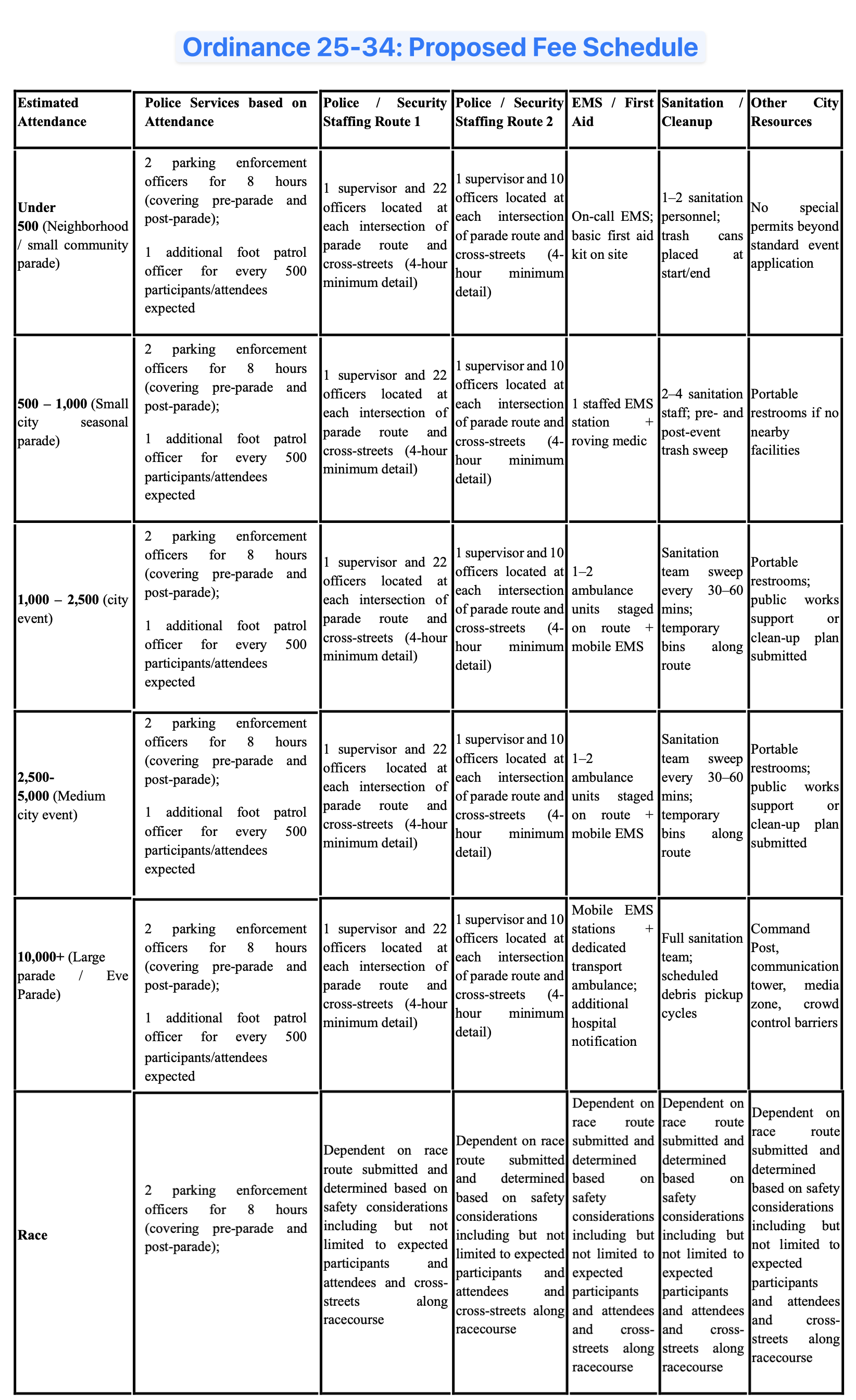
Ordinance 25-34 would replace that system with an attendance-based framework requiring organizers to reimburse the city for police, fire, EMS, sanitation and traffic-control services. Permit fees would be calculated upfront based on projected attendance, route length and safety needs, with the city retaining authority to bill additional costs if attendance exceeds estimates.
The proposed fee structure contemplates staffing that includes parking enforcement officers for extended pre- and post-event coverage, additional foot patrol officers tied to attendance, and traffic-control staffing at route intersections, along with staged EMS coverage and ongoing sanitation sweeps.
The ordinance also anticipates added costs for crowd-control barricades and vehicle-control measures, including temporary no-parking signage.
While the ordinance does not assign dollar values, a minimum-cost estimate based on the required staffing levels and typical municipal overtime rates places the permit cost for a Lakeshore Drive parade turning up Girod Street with about 3,000 attendees at approximately $15,000 to $20,000 or more, depending on final staffing and route conditions as well as other factors that cannot be determined without more information.
(Editor’s note: Mandeville Daily independently calculated this estimate using the staffing framework in the proposed ordinance, police overtime rates published in the city’s FY2026 adopted budget, and conservative assumptions for other services. The City of Mandeville has not issued an official cost estimate, and actual charges could differ materially.)
Route limits and enforcement
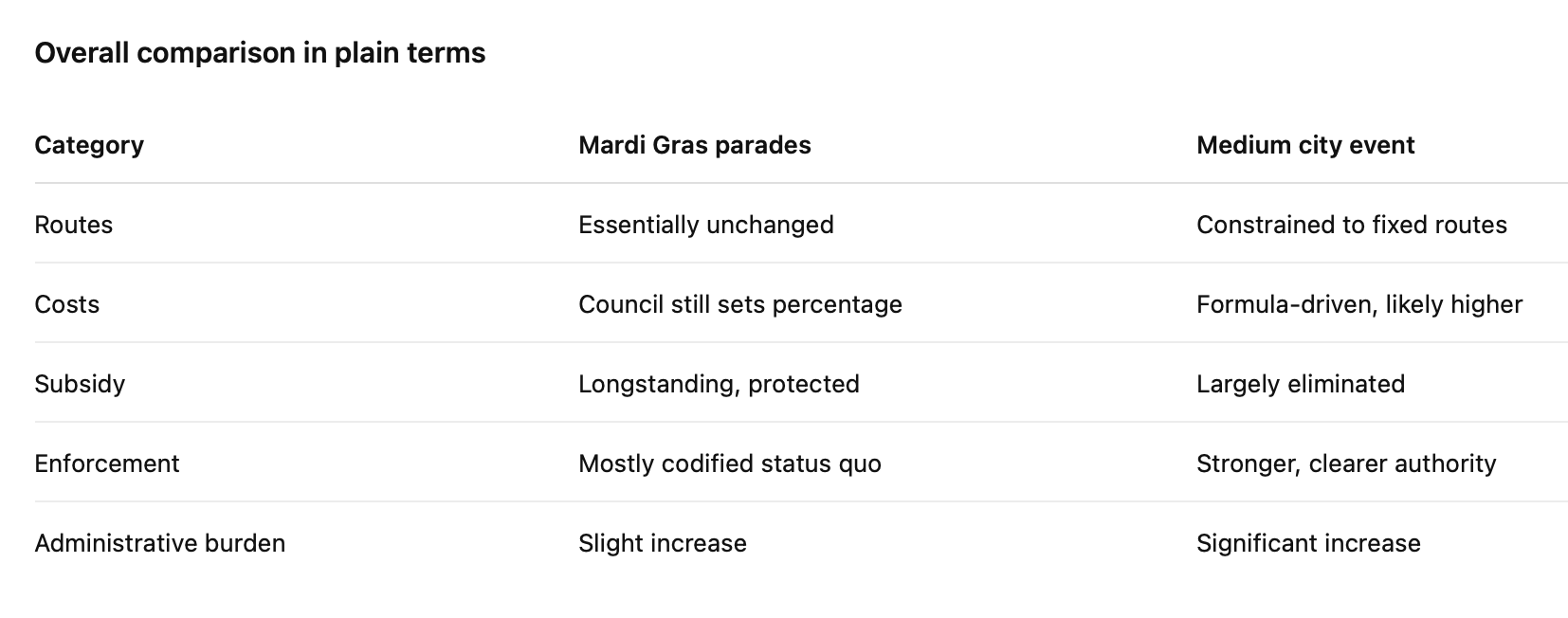
The ordinance would limit most non-Mardi Gras parades to two predefined public parade routes along Lakeshore Drive, with fixed staging and termination points.
While many conduct rules already exist in city code, the ordinance strengthens enforcement mechanisms by more clearly authorizing police and parade marshals to remove participants for indecent behavior, intoxication or safety violations. It also expands no-parking rules, clarifies sanitation minimums and codifies authority to cancel events due to weather or safety threats.
Post-parade assemblies permitted separately
The proposal creates a new category for “public assemblies,” requiring permits for organized gatherings expected to obstruct traffic or normal public use. Those permits would be tied to fixed locations, would require indemnification and cleanup commitments, and would be subject to cost recovery for public safety services.
Any post-parade gathering would be confined to designated special event areas such as the Mandeville Trailhead, Sunset Point Park or Lakeshore Park and would require separate approval — and in most cases a separate permit — if the activity is stationary, extends beyond normal parade disbandment, requires police, EMS, sanitation or traffic control services, or involves amplified sound, vendors or alcohol.
Mardi Gras parades largely unaffected
Traditional Mardi Gras parades would see comparatively little change. Established routes, seniority rules, float requirements and seasonal timing remain in place.
The City Council would continue to determine what percentage of city costs Mardi Gras organizations pay, preserving the city’s longstanding cost-sharing structure for those parades.
Debate ahead
Supporters argue the ordinance brings transparency, fairness and modern safety standards to a growing calendar of large events that often strain the Old Mandeville neighborhood. Critics contend the cost structure could discourage community-based parades and festivals by shifting major costs onto organizers.
Ordinance 25-34 is scheduled only for introduction at the City Council’s December 18th meeting. Ordinances are not debated or voted on at the meeting where they are introduced, but must be formally introduced in advance of a later meeting where they would debated and voted on.
-30-

 Mandeville Daily
One thought on “Proposed ordinance would overhaul Mandeville parade rules, shift costs to organizers”