

Analysis of the FY26 budgeting process and the ‘crisis’ claim
Updated 9/4/2025: Expands reporting, documentation and graphics.
MANDEVILLE — Four years ago, Glen Runyon told Mandeville leaders they were “a flush with money” and should cut taxes. Today, the city’s former efficiency consultant is warning of a budget crisis — and calling for pay and benefit cuts, despite his 2021 report pinpointing low pay and benefits as the primary reasons for morale and retention issues.
In recent weeks, Runyon has peppered Finance Director Jessica Farno with dozens of emails pressing for — and receiving — answers to budget minutiae. He hosted a meeting in the Sanctuary neighborhood, urging residents to flock to the City Council’s final budget hearing and adoption meeting to demand answers, according to sources.
But the numbers may tell a different story. By most measures, Mandeville’s fiscal health is stronger than that of neighboring municipalities, with reserves several times higher than the national standard and well above the levels maintained by nearby cities like Covington and Slidell.
The fiscal year 2026 budget, adopted earlier this month, is balanced. The city is projected to finish the current year $2 million under budget on operating expenses. The general fund has indeed dipped from its 2018 peak, but restricted funds have ballooned, growing by more than $23 million since then. Overall, Mandeville has more money in the bank than ever before.
From raises to rollbacks
Runyon authored the city’s 2021 efficiency study, which found morale problems, overwork, and rigid pay scales. His report would eventually lead to across-the-board raises.
In April 2021 he told the City Council the city was running a $2 million general fund surplus that “should go back to the taxpayers.” That same year, the city commissioned SSA Consultants to perform a market salary survey, which confirmed that entry-level pay — particularly for police — was far below regional averages.
“You are a flush with money coming in … another $2 million general fund surplus this year … and that money should go back to the taxpayers,” Runyon told the City Council in April 2021.
In February 2022, the City Council passed a historic pay overhaul, raising salaries for 83 of roughly 100 employees by 10 to 40 percent. Officials cited Runyon’s findings, the SSA survey, and recruitment concerns in justifying the raises.
But not long thereafter, Runyon reversed course, insisting the general fund is unsustainable, eventually urging cuts to the very pay and benefits his 2021 study is credited with boosting.
So what happened?
Forecasting a ‘crisis’
Today, Runyon and his allies often point to the city’s recently released FY26 Five-Year Forecast as proof that a financial reckoning is near. That report projects the general fund will slip into the red by 2027 if nothing changes — with annual deficits climbing to $4 million by 2030. If the city were to self-fund all capital projects without state or federal matching funds, the shortfall would deepen even further.
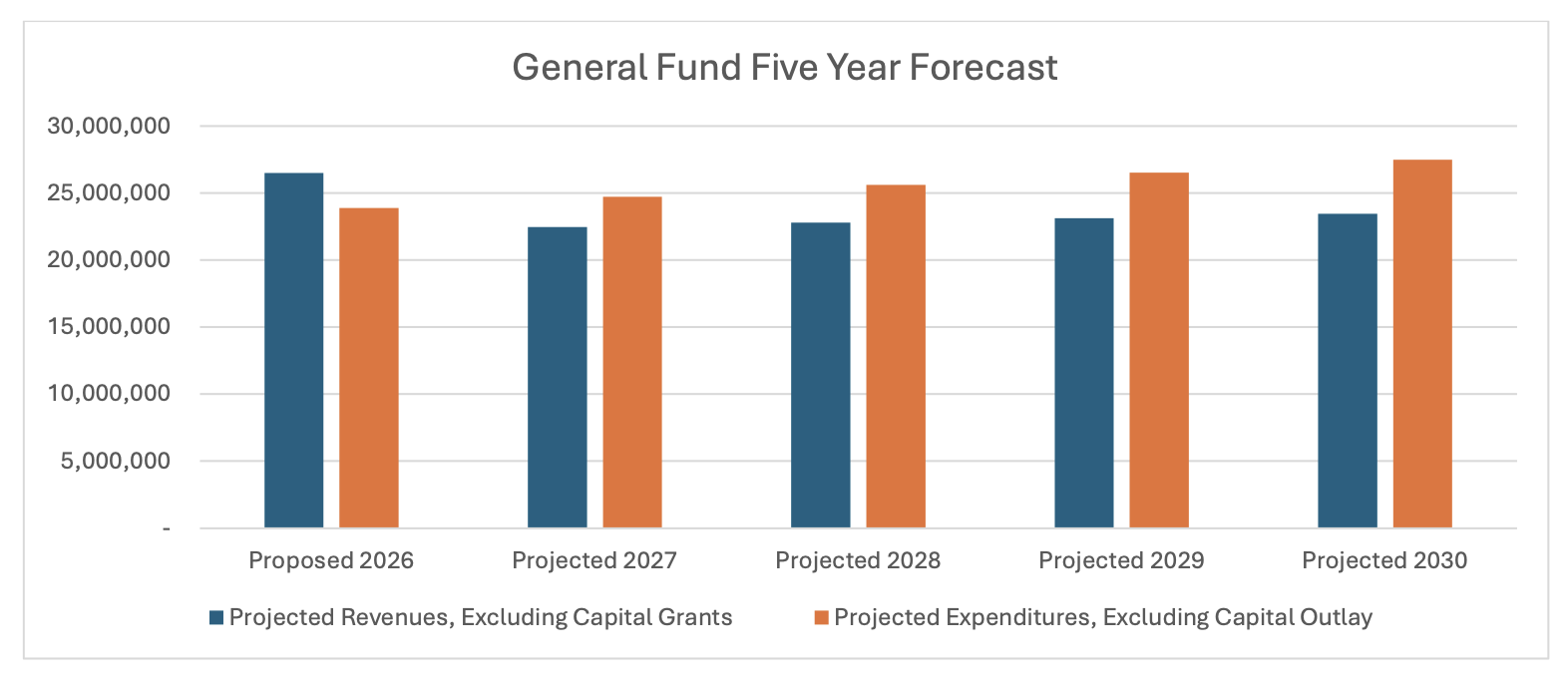
But that scenario is largely unrealistic, according to city officials, who note that Mandeville almost never pursues a capital outlay project without matching grants or outside funding. In fact, most large infrastructure projects in recent decades have been built on state or federal partnerships. Without those funds, projects simply do not move forward.
In other words, the forecast’s “all cash, no grants” scenario is a stress test — not a prediction, according to Councilman at Large Jason Zuckerman. The document itself acknowledges that if matching dollars are not obtained, projects won’t commence.
However, the baseline forecast, which excludes capital outlay, still shows the general fund tightening under current assumptions: revenues growing just 1-1.5 percent annually, while personnel costs grow 4.5 percent. But officials say those figures do not account for potential structural fixes — such as a referendum to rebalance dedicated sales taxes or redefining expenditures so restricted funds can cover more costs.
At the budget adoption meeting August 14th, Farno said she was confident such options could resolve a revenue imbalance, and Zuckerman has pushed for just that, calling it a matter of fairness.
Zuckerman argues the real problem is not overspending but a structural imbalance. While the general fund has shrunk by $7 million since 2018, restricted accounts have swelled with dedicated sales tax revenues that cannot be used for salaries, benefits, or basic operations.
“The city is already collecting $3.4 million per year more than it spends,” Zuckerman said at a July budget hearing. “We can lower the tax rate and still fund core services — if we fix how that money is allocated.”
Zuckerman’s proposal wouldn’t touch the existing restricted funds but would instead: 1) send a smaller percentage to restricted funds to better match projected spending, and 2) re-classify or redefine certain expenditures that are currently paid from the general operating fund that could legally be paid from restricted funds.
If left unchanged, some say the restricted funds balance could balloon to over $100 million by the mid-2040s, if not sooner. This would be money that for the most part could never be spent, while officials would continue to bicker over the need to cut pay and services coming out of the general fund.
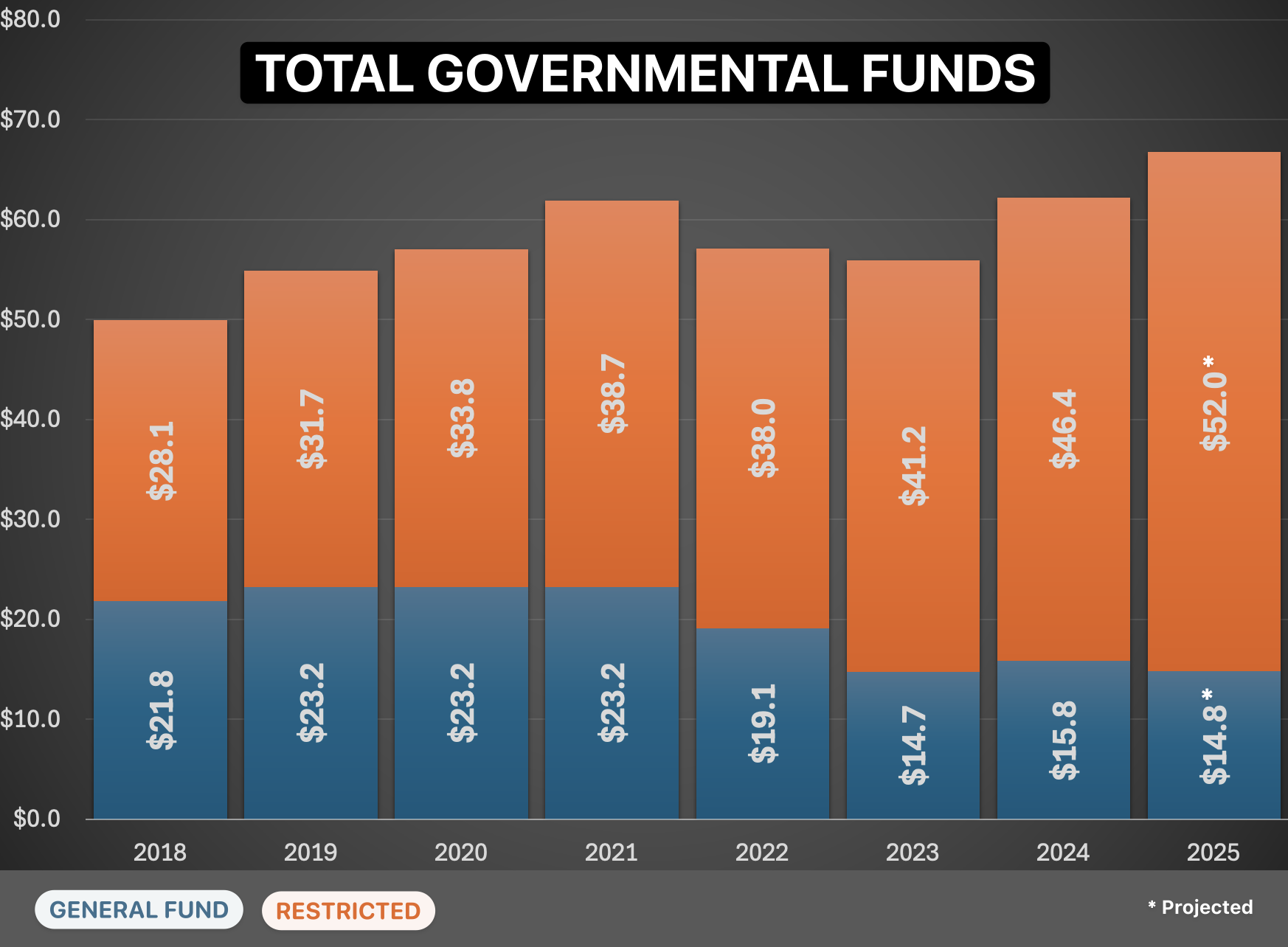
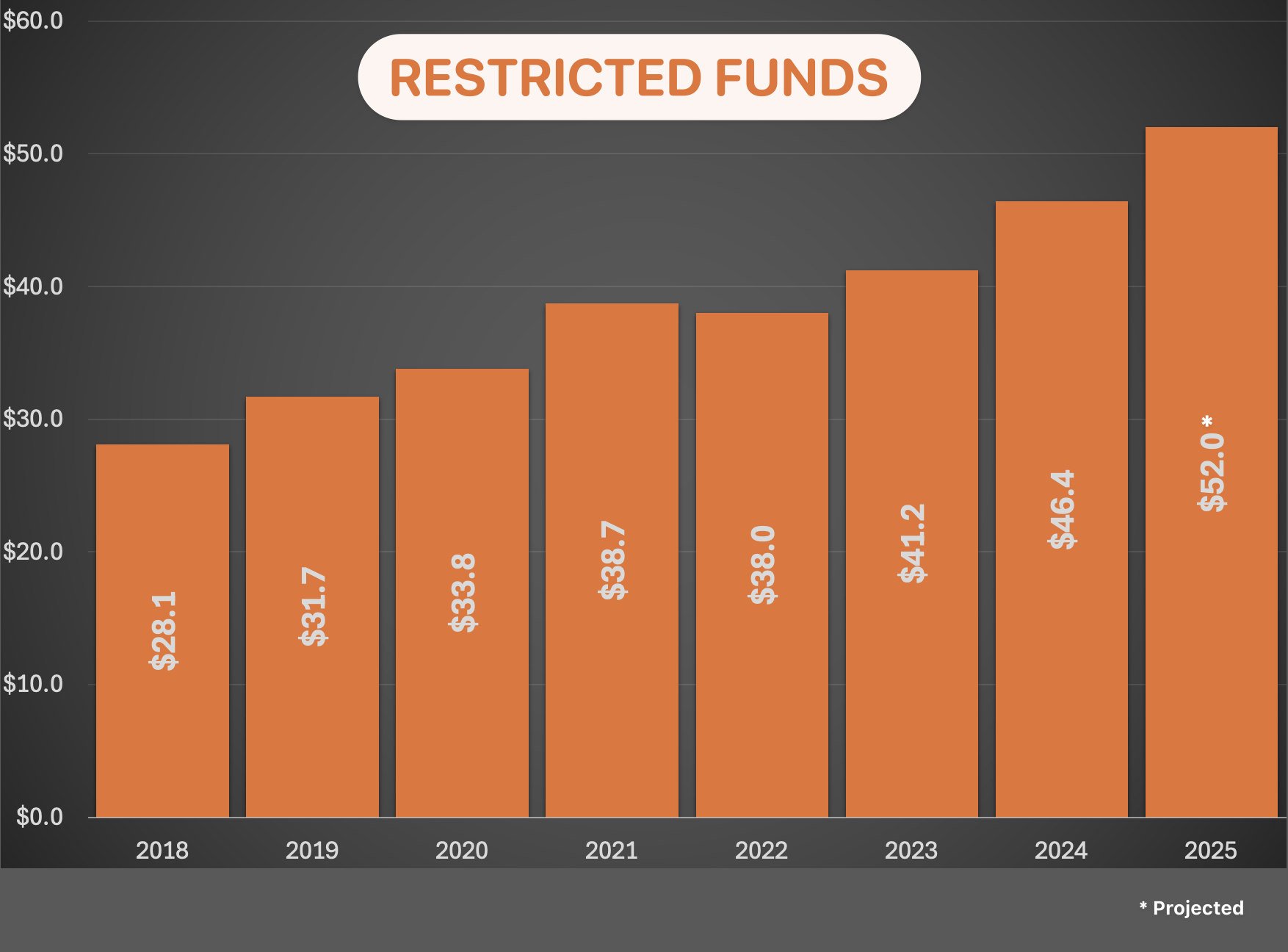
“We’re taking money from the taxpayers and we’re sticking it in the mattress — and it’s not right,” Zuckerman said. “We have charged the taxpayers money and not spent it yet again, and that’s something I have a huge problem with. I think council members are starting to realize that we now have to focus on this reallocation.”
He added that if nothing changes structurally, the voters will continue to lose millions of dollars into an “accounting limbo” where it could never be spent.
District II Councilman Kevin Vogeltanz agreed with Zuckerman at the August 11th budget hearing: “It just so happens that as the budget has evolved, we can’t spend that money fast enough and year over year, forever, this will never end, ever. We are going to stack more, and more, and more of your money — your money — into these restricted funds and they will never be spent down.”
“This is not a deficit budget. At the end of the budget year, we will have more money than we had at the beginning of the year,” he concluded.
During the budget hearing process, District I Councilwoman Cynthia Strong-Thompson framed the argument for small cuts to the FY2026 budget as futile unless the city first attempts to address the bigger problem in the way that Zuckerman and Madden have suggested.
“We’re not really fixing the problem [with token cuts to general fund spending]. We’re basically sticking a finger in a tiny hole and ignoring the crumble over there, which is we’re taking too much money from our citizens and it’s being put into other [restricted] funds,” she told the council on August 5th.
But at the budget adoption meeting August 14th, Runyon cast doubt on the rededication idea.
“You think you got a plan to go to the citizens and ask to rededicate restricted sales tax. I wanna remind you that money that you keep saying that city winds up with surplus at the end of the year, that money that’s in those surpluses is restricted based off of the votes of the employee, uh, citizens,” he told the council.
Runyon continued, “They didn’t say we wanted to pass those sales taxes so that oh, in one day in the future we uh, we think it’d be okay for that to go back into the general fund. That’s not true.”
Political allies join in
But Runyon isn’t alone in his position.
In 2024, retired Piccadilly Restaurants manager Jeff Lyons ran to unseat Mayor Clay Madden using the budget crisis narrative. It didn’t work and he was overwhelmingly rejected by the voters, 73-22 percent.
The 2024 campaign season was particularly nasty, coming fresh off the Sucette Harbor debate. Then-candidate for council at-large Scott Discon supported Lyons over Madden and indicated support for the Sucette Harbor project at an RPEC candidate forum. Since winning his seat on the council, Discon has at times echoed Runyon’s budget narrative, especially during the recent fiscal year 2026 budget adoption process.
However, on August 24th, 2024, Discon voted with the rest of the council in favor of two budget amendments that added roughly $1.9 million in expenditures to the FY2025 budget, with no mention of a budget crisis.

And now, former City Councilman and past mayoral candidate Denis Bechac recently inserted himself into the debate, reading a statement of opposition to the FY2026 budget at the August 14th meeting. Days earlier, he sent out a group text inviting residents to the Sanctuary meeting Runyon hosted.
Bechac, who publicly backed Lyons for mayor in 2024, warned in his message that the city is at a “serious crossroads” and accused the council of engaging in deficit spending. He portrayed Zuckerman’s referendum idea — rededicating some of the city’s dedicated sales taxes to shore up the general fund — as an attempt to “un-dedicate” funds for “critical maintenance, repairs, replacement of important infrastructure.”
“The Mayor and council now are talking about reaching into voter decided ‘dedicated funds’ for important infrastructure, such as streets, drainage, and flood protection,” Bechac wrote.
But officials contend that description is misleading. As the last five audits show, these restricted funds are on track to accumulate well beyond what can be spent because they cannot be tapped for day-to-day operations.
So yes, the general fund has shrunk, not because of overspending, but because of how revenues are partitioned, Zuckerman told the council during budget hearings.
Zuckerman has called for putting the matter to the voters this spring to adjust the percentages so that the partitioning is more balanced. He and Madden say that a referendum, combined with other measures, would fix the imbalance without raising taxes or cutting services.
Zuckerman says Runyon and his allies seem to have pivoted back into campaign mode because the council approved the “Income Strategies” committee to explore correcting the funds imbalance with a combination of measures, which would include rededication.
“They believe a budget crisis is their best hope of winning the mayor’s office and the council in 2028. They need a crisis, so naturally they don’t want the rededication because they’re afraid it will work,” Zuckerman said. “And he’s [Runyon] suggesting defunding the police now? I will never support defunding our police,” he added.
A similar rededication was approved by council and voters in 2014 under Mayor Donald Villere, where the amount and partitioning was changed slightly for similar reasons. Despite the 2014 measure, the restricted funds balance has still grown too large and will continue to do so, says Madden.
Accusations of political sabotage
In the weeks around the budget hearings, and even after the budget was adopted August 14th, Farno faced a steady barrage of emails from Runyon and his allies questioning the city’s finances. Runyon pressed her to confirm figures he circulated to the council, often framing them as evidence of “dwindling reserves” or looming deficits.
Farno responded each time, often with lengthy explanations, citing conservative forecasting practices, FEMA reimbursements, and reserve ratios that far exceed national benchmarks. She repeatedly stressed that the city’s fund balances remain strong, that forecasts are planning tools rather than fixed facts, and that appropriations should not be mistaken for immediate obligations. Her explanations, she said, were consistent with the guidance of the Government Finance Officers Association (GFOA) and state law.
Some city officials have quietly raised the point that much of what Runyon was demanding from Farno — salary schedules, budget spreadsheets, fund balances and forecasts — are de facto public records requests under Louisiana law. Normally, such requests are routed through the city’s public records custodian, which creates a legal paper trail of what was asked for and what was provided.
This reporter has been required to submit formal public records requests for even routine information such as the names of applicants for the Planning and Zoning Commission or other public body appointments, records that are specifically enumerated as public under state law.
By responding informally to Runyon’s steady stream of emails, critics say, there is risk of exposing the city to legal or political fallout if a mistake is made or if the information is later challenged. Directing these inquiries into the public records process would not only ensure equal access for all members of the public, but also protect the city by documenting compliance with state law.
Furthermore, as per the Louisiana public records law, municipalities are not obligated to create records where none already exist. Consequently, requests for the generation of data tables could fall into that category.
Madden told Mandeville Daily that Runyon’s emails were intended less to seek clarity and more to stir political doubt and prepare for his August 10th Sanctuary meeting. He said he originally allowed the exchanges in an effort to be transparent, but was forced to put a stop to the practice when the requests became excessive and constant.
Social media posts appear to make reference to the very information that Farno was privately providing Runyon, but that he was taking it out of context and drawing unfounded conclusions, Madden said.
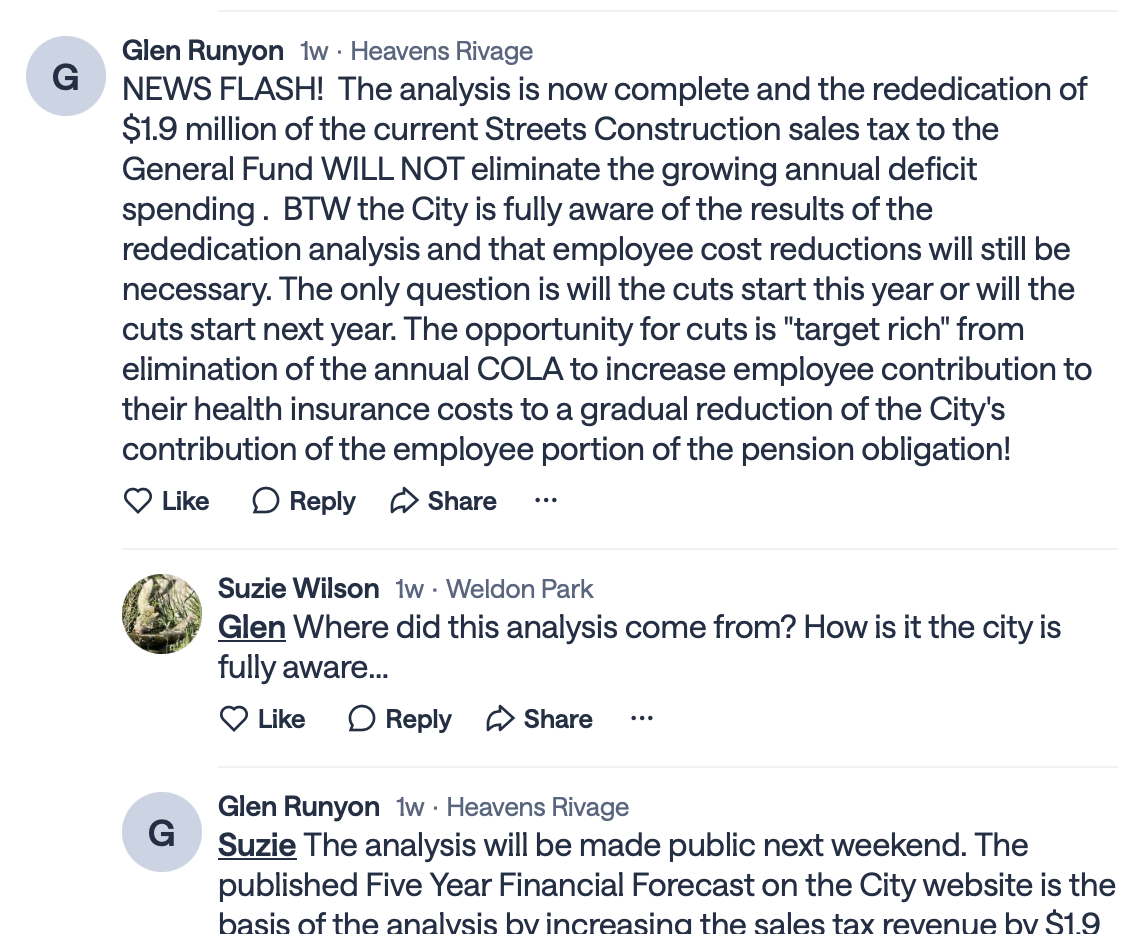
Madden said the exhaustive, months-long email exchange between Farno and Runyon provides context for his August 14th remarks to the council once they adopted the FY2026 budget. After thanking the council for their cooperation and their “productive” budget hearings, he turned his attention to the Sanctuary meeting:
“I do have a problem with a group of people having a secret Sunday meeting that we — none of us — were invited to at the last minute after we had very productive budget meetings and coming in and trying to sabotage it at the end. Why not come to the meetings that we had, if you had some concerns,” Madden told the council.
At the August 25th City Council meeting, Madden announced that he had chosen Zuckerman and Strong-Thompson to serve on the Income Strategies Committee, with no mention of Runyon.
Though not appointed, Runyon has responded by sending a flurry of emails to council members, Madden, Farno, and news reporters, offering his own suggestions for employee-related cuts and strategies. Notably, he criticized Mandeville’s per-officer police spending compared to that of Covington.
From ally to adversary
Runyon’s shift from ally to adversary was closely tied to the political trajectory of former Councilwoman and past mayoral candidate Trilby Lenfant, according to Madden.
Madden tapped Lenfant to be his executive assistant in 2020. It was Lenfant, Madden said, who recommended Runyon to conduct the 2021 efficiency study.
While still on the council in 2009, Lenfant nominated Runyon after he applied to become interim mayor, to replace disgraced former mayor Eddie Price, until a special election could be held. However, the council chose Edward “Bubby” Lyons instead.
In 2012, however, Runyon was appointed to a seat on the short-lived “Financial Oversight Committee” which produced several recommendations that were later codified to improve transparency in the budgeting process.
In April 2021, the City Council rejected a Madden proposal to implement one of Runyon’s key efficiency study recommendations — a staff restructuring plan which would have promoted Lenfant to a director-level position with a 25-percent pay raise.
After a minor dustup with the council, Madden eventually pushed through a $10,000 raise for Lenfant, lifting her to $82,000. Still, the raise fell short of the $90,000 envisioned for the proposed director position.
The public’s first indication that Runyon had an issue with the administration’s budgeting was February 10th, 2022, the night the landmark pay-scale overhaul was adopted by the council. Runyon was not present for the meeting, but he had then-Councilwoman Rebecca Bush read a statement of opposition into the record, calling the raises “ill-conceived” and suggesting the city even consider no longer paying the employee portion into the state retirement system.
Lenfant resigned in May 2022, shortly after Runyon resurfaced as a critic of the city’s finances. In the subsequent months, Runyon and others intensified their warnings of an impending crisis.
Lenfant emerged as a prominent advocate for the ill-fated Sucette Harbor development, which envisioned a massive hotel-apartments-event-center on Mandeville’s lakefront. This project was opposed by Madden and Zuckerman.
The financial crisis narrative seamlessly transitioned into promoting Sucette Harbor as a potential revenue source to aid Mandeville and its predicted general fund shortfall.
Despite Sucette Harbor’s rejection by the council and Madden’s landslide victory, seemingly over the budget-crisis narrative, Runyon maintains that a financial meltdown remains a looming threat in the near future.
Madden and other officials disagree.
Runyon and Farno’s email summary:
Back to Top
• Dec. 18, 2024 — Runyon asks Farno to post the November finance report immediately before the council meeting.
→ Farno’s reply: (Dec. 19, 2024, not shown in this set, but chain continues with monthly reports).
• Jan. 18, 2025, 1:39 p.m. — Runyon requests the December finance report be posted ASAP before council meeting.
→ Farno’s reply: (Feb. 19–21, 2025; January report delivered).
• Feb. 18, 2025, 8:29 p.m. — Runyon asks when the January monthly finance report will be posted.
→ Farno’s reply: Feb. 19, 2025, 9:25 a.m. (“by Friday at the latest”).
• Feb. 21, 2025, 4:51 p.m. — Runyon chases January report (“????”).
→ Farno’s reply: Feb. 21, 2025, 8:12 p.m. (report attached).
• Feb. 26, 2025, 3:35 p.m. — Runyon questions January report, says sales tax slowdown shows $629K shortfall, asks about adjustments.
→ Farno’s reply: Feb. 27, 2025, 5:19 p.m. (comments in red + spreadsheet).
• Mar. 2, 2025, 5:43 p.m. — Runyon argues General Fund has a spending problem, urges early cuts.
→ Farno’s reply: Mar. 5, 2025, 4:48 p.m. (philosophical difference, will target cuts in FY26 budget).
• Mar. 9, 2025, 4:17 p.m. — Runyon asks when FY24 audit will be released.
→ Farno’s reply: Mar. 10, 2025, 6:16 p.m. (60-day extension requested).
• Mar. 11, 2025, 11:34 a.m. — Runyon asks about property tax “collection fee” charges.
→ Farno’s reply: Mar. 11, 2025, 5:05 p.m. (explains STPSO holdback, costs).
• Mar. 19, 2025, 2:10 p.m. — Runyon thanks for February report, asks if Mardi Gras influenced taxes, presses for audit status.
→ Farno’s reply: Mar. 20, 2025, 4:10 p.m. (audit wrapping, hope by end of March).
• Apr. 3, 2025, 1:54 p.m. — Runyon follows up on audit report status.
→ Farno’s reply: Apr. 23, 2025, 7:25 p.m. & 8:24 p.m. (capital outlay, March finance report sent).
• Apr. 17, 2025, 4:01 p.m. — Runyon reviews Q2 budget, asks for WIP capital project totals.
→ Farno’s reply: Apr. 23, 2025 (capital outlay, balances sent).
• Apr. 29, 2025, 3:42 p.m. — Runyon presses on FY24 audit, extension deadline April 30.
→ Farno’s reply: Apr. 29, 2025, 4:26 p.m. (another 30-day extension, fixed asset issue explained).
• Apr. 24, 2025, 4:14 p.m. — Runyon analyzes March report, claims $550K over budget.
→ Farno’s reply: Apr. 24, 2025, 5:26 p.m. (clarifications on costs, police OT).
• Apr. 24, 2025, 5:53 p.m. — Runyon follow-up: focus on recurring vs non-recurring revenue/expenditure, hopes for 5-year forecast.
→ Farno’s reply: May 15–19, 2025 (addressed in forecasting thread).
• May 15, 2025, 1:54 p.m. — Runyon cites ordinance requiring 5-year forecast, attaches GFOA practices.
→ Farno’s reply: May 19, 2025, 5:20 p.m. (April 2025 report posted).
• May 19, 2025, 1:34 p.m. — Runyon asks when April Monthly Financial Report will be available.
→ Farno’s reply: May 19, 2025, 5:20 p.m. (now posted).
• Jul. 2, 2025, 10:25 a.m. — Runyon requests full Excel line-item FY26 budget, asks about 5-year forecast.
→ Farno’s reply: Jul. 2, 2025, 2:10 p.m. (explains PDF only, Excel not distributed).
• Jul. 2, 2025, 4:26 p.m. — Runyon performs recurring revenue vs expenditure analysis, asks for SST breakdown.
→ Farno’s reply: Jul. 8, 2025, 3:44 p.m. (provides breakdown).
• Jul. 8, 2025, 11:13 a.m. — Runyon repeats request for SST breakdown for analysis.
→ Farno’s reply: Jul. 8, 2025, 3:44 p.m. (same reply).
• Jul. 18, 2025, 1:40 p.m. — Runyon emails council re: rededication vs reallocation of Street Fund.
→ Farno’s reply: Jul. 18, 2025, 3:25 p.m. (confirms distinction, references 2014 rededication).
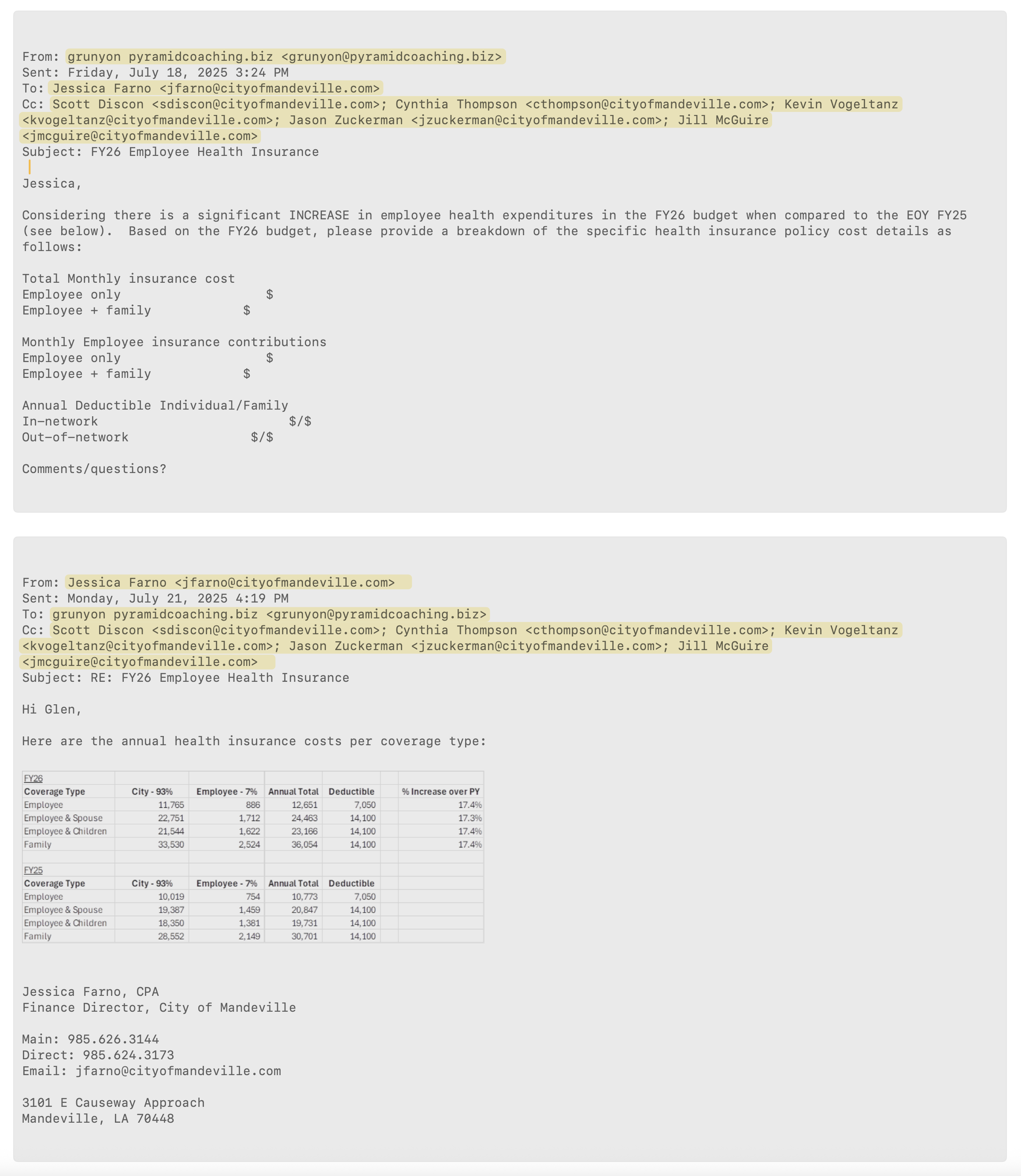
• Jul. 18, 2025, 3:24 p.m. — Runyon asks about FY26 employee health insurance costs.
→ Farno’s reply: Jul. 21, 2025, 4:19 p.m. (provides annual cost per type).
• Jul. 19, 2025, 11:19 a.m. — Runyon asks about police seizure funds.
→ Farno’s reply: Jul. 21, 2025, 3:51 p.m. (approx. $3,500 held at Whitney Bank, restricted).
• Jul. 22, 2025, 12:30 p.m. — Runyon analyzes FY26 capital budget impact, asks about extending projects.
→ Farno’s reply: Jul. 23, 2025, 10:34 a.m. (explains enterprise fund rules).
• Jul. 23, 2025, 1:07 p.m. — Runyon critiques budget format, cites RS 39:1305 compliance.
→ Farno’s reply: Jul. 23, 2025, 3:41 p.m. (clarifies fund summary labels).
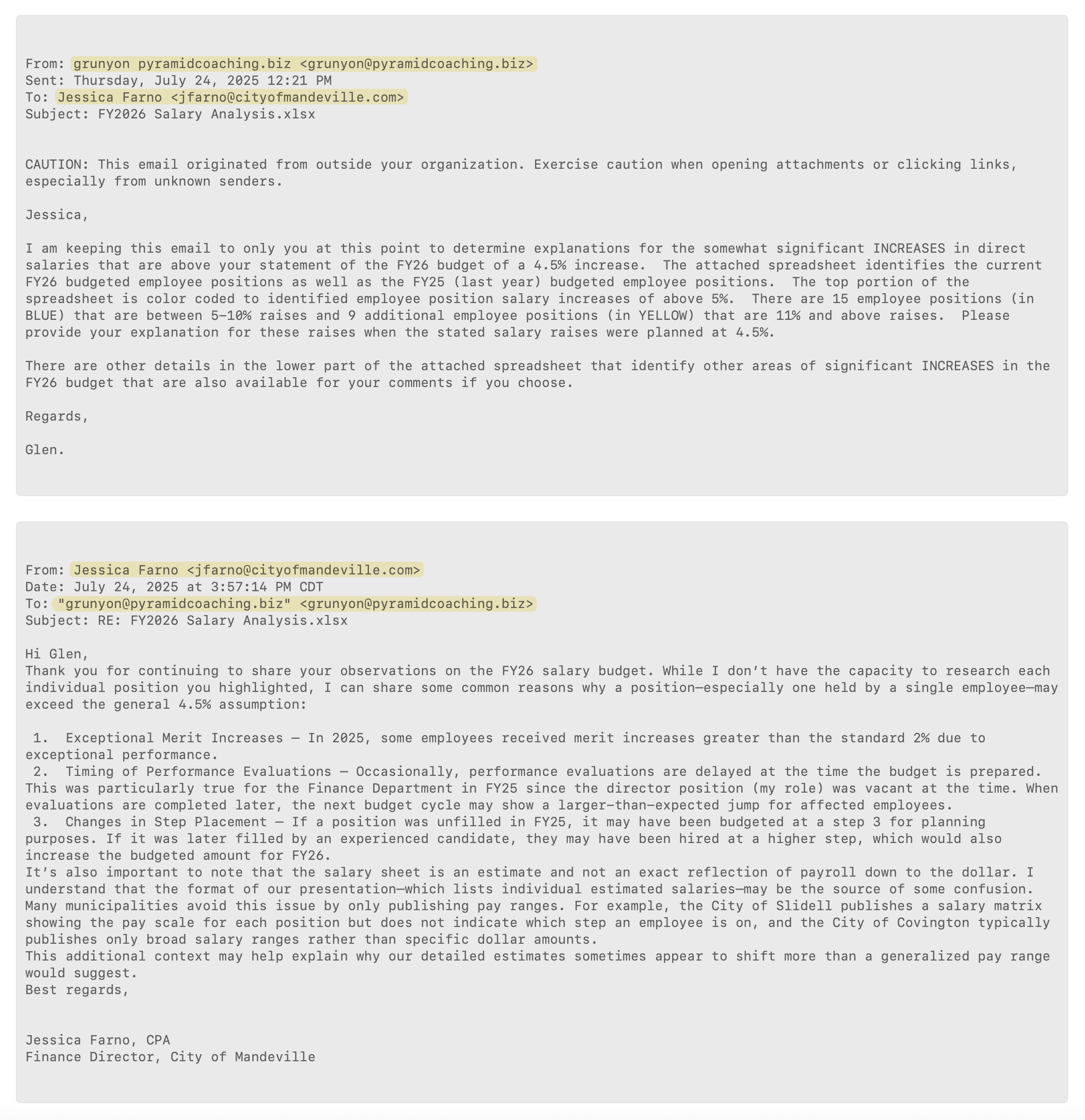
• Jul. 24, 2025, 12:21 p.m. — Runyon questions FY26 salary analysis, flags raises above 5%.
→ Farno’s reply: Jul. 24, 2025, 3:57 p.m. (merit increases, timing, step placement).
• Aug. 10, 2025, 5:00 p.m. – Runyon hosts meeting in Sanctuary neighborhood
• Aug. 12, 2025, 11:46 p.m. — Runyon email to council: “Mandeville Has a Spending Problem NOT a Revenue Problem,” challenges rededication idea.
→ Farno’s reply: Aug. 13, 2025, 5:09 p.m. (acknowledges concerns, cites Income Strategies Committee).
• Aug. 15, 2025, 10:22 a.m. — Runyon asks Farno to confirm FY25 ending fund balance and $1M “shortfall.”
→ Farno’s reply: Aug. 15, 2025, 2:28 p.m. (projections conservative; FEMA obligations improve outlook).
-30-


 Mandeville Daily
This Runyun guy seems a little power hungry. He wants to matter or get an appointment to something… anything. This whole time I thought we were adopting deficit budgets and we were in the red based on his comments at the meetings. But now that I looked up the budget audits, I see that’s not true.. like really not true. And no one is mentioning the $5.5M we are still missing from Ida? So why are we wasting so much money into restricted account that we can never spend? Might as well be burning it in a fire pit. We need a referendum like for sure. Good article to finally tell both sides. -TJ
LikeLiked by 1 person
this stinks. its always about the next election. seems like we are throwin money away in the restricted funds. how did this happen? will they lets us vote to fix it soon? these runyon are wanting to defund the police instead which will make us like Slidell and N.O. East. No way!
LikeLiked by 1 person